
Washington Post Fires One-Third of Staff, Including All Its Middle East Journalists
Job cuts eliminate entire regional bureau amid financial pressures Media industry shaken as one of America’s leading newspapers scales back international coverage Union condemns layoffs as newsroom morale plunges Critics warn decision weakens accountability journalism during global crises Veteran correspondents among those dismissed in major restructuring Financial strain drives shift toward domestic-focused reporting Press freedom groups express concern over shrinking foreign newsrooms Subscribers question loss of Middle East expertise

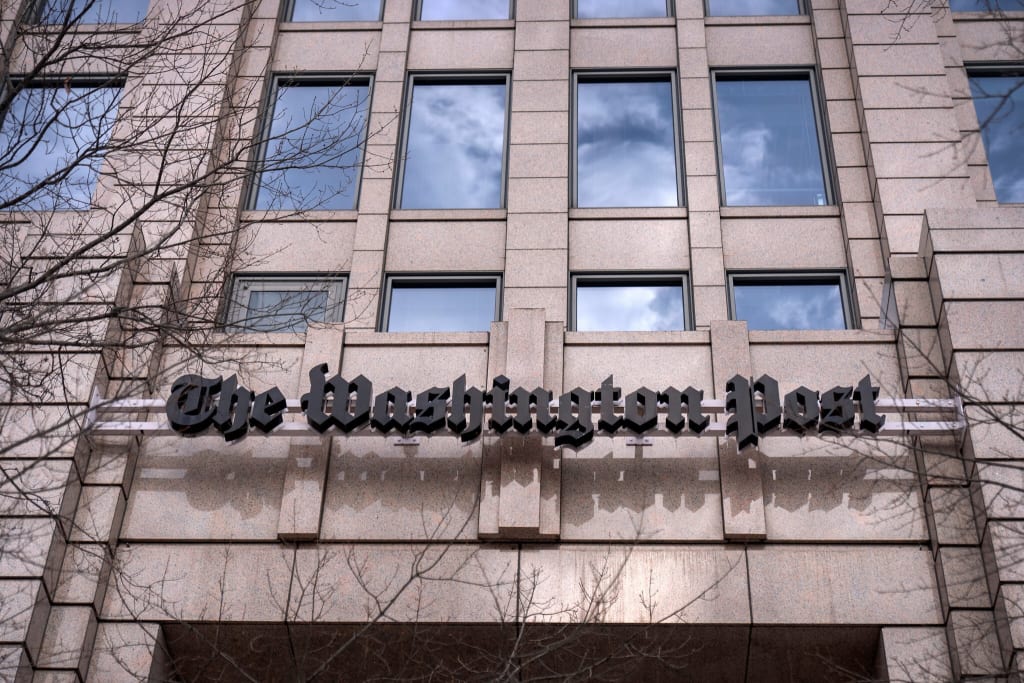
The Washington Post has laid off roughly one-third of its newsroom staff in a sweeping round of job cuts that includes the dismissal of its entire Middle East reporting team, a move that has sent shockwaves through the global journalism community and raised serious concerns about the future of international coverage at one of America’s most influential newspapers.
The layoffs, confirmed by company executives on Tuesday, come as part of a broader restructuring effort aimed at stabilizing the paper’s finances amid declining digital subscriptions, falling advertising revenue, and rising operational costs. While the Post described the cuts as “necessary for long-term sustainability,” critics argue the decision reflects a troubling retreat from in-depth foreign reporting at a time of heightened global conflict.
Among those affected were veteran correspondents based in Jerusalem, Beirut, and Cairo, as well as editors and producers who supported coverage across the Middle East. Several journalists said they were informed with little notice and offered severance packages that varied by tenure.
“This is devastating not only for the people who lost their jobs but for readers who depend on rigorous reporting from one of the world’s most complex regions,” said one former correspondent, who requested anonymity due to ongoing negotiations with the company.
Financial Pressures and Strategic Shift
In a memo to staff, Washington Post publisher Will Lewis cited financial challenges facing the newspaper industry and the need to “refocus resources on core priorities.”
“Our responsibility is to ensure the Post remains a strong and viable institution for the future,” Lewis wrote. “These decisions were not made lightly, but they are necessary to adapt to changing audience habits and economic realities.”
The Post has struggled in recent years to maintain the rapid subscriber growth it enjoyed during the Trump presidency, when political coverage drove record digital engagement. As interest in U.S. politics has cooled and competition from free online news sources has intensified, the paper’s revenue has reportedly declined significantly.
Insiders say management has chosen to concentrate more heavily on domestic politics, investigations, and opinion content while relying increasingly on wire services and partnerships for international news.
Media analysts warn that this strategy risks eroding the Post’s reputation as a global news leader.
“Cutting an entire regional bureau is not just a cost-saving measure—it’s a statement about priorities,” said Margaret Collins, a professor of journalism at Columbia University. “The Middle East is central to U.S. foreign policy, global security, and humanitarian issues. Removing dedicated coverage weakens public understanding.”
Impact on Middle East Coverage
The elimination of the Middle East desk comes amid ongoing wars in Gaza and Ukraine, rising tensions between Iran and Israel, and continued instability in Syria, Yemen, and Lebanon. Journalists who specialized in the region say their work required years of cultural knowledge, language skills, and trusted local networks that cannot easily be replaced.
“Parachute reporting doesn’t work in the Middle East,” said a former Post editor. “You need people on the ground who understand the politics, history, and communities. Without that, coverage becomes shallow and reactive.”
Several international press organizations condemned the move, calling it a setback for accountability journalism. The Committee to Protect Journalists said in a statement that “reducing foreign correspondents at a time of global crisis undermines the public’s right to accurate and independent information.”
Staff Reaction and Morale
Within the newsroom, the layoffs have fueled anxiety and anger among remaining employees. Union representatives said the cuts disproportionately affected foreign correspondents and junior reporters while leaving management largely untouched.
“The burden of financial mistakes is being placed squarely on journalists who do the work,” said a spokesperson for the Post’s union. “This will weaken coverage and harm trust with readers.”
Employees also expressed concern about workload increases and burnout as fewer reporters are expected to produce more content across multiple beats.
“This isn’t just about losing colleagues,” one staff writer said. “It’s about losing institutional knowledge. People who spent decades building sources and expertise are suddenly gone.”
A Broader Industry Trend
The Washington Post is not alone in shrinking its foreign bureaus. Major news organizations across the United States and Europe have scaled back international reporting over the past decade due to high costs and shrinking profit margins. Maintaining overseas offices requires security arrangements, translators, travel budgets, and legal support—expenses many outlets can no longer sustain.
However, critics argue that the trend creates a dangerous information gap.
“When major papers pull out of regions like the Middle East, coverage increasingly comes from social media or partisan sources,” said Collins. “That leaves audiences vulnerable to misinformation and propaganda.”
The layoffs also raise questions about the role of billionaire ownership in shaping newsroom priorities. The Washington Post is owned by Amazon founder Jeff Bezos, who purchased the paper in 2013 and invested heavily in digital expansion during its early turnaround years.
While Bezos has not commented publicly on the latest cuts, some staff members have questioned whether financial discipline has overtaken journalistic mission.
What Comes Next
Management says the newspaper will continue to cover the Middle East through freelance reporters and partnerships with international outlets. Yet former staff warn that this approach cannot replace a dedicated bureau with institutional continuity.
Readers have already begun to voice concerns on social media, with many saying they subscribed specifically for the Post’s international reporting.
“This was one of the last American papers with serious foreign coverage,” one subscriber wrote. “Now it feels like another retreat inward.”
The layoffs mark a turning point for the Post, long regarded as a standard-bearer for investigative and global journalism. While executives insist the paper will remain committed to international news, the absence of a permanent Middle East team suggests a narrower vision of its future role.
For journalists who lost their jobs, the decision represents more than a financial setback.
“We believed in the mission of informing the public about a region that shapes world events,” said a former correspondent. “Now that mission feels compromised.”
As newsrooms continue to struggle with economic realities, the question remains whether leading institutions can balance survival with their responsibility to provide deep, independent coverage of the world beyond their borders.
About the Creator
Fiaz Ahmed
I am Fiaz Ahmed. I am a passionate writer. I love covering trending topics and breaking news. With a sharp eye for what’s happening around the world, and crafts timely and engaging stories that keep readers informed and updated.
Keep reading
More stories from Fiaz Ahmed and writers in The Swamp and other communities.
Greetings from Kyiv, Where Candles Are the Last Option During Wartime Blackouts
As night falls over Kyiv, the city no longer glows the way it once did. Streetlights flicker sporadically, apartment windows dim quickly, and the familiar hum of urban life is replaced by an uneasy silence broken only by generators and distant air raid sirens. In many neighborhoods, candles have become the last and most reliable source of light during prolonged wartime blackouts. Ukraine’s capital continues to endure waves of power outages following sustained Russian attacks on the country’s energy infrastructure. Substations, power plants, and transmission lines have been repeatedly targeted, leaving millions of residents with limited or no electricity for hours — sometimes days — at a time. While emergency repairs are carried out around the clock, each new strike pushes the system closer to collapse. For families across Kyiv, daily routines have been reshaped around the availability of electricity. Mobile phones are charged whenever power briefly returns. Meals are prepared in advance or cooked on gas stoves and portable burners. Elevators stand still in high-rise buildings, forcing elderly residents to climb dark stairwells with flashlights or candles in hand. “In the evening, when everything goes dark, we light candles and sit quietly,” said Olena, a retired schoolteacher living in the Podil district. “It feels like the city goes back a hundred years. But at least we are together, and that gives us strength.” A City Adjusts to Darkness Shops close earlier than before. Restaurants that remain open rely on generators and candlelit tables, creating scenes that resemble romantic dinners but carry an unmistakable tension. Pharmacies ration fuel for backup power to preserve refrigeration for medicines. Hospitals operate under strict energy-saving protocols, prioritizing intensive care units and surgical theaters. Public transportation is frequently disrupted. The Kyiv Metro, which doubles as a bomb shelter during air raids, runs on reduced schedules when electricity supplies are unstable. Bus stops are packed during peak hours, as commuters try to make it home before sunset. For many residents, the blackout is not just an inconvenience — it is a reminder that the war remains ever-present. “You cannot escape it,” said Andriy, a university student. “Even if you don’t hear explosions, the darkness tells you the war is here.” The Candle Economy Candles, flashlights, and battery-powered lanterns have become essential items. Small shops that once sold decorative candles now stock large boxes of emergency supplies. Prices have risen sharply, and shelves are often emptied within hours of new deliveries. Markets across the city sell thick paraffin candles designed to burn for many hours. Some families reuse wax remnants, melting them down to create new ones. Others improvise using jars and cooking oil when supplies run low. “We never thought candles would become so important,” said Larysa, who runs a small grocery store. “Now they sell faster than bread.” Alongside candles, power banks and portable solar chargers are in high demand. Residents line up at public charging stations installed by the city council in libraries, schools, and metro stations. These hubs allow people to power phones, laptops, and medical devices for a few precious hours. Psychological Toll The darkness brings emotional strain as much as physical hardship. Mental health workers say prolonged blackouts deepen feelings of anxiety and isolation, especially for children and the elderly. “When it’s dark and cold, people feel more vulnerable,” said a Kyiv-based psychologist who volunteers at a crisis center. “Candles provide light, but they also symbolize how fragile life has become.” Parents struggle to maintain a sense of normalcy. Homework is done by candlelight. Board games replace television. Stories are told instead of streamed. Some families say the blackouts have unexpectedly brought them closer together, but the uncertainty remains exhausting. Children have adapted quickly, treating blackouts like adventures at first. But teachers warn that fatigue and stress are beginning to affect learning and behavior. “They are brave, but they are tired,” said one elementary school teacher. “They ask when the lights will stay on again. We don’t always have an answer.” Government and International Support Ukrainian officials acknowledge the scale of the challenge. Emergency crews repair damaged power lines within hours of strikes, often under dangerous conditions. International partners have sent generators, transformers, and technical equipment to stabilize the grid. President Volodymyr Zelensky has repeatedly urged Western allies to accelerate delivery of air defense systems to protect energy facilities. “Every blackout is a victory for terror,” he said in a recent address. The government has also introduced rolling blackout schedules to distribute electricity more evenly and prevent total system collapse. While this has helped some neighborhoods, unpredictable attacks mean outages still occur without warning. Resilience in the Shadows Despite the hardships, Kyiv continues to function. Cafés reopen when power returns. Musicians play acoustic sets by candlelight. Volunteers organize soup kitchens using portable stoves. Life persists, dimly lit but determined. In one apartment block near Independence Square, residents gather in the stairwell each night during outages, sharing tea and stories by candlelight. What began as a practical solution has become a small community ritual. “We cannot control the war,” said Mykola, a former engineer. “But we can control how we treat each other in the dark.” As winter deepens, the challenge grows more severe. Cold temperatures make heating as critical as lighting. Yet for now, candles remain the city’s quiet symbol of survival — small flames standing against vast uncertainty. In Kyiv, light is no longer taken for granted. Each flicker of a candle is both a reminder of loss and a sign of resilience. In the darkness of war, even the smallest flame carries meaning.
By Fiaz Ahmed 4 days ago in The Swamp
Why Black History Matters in America?
The United States of America is celebrating their 250th anniversary in 2026. I'm proud to be an American and as someone who was born here, I wouldn't imagine myself living anywhere else. This is a country where opportunities are possible. Where anyone can be successful in anything they desire to do. Equality, community, and togetherness are the backbones of what America is and should be about. However, we have an administration who wants to erase and disregard those who have made positive, meaningful impacts in our country, specifically Black figures, such as Martin Luther King, Jr., Rosa Parks, and Maya Angelou. President Trump and his administration have been constantly complaining and fighting against what they call the "Woke agenda". They use this excuse as a distraction from other issues they refuse to address, such as the high cost of living, climate change, and inflation. That equality is dividing America, when in reality, it's bringing us together. Being woke is not tied to a specific political party. No matter where you stand on the political spectrum, you can still care about other people and their plights. Compassion and empathy for others isn't tied to a political party, either. We were taught as children to treat others the way we want to be treated and not judge others because they're different from us. Caring about others isn't a personal attack on your beliefs. It doesn't make you any less of a person. People who are easily offended over African American figures, past or present, or anything related to it, are grasping at straws. Current and future generations need to know who people like Harriet Tubman and Shirley Chisholm were, especially in the classroom. Black History is part of American History. It should be recognized, not hidden or forgotten. Besides, you can't shield children from everything, just because your feelings are easily hurt.
By Mark Wesley Pritchard 7 days ago in The Swamp
Former Prince Andrew Moves Out of Royal Lodge at Windsor
Former Prince Andrew, now officially known as Andrew Mountbatten-Windsor, has moved out of Royal Lodge in Windsor Great Park, bringing an end to more than twenty years of residence at one of the British monarchy’s most prestigious properties. While the move itself was carried out quietly, its implications are anything but small. It represents another chapter in the dramatic fall of a once-senior royal figure whose name has become inseparably linked with controversy.
By Ayesha Lashari4 days ago in The Swamp
📢 Raise Your Voice Thread: 02/05/2026
Our “Raise Your Voice Threads” are hosted most alternating Thursdays at 12PM ET to offer creators more avenues to uncover exceptional stories on Vocal. As we are continuously searching for fresh creators and inspiring stories, this thread provides an opportunity to exchange and discuss the stories that have moved and motivated us on Vocal.
By Raise Your Voice by Vocal3 days ago in Resources



Comments
There are no comments for this story
Be the first to respond and start the conversation.