
Wary of Israeli Appropriation, Palestine Lists 14 Sites with UNESCO
Palestine lists 14 historic sites with UNESCO to safeguard heritage amid fears of Israeli appropriation

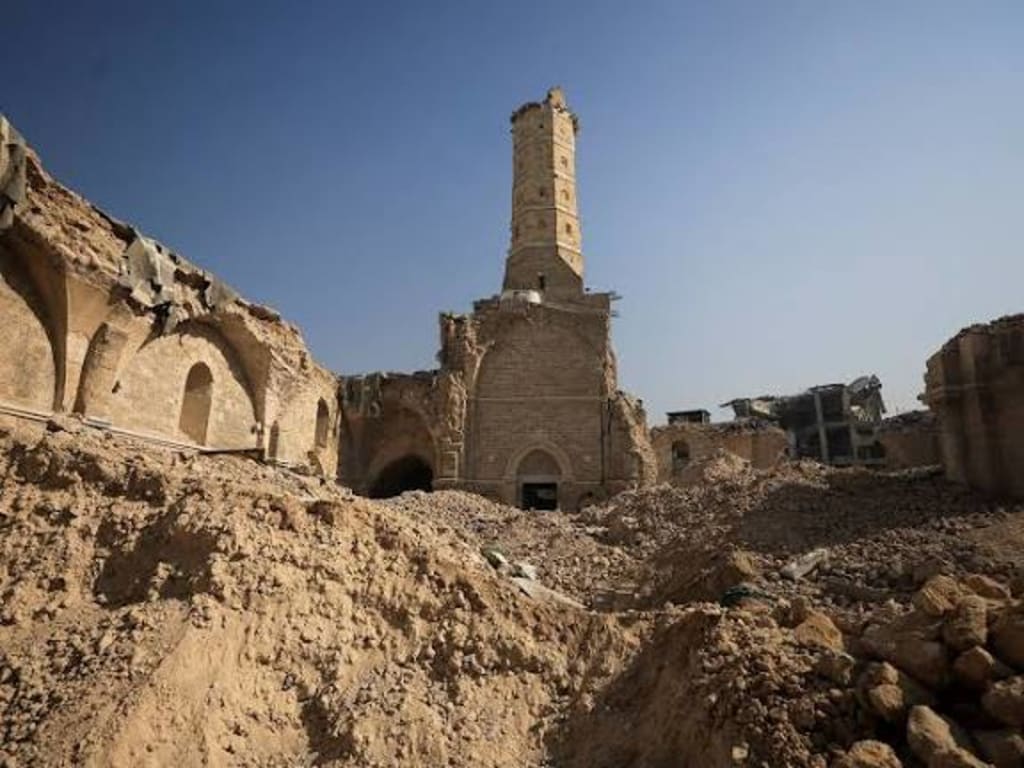
In a significant move aimed at preserving its cultural heritage and asserting historical claims, Palestine has officially listed 14 sites with the United Nations Educational, Scientific and Cultural Organization (UNESCO). This step comes amid growing concerns over Israeli appropriation of Palestinian historical and religious landmarks, and it underscores the deep-seated tensions surrounding heritage, identity, and territorial claims in the region.
The list includes a mix of archaeological sites, historic buildings, and religious landmarks spread across the West Bank and Gaza. Palestine’s decision is rooted in the fear that continued Israeli control over these areas could lead to the erasure or misrepresentation of Palestinian history. UNESCO’s recognition not only safeguards these sites internationally but also strengthens Palestine’s legal and cultural standing on the global stage.
Historical Context and Rising Concerns
The Israeli-Palestinian conflict, which has spanned over seven decades, is not only about territory and politics but also about heritage and identity. Both nations claim historical and religious ties to the land, with Jerusalem holding a particularly central place in these claims. In recent years, Palestinian authorities have voiced concerns that Israeli authorities and settlers are increasingly asserting control over sites of significant cultural and religious value. This includes historic mosques, churches, and archaeological ruins that reflect Palestine’s rich and diverse history.
The listing of these 14 sites by Palestine is a strategic move to counter such claims and ensure that the narrative surrounding these landmarks remains inclusive of Palestinian history. Officials stress that the sites chosen reflect the shared heritage of the Palestinian people and provide a window into centuries of civilization that thrived in the region.
UNESCO’s Role and International Implications
UNESCO plays a critical role in preserving world heritage, recognizing sites that hold outstanding cultural, historical, or natural significance. By formally registering these sites, Palestine is not only highlighting its heritage but also calling on the international community to recognize and protect it. This can have diplomatic repercussions, as Israel has historically criticized UNESCO for what it perceives as biased treatment of the Israeli-Palestinian conflict.
The listing is also a subtle assertion of sovereignty. While Palestine is not a full member state of the United Nations, its ability to nominate and register sites with UNESCO provides a form of international recognition of its administrative and cultural authority. Experts believe this can influence future negotiations and add weight to Palestine’s claims in international forums.
The 14 Sites and Their Significance
Although Palestine has not disclosed all the details of the 14 sites publicly, reports suggest that they encompass a broad spectrum of heritage. Some of these sites include ancient mosques dating back to the early Islamic period, Roman-era ruins, and historic markets that reflect the social and economic life of past civilizations. The sites are chosen to showcase the continuity of Palestinian culture and the historical depth of its presence in the region.
These efforts also have a symbolic dimension. By documenting and registering these sites, Palestine sends a message that its history is enduring and cannot be erased or overwritten, despite the ongoing political disputes. For Palestinians, these sites are more than tourist attractions—they are a testament to identity, resilience, and continuity.
Challenges Ahead
Despite UNESCO’s recognition, challenges remain. Ensuring the protection of these sites on the ground is difficult given the political realities of the Israeli-Palestinian conflict. Many of the sites are located in areas with contested control or near Israeli settlements, which complicates access, preservation, and monitoring. Moreover, there is always the risk of damage during periods of heightened conflict.
Palestinian authorities are therefore calling for stronger international support, both in terms of funding for preservation and in political advocacy to prevent any attempts at appropriation or destruction. Preservation experts emphasize that protecting these sites requires not just recognition, but proactive measures that include documentation, restoration, and public education.
A Step Toward Cultural Preservation
The listing of these 14 Palestinian sites with UNESCO represents a critical step in preserving history amid a backdrop of conflict and uncertainty. It demonstrates the importance of cultural heritage in the larger struggle for identity and sovereignty. While the geopolitical challenges are immense, the act itself is a reaffirmation that history, once recognized and documented, cannot be easily erased.
As the international community watches closely, this move may serve as a precedent for other regions where cultural heritage is entangled with political disputes. For Palestinians, these 14 sites are a lifeline to the past and a beacon for future generations, highlighting the enduring significance of their presence in the land they call home.
About the Creator
Fiaz Ahmed Brohi
I am a passionate writer with a love for exploring and creating content on trending topics. Always curious, always sharing stories that engage and inspire.
Keep reading
More stories from Fiaz Ahmed Brohi and writers in The Swamp and other communities.
What Is the Old Name of Turkey? A Journey Through History, Empires, and Identity
When people hear the name Turkey, they often think of a modern nation bridging Europe and Asia, rich with culture, cuisine, and history. But Turkey’s land has carried many names long before it became the Republic of Türkiye in the 20th century. Understanding the old names of Turkey is more than a geography lesson—it is a journey through ancient civilizations, powerful empires, and shifting identities that shaped the world. Anatolia: The Earliest Known Name The oldest and most widely used historical name for much of modern-day Turkey is Anatolia. Derived from the Greek word Anatolē, meaning “the east” or “sunrise,” Anatolia referred to the lands east of mainland Greece. For ancient Greeks, this region was literally where the sun rose. Anatolia was not a single kingdom but a vast region that hosted some of the world’s earliest civilizations, including the Hittites, Phrygians, Lydians, and Urartians. Archaeological discoveries show that Anatolia was a cradle of early human settlement, agriculture, and trade, making it one of the most historically dense regions on Earth. Even today, historians and scholars frequently use “Anatolia” to describe Turkey’s Asian portion, which makes up about 97% of the country. Asia Minor: A Roman and Byzantine Label Another well-known old name for Turkey is Asia Minor. This term was popularized during the Roman and Byzantine Empires to distinguish the region from the larger continent of Asia. “Asia Minor” literally means “Lesser Asia,” emphasizing its role as a western extension of the Asian landmass. Under Roman and later Byzantine rule, Asia Minor became a hub of administration, commerce, and Christianity. Many early Christian communities, councils, and churches—mentioned in biblical texts—were located in this region. Cities like Ephesus, Smyrna, and Nicaea were central to religious and political life for centuries. Constantinople and the Byzantine Identity While the land itself had regional names, the capital city—Constantinople—often symbolized the entire territory. Founded by Roman Emperor Constantine the Great in 330 AD, Constantinople became the heart of the Byzantine Empire. For over a thousand years, the Byzantine Empire ruled much of what is now Turkey, blending Roman governance, Greek culture, and Christian theology. During this period, the region was not called Turkey at all, as the term “Turk” had not yet become dominant in Anatolia. The Arrival of the Turks and the Name “Turkey” The name Turkey comes from the word “Turk”, referring to the Turkic peoples who migrated from Central Asia. After the Battle of Manzikert in 1071, Seljuk Turks defeated the Byzantine army, opening Anatolia to Turkish settlement. Over time, European sources began referring to the region as “Turcia” or “Turkey,” meaning “the land of the Turks.” This marked a major shift in identity—from a Greco-Roman-Christian region to a predominantly Turkic and Muslim one. The Ottoman Empire: A Global Power Without the Name “Turkey” Interestingly, during the height of Turkish power, the state was not officially called Turkey. Instead, it was known as the Ottoman Empire, named after its founder Osman I. From the late 13th century until the early 20th century, the Ottoman Empire controlled vast territories across Europe, Asia, and Africa. Ottoman rulers referred to their realm as the Devlet-i Aliyye-i Osmaniye (The Sublime Ottoman State). However, European diplomats and writers still casually referred to the empire’s core lands as Turkey, reinforcing the name internationally. From Ottoman Empire to the Republic of Turkey After World War I and the collapse of the Ottoman Empire, Mustafa Kemal Atatürk led a successful independence movement. In 1923, the modern Republic of Turkey was officially established. This marked the first time “Turkey” became the formal name of the state, symbolizing a break from imperial rule and the beginning of a secular, nation-based identity. In recent years, the country has also emphasized the spelling “Türkiye” internationally to reflect its native pronunciation and cultural identity. Why These Old Names Still Matter The old names of Turkey—Anatolia, Asia Minor, Byzantine lands, and Ottoman domains—tell a story of continuity and transformation. They reveal how geography, culture, religion, and power shape national identity over time. Turkey is not just a modern nation-state; it is a living archive of human civilization. Each old name represents a chapter in its long and complex story, making Turkey one of the most historically layered countries in the world. Final Thoughts So, what is the old name of Turkey? The answer depends on the era. From Anatolia and Asia Minor to Byzantine territories and the Ottoman Empire, Turkey has worn many names—each reflecting the people and powers of its time. Understanding these names helps us appreciate Turkey not just as a country, but as a crossroads of civilizations that continues to influence global history today.
By Fiaz Ahmed Brohi4 days ago in The Swamp
France and the Rafale Lose a €3.2 Billion Contract After a Last-Minute U-Turn
In a surprising turn of events, France and its flagship fighter jet, the Dassault Rafale, have reportedly lost a massive €3.2 billion defense contract following a last-minute reversal by the buyer. The decision has sent ripples through Europe’s defense industry, raising questions about geopolitics, competition in the global arms market, and the fragile nature of high-value military deals. A Deal That Once Looked Secure For months, the contract had been viewed as a diplomatic and industrial success for France. The Rafale, a multirole fighter aircraft developed by Dassault Aviation, has built a strong reputation in recent years, securing export deals with countries in Asia, the Middle East, and Europe. Known for its combat performance, advanced avionics, and operational flexibility, the aircraft has often been marketed as a reliable alternative to American and Russian fighters. The €3.2 billion agreement was expected to include not just the jets themselves, but also training, maintenance packages, weapons integration, and long-term logistical support—elements that make such contracts economically and strategically significant for both buyer and seller. The Sudden Reversal What makes this development particularly striking is the timing. According to reports, negotiations were largely complete when the buyer abruptly changed course. Such last-minute U-turns are rare in defense procurement, where deals usually take years to finalize and involve extensive political oversight. While official explanations remain limited, analysts suggest several possible reasons: shifting geopolitical alignments, pressure from allies, budgetary reassessments, or the emergence of a more politically convenient alternative. In some cases, defense purchases are less about technical superiority and more about diplomatic signaling. Competitive Pressures in the Fighter Jet Market The global fighter jet market has become increasingly crowded and politicized. The Rafale competes with U.S.-made aircraft like the F-35, Sweden’s Gripen, and emerging platforms from other defense manufacturers. The F-35, in particular, benefits from strong political backing from Washington and offers interoperability advantages for NATO and allied nations. For some countries, choosing a fighter jet is also a choice of long-term strategic alignment. Selecting American equipment often deepens military ties with the United States, while opting for European systems can signal a desire for greater strategic autonomy. The sudden loss of this contract highlights how fragile that balance can be. Economic and Industrial Impact on France A €3.2 billion contract is not just a headline number—it represents thousands of jobs, years of industrial activity, and sustained investment in research and development. While Dassault Aviation has a healthy order book, losing a deal of this scale is still a setback, particularly at a time when European defense industries are seeking to strengthen their global competitiveness. France has positioned the Rafale as a cornerstone of its defense exports, and each successful sale reinforces its credibility in future negotiations. Conversely, a high-profile loss can embolden competitors and complicate upcoming bids. Political Fallout and Strategic Questions The decision may also carry diplomatic consequences. Defense contracts often serve as pillars of broader strategic relationships, including intelligence sharing, joint exercises, and industrial cooperation. A sudden reversal can strain bilateral ties, especially if France perceives the move as politically motivated rather than purely technical. At a broader level, the incident reignites debate within Europe about defense sovereignty. As EU nations discuss reducing reliance on non-European military equipment, the loss of a major Rafale contract underscores the challenges of translating that ambition into reality. Lessons for the Future This episode serves as a reminder that even well-established defense platforms are not immune to sudden shifts. For manufacturers like Dassault, diversification of markets and deeper industrial partnerships may be key to reducing vulnerability. For governments, it highlights the importance of aligning defense exports with long-term diplomatic strategies. The Rafale remains a capable and battle-proven aircraft, and its export story is far from over. However, the loss of a €3.2 billion deal at the eleventh hour illustrates how modern defense procurement is shaped as much by politics and perception as by performance. A Wake-Up Call for Europe’s Defense Industry Ultimately, the episode is less about one lost contract and more about the evolving dynamics of global defense. As competition intensifies and geopolitical calculations grow more complex, European manufacturers may need to adapt faster, negotiate smarter, and prepare for abrupt changes—even when victory seems assured.
By Fiaz Ahmed 2 days ago in The Swamp


Comments
There are no comments for this story
Be the first to respond and start the conversation.