
War Between Brothers: A Call for Peace in South Asia
How the Pakistan-India Conflict Threatens Asia’s Stability—and Why Peace Is the Only Way Forward

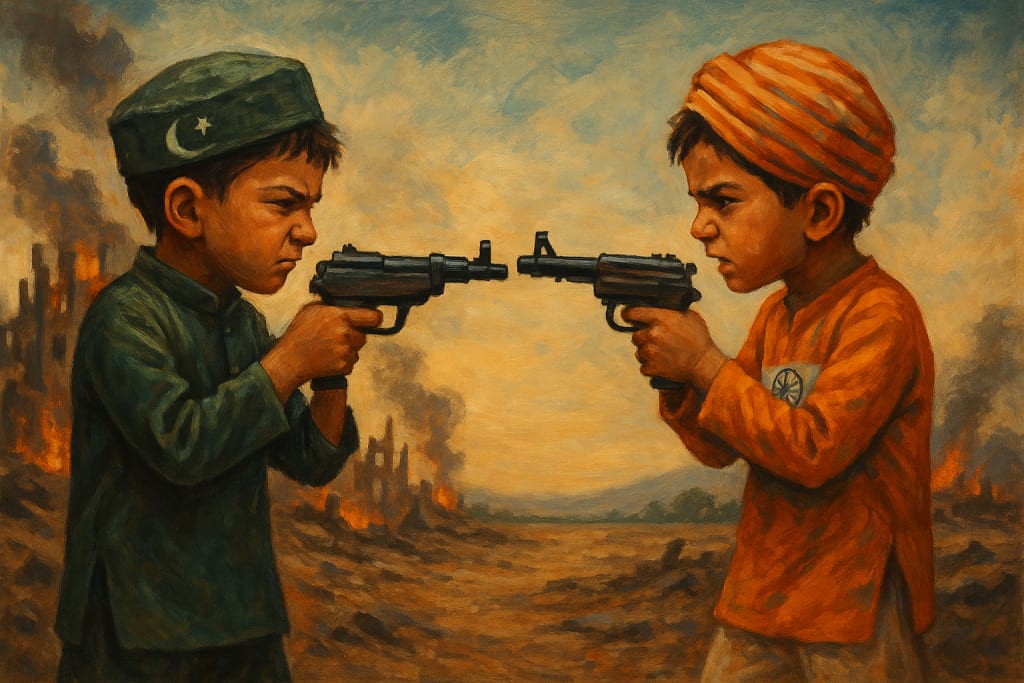
The world watched in horror as tensions between Pakistan and India erupted once again into a full-blown conflict in these recent days. What began as a border skirmish soon escalated into one of the most destructive confrontations in recent South Asian history. While the international media flooded timelines with statistics and breaking updates, the real cost of this war—human lives, fractured communities, economic collapse, and regional instability—remains far more than what any headline can convey.
A Regional Tragedy, Not Just a Bilateral Conflict:-
This recent war wasn’t just about two countries exchanging fire. It shook the entire Asian continent. Pakistan and India, two nuclear-armed neighbors with a deeply intertwined past, share more than just a contested border—they share rivers, culture, history, and millions of families divided by man-made lines. This war reawakened painful memories of past conflicts and widened the emotional and political rift between the people of both nations.
But more than that, the war rippled across Asia. Countries like China, Afghanistan, Iran, and the Gulf states, which maintain economic and diplomatic ties with both nations, were caught in a whirlwind of uncertainty. Refugees began to trickle across borders, markets plunged, and the fear of escalation into a nuclear crisis sent shockwaves through regional security frameworks.
Trade, Development, and the Price of Conflict:-
War is expensive, not only in blood but also in coin. Both Pakistan and India are developing nations with dreams of prosperity, innovation, and global integration. Those dreams now lie partially buried under the rubble of destroyed infrastructure and disrupted economies.
The war brought trade between the two nations to a standstill. Key industries—especially agriculture, textiles, IT services, and cross-border logistics—suffered immense losses. Ports slowed down. Trucks stopped rolling across borders. Factories that depended on raw materials from either side shut down temporarily. South Asia’s fragile economy, already struggling post-pandemic, took another hit.
The entire Asian trade corridor, especially regional initiatives like the China-Pakistan Economic Corridor (CPEC) and India's trade ties with Central Asia, was affected. Foreign investors withdrew or froze their plans, spooked by instability in the subcontinent. The war, though localized, pushed the entire region a step backward in terms of development.
The Human Cost: Stories Beyond Borders:-
Beyond the geopolitical chessboard and trade figures are human beings—mothers waiting for sons who will never return, children growing up in refugee camps, young soldiers following orders, not knowing if they'll see another sunrise. Peace doesn’t make headlines, but its absence leaves scars that generations inherit.
Stories of kindness amidst chaos—Indian and Pakistani doctors saving lives together in makeshift hospitals near the border, families from both sides connecting over WhatsApp before communication blackouts—remind us that the people are not enemies. The real enemy is hatred, fed by decades of mistrust and manipulated narratives.
The Path Forward: Dialogue, Not Destruction:-
It’s time we break the cycle. The solution lies not in retaliation but in reconciliation. Peace talks, demilitarized zones, cultural exchange programs, joint trade initiatives, and mutual respect for sovereignty are essential steps toward lasting peace.
South Asia doesn’t need more martyrs—it needs more mediators. It doesn’t need more weapons—it needs more classrooms, bridges, and hospitals. Regional organizations like SAARC must be revitalized, not sidelined. Neutral international mediators could help restart meaningful dialogue. Youth voices and civil society movements must push for change from the ground up.
Final Thoughts: A Shared Future Awaits:-
History will remember this war not just for its damage but for what we choose to do next. Will we build walls or bridges? As citizens, writers, and human beings, we have a responsibility to advocate for peace, not just in words but in action. Let this article be more than just a report—let it be a call to conscience.
Pakistan and India were once one. They can never go back, but they can choose to go forward—together, in peace.
About the Creator
Zakir Ullah
I am so glad that you are here.
Reader insights
Outstanding
Excellent work. Looking forward to reading more!
Top insights
Compelling and original writing
Creative use of language & vocab
Easy to read and follow
Well-structured & engaging content
Excellent storytelling
Original narrative & well developed characters
Expert insights and opinions
Arguments were carefully researched and presented
Eye opening
Niche topic & fresh perspectives
Heartfelt and relatable
The story invoked strong personal emotions
Masterful proofreading
Zero grammar & spelling mistakes
On-point and relevant
Writing reflected the title & theme
Keep reading
More stories from Zakir Ullah and writers in The Swamp and other communities.
Is the World Preparing for a Third World War?
A Dangerous Time for the World We are living in a time of great uncertainty. Across the world, political tension, war, and hatred are rising. Some experts and ordinary people alike are starting to ask a very serious question: Is the world preparing for a third world war?
By Zakir Ullah7 months ago in The Swamp



Comments (2)
Great
Very Useful