
Trump Declaration of Greenland Framework Deal Met With Scepticism as Doubts Persist
“European leaders and analysts question the credibility of Trump’s claims as sovereignty and diplomacy concerns remain unresolved”

Former US president Donald Trump’s declaration that a “framework deal” on Greenland is within reach has been met with widespread scepticism across Europe and among policy experts, who say the claim lacks clarity, formal backing, and political realism. While Trump has long expressed interest in Greenland’s strategic and economic value, doubts persist over whether any meaningful agreement exists beyond rhetoric.
The comments have reignited debate about Arctic geopolitics, sovereignty, and the future of transatlantic relations at a time when global competition for influence in the polar regions is intensifying.
A Familiar Claim Resurfaces
Trump’s renewed assertion of a Greenland framework deal echoes his controversial remarks during his presidency, when he openly floated the idea of the United States acquiring Greenland. At the time, the proposal was swiftly rejected by Denmark and Greenland’s autonomous government, both of which stressed that the island is not for sale.
This latest declaration, however, suggests a softer framing—one of cooperation rather than acquisition. Yet critics argue that Trump has provided no concrete details about the scope, partners, or legal standing of any such framework, prompting questions about whether the claim reflects actual negotiations or political posturing.
Why Greenland Matters
Greenland holds growing strategic importance due to its location in the Arctic, rich natural resources, and proximity to key shipping routes that are becoming more accessible as ice melts. The island is also home to US military infrastructure, including the Pituffik Space Base (formerly Thule Air Base), which plays a role in missile defense and space surveillance.
In addition, Greenland possesses deposits of rare earth minerals that are crucial for clean energy technologies and defense systems—resources that global powers are increasingly eager to secure. These factors have made Greenland a focal point in broader geopolitical competition involving the US, China, Russia, and European nations.
European and Danish Reactions
Officials and analysts in Denmark and across Europe have responded cautiously to Trump’s remarks. While cooperation with the United States on Arctic security is well established, European observers stress that any framework agreement would require formal diplomatic processes, parliamentary oversight, and the consent of Greenland’s elected leadership.
Danish officials have reiterated that Greenland’s future is a matter for its people to decide, emphasizing respect for sovereignty and international law. Greenland’s government, meanwhile, has consistently prioritized sustainable development, local autonomy, and balanced international partnerships over external pressure.
Lack of Transparency Fuels Doubts
One of the main reasons Trump’s declaration has been met with scepticism is the absence of transparency. No documentation, joint statements, or confirmations from Danish, Greenlandic, or US officials currently in office have emerged to substantiate the existence of a framework deal.
Policy experts note that international agreements—particularly those involving territory, defense, or resources—require extensive negotiation and public disclosure. The lack of such evidence suggests that Trump’s claim may be aspirational rather than operational.
Domestic and Political Context
Trump’s remarks also come amid ongoing political positioning in the United States, where foreign policy narratives often intersect with domestic campaigning. Analysts argue that references to Greenland may be intended to project strength on national security and economic strategy, rather than signal imminent diplomatic developments.
At the same time, the Biden administration has pursued a more traditional diplomatic approach to Arctic affairs, focusing on multilateral cooperation through NATO and Arctic Council frameworks. This contrast further complicates the credibility of claims made outside official policy channels.
Implications for Transatlantic Relations
Although Trump is no longer in office, his statements continue to influence transatlantic discourse. European leaders remain sensitive to rhetoric that could strain alliances or undermine established diplomatic norms.
Experts warn that repeated public claims about territorial or strategic arrangements—without coordination—risk creating uncertainty among allies. At a time when NATO unity is viewed as critical, particularly in response to security challenges in Eastern Europe and the Arctic, mixed signals can weaken collective trust.
Greenland’s Own Priorities
Crucially, Greenland’s leadership has emphasized that international interest must align with the island’s long-term goals. These include economic diversification, climate resilience, and greater self-governance. While cooperation with global partners is welcomed, decisions are expected to be made on Greenland’s terms, not imposed externally.
Public opinion in Greenland has historically opposed any notion of foreign control, making the political feasibility of dramatic shifts in status highly questionable.
What Happens Next
Without formal confirmation or supporting evidence, Trump’s declaration is likely to remain a subject of debate rather than a catalyst for policy change. Observers expect Arctic cooperation to continue through existing diplomatic channels, with a focus on security, climate research, and sustainable development.
Any future agreement involving Greenland would almost certainly require multilateral negotiation, legal scrutiny, and democratic approval, making sudden or unilateral frameworks highly unlikely.
Conclusion
Trump’s claim of a Greenland framework deal has once again placed the Arctic in the geopolitical spotlight, but scepticism remains strong. The lack of detail, official backing, and alignment with established diplomatic processes has led many to question whether the declaration represents reality or rhetoric.
As interest in the Arctic grows, the future of Greenland will continue to be shaped not by bold statements, but by careful diplomacy, respect for sovereignty, and the priorities of its people. Until clear evidence emerges, doubts surrounding the alleged framework deal are likely to persist.
About the Creator
Keep reading
More stories from Aarif Lashari and writers in The Swamp and other communities.
Spain’s Rail Network Under Scrutiny After Second Deadly Crash in Three Days
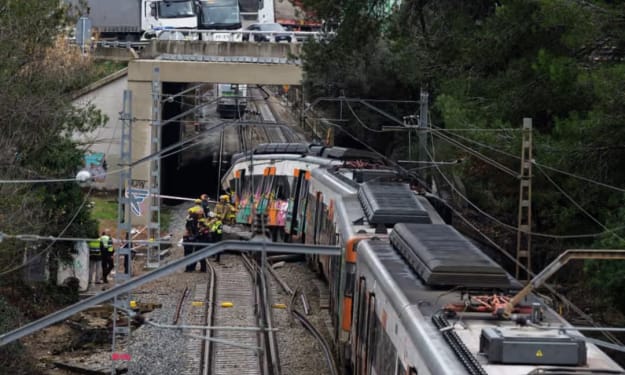
Spain’s rail network is facing intense scrutiny following a second fatal train accident in just three days, raising urgent questions about safety protocols, infrastructure maintenance, and emergency response measures. Authorities are under pressure to investigate the causes of these crashes and prevent further tragedies on one of Europe’s busiest rail systems.
By Aarif Lashari2 months ago in The Swamp
The Forsyth House Fire
Since 1851, Forsyth House has stood on the corner of Union Street and Gordon Street in the heart of Glasgow. Its iconic, or was... because on Sunday 8th of March, 2026, a fire broke out in a small, seemingly un-named shop in the building and tore all that history down. As I write, the rubble is still unsettled and the street is still blocked off. Central Station is quiet on the upper level, and around 30 small businesses have quite literally gone up in smoke.
By S. A. Crawford3 days ago in The Swamp
UAE Evacuates 6,000 Emiratis and Companions from Abroad Under Emergency Plans
The United Arab Emirates has successfully evacuated more than 6,000 Emirati citizens and their companions from multiple countries as part of an emergency repatriation operation triggered by escalating regional instability and security concerns. Officials described the operation as one of the largest coordinated evacuation efforts conducted by the Gulf nation in recent years.
By Fiaz Ahmed a day ago in The Swamp
A System That Isn’t Working Challenge Winners
Systems promise order. They organize behavior, distribute opportunity, and suggest that if everyone follows the rules, things will work. The entries in A System That Isn’t Working look closely at what happens when that promise begins to slip.
By Vocal Curation Team5 days ago in Resources



Comments
There are no comments for this story
Be the first to respond and start the conversation.