
The Casey DeSantis Question Looming Over Florida's Governor Race
As term limits approach for Ron DeSantis, speculation grows about whether Florida’s first lady could become the next political force in the Sunshine State
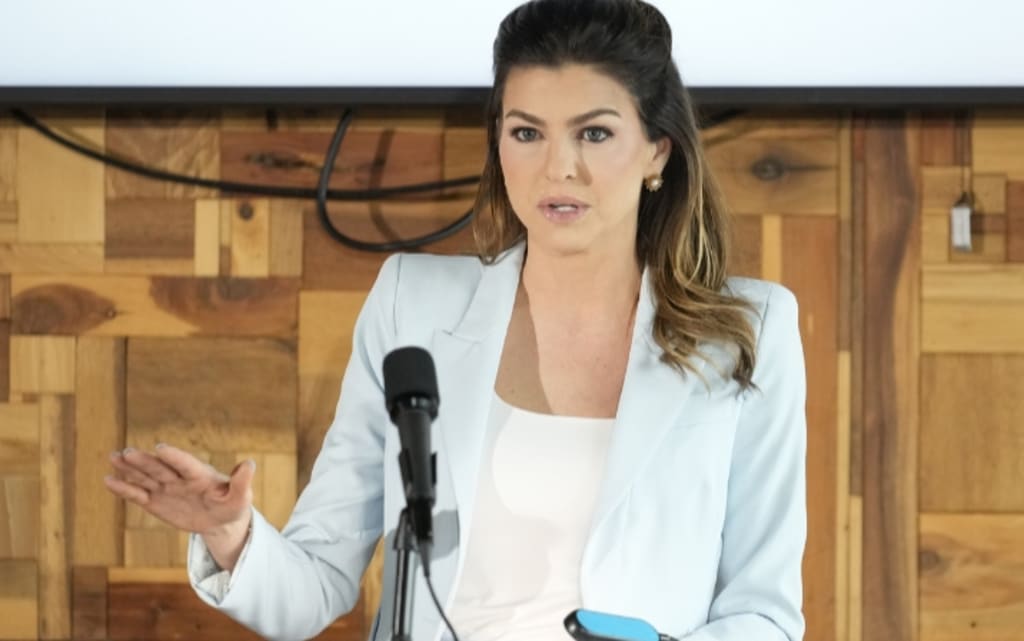
With Florida’s next gubernatorial contest on the horizon, a single question is quietly shaping conversations in Tallahassee and beyond: will Casey DeSantis step into the race?
As Ron DeSantis approaches the end of his term-limited tenure, Florida Republicans face a strategic crossroads. The governor’s political brand remains powerful within the state, but the constitutional clock is ticking. That reality has shifted attention toward the person who has stood beside him throughout his rise — the state’s first lady.
For months, political insiders, donors, and grassroots activists have debated whether Casey DeSantis might transform from influential partner to candidate in her own right.
A Political Partner, Not Just a Spouse
Casey DeSantis has never been a ceremonial presence in the governor’s mansion. A former television journalist with on-camera confidence and message discipline, she has long been considered one of her husband’s closest advisers. Allies often describe her as a strategic sounding board and political asset.
During Ron DeSantis’s presidential campaign, observers noted her visible role on the trail — delivering speeches, energizing supporters, and shaping campaign messaging. Her personal story, including her highly publicized battle with breast cancer and subsequent recovery, deepened her public profile and broadened her appeal.
Through initiatives like “Hope Florida,” a program aimed at connecting residents with community and faith-based support services, she has cultivated a policy portfolio that blends compassion-focused rhetoric with conservative governance themes. That combination has helped define her as more than a background figure.
The Power of Name Recognition
In Florida politics, name recognition carries enormous weight. The DeSantis brand is well known across the state, particularly among Republican voters who supported the governor’s combative approach on cultural and economic issues.
Should Casey DeSantis enter the race, she would begin with a substantial advantage: instant familiarity and an established donor network. Campaign infrastructure, fundraising lists, and political consultants already aligned with her husband could be mobilized quickly.
However, political inheritance is not automatic. Voters may admire a governor yet hesitate to extend that loyalty to a spouse. The transition from influential first lady to independent executive candidate would require careful positioning.
A Strategic Calculation for Republicans
Florida’s Republican Party must weigh its options carefully. The state has trended reliably red in recent election cycles, but internal factions exist. Some party members favor continuity — maintaining the policy direction set under Ron DeSantis. Others may seek a fresh voice or different tone.
Casey DeSantis, if she runs, would likely frame herself as both continuity and evolution: committed to conservative principles while bringing her own leadership style. Her communication background gives her a polished, media-savvy presence that could resonate in a crowded primary.
At the same time, other potential candidates may argue that executive experience — rather than proximity to it — should guide the party’s future.
The Gender Factor in Florida Politics
Florida has elected female governors before, but the dynamics of 2026 (or beyond) would be unique. Casey DeSantis would not run as a political newcomer. She would run as part of an established brand with clear ideological positioning.
Her candidacy could energize certain voter segments, particularly suburban women who connected with her personal story during her cancer treatment. It could also test how Florida Republicans balance traditional conservatism with evolving demographic realities.
Yet gender alone will not define the race. Policy positions on education, economic growth, immigration, and cultural issues will shape voter decisions far more than biography.
The Democratic Response
For Democrats, the possibility of a Casey DeSantis campaign presents both challenge and opportunity. On one hand, her association with the current administration would allow opponents to tie her to every controversial decision made over the past eight years. On the other, her personal narrative and communication style may make direct attacks politically delicate.
Democrats would likely attempt to frame her as an extension of her husband’s administration rather than an independent actor. The key question would be whether voters perceive her as carrying forward the same governing philosophy — or charting her own course.
Governing Versus Campaigning
There is also the matter of experience. While Casey DeSantis has championed initiatives and participated in high-level discussions, she has not held elected office. Transitioning from advocacy and advisory roles to executive leadership would require demonstrating policy fluency and command over complex state systems.
Supporters argue that leadership is not confined to titles. Critics counter that governing the nation’s third-largest state demands direct administrative experience.
If she chooses to run, her campaign would need to strike a careful balance: projecting confidence without appearing entitled to succession.
Timing and Political Climate
Florida’s political climate continues to evolve. Population growth, migration from other states, and economic expansion have reshaped the electorate. National political dynamics will also influence the race. If the Republican brand remains strong statewide, a DeSantis candidacy could benefit. If national headwinds emerge, even well-known names may face resistance.
Much will depend on timing. An early announcement could consolidate donor support but invite prolonged scrutiny. Waiting too long could open space for rivals to define the narrative first.
For now, Casey DeSantis has not formally declared any intention to run. Public statements have emphasized her focus on current initiatives and family life. Yet political speculation rarely fades without resolution.
The Legacy Question
Ultimately, the debate surrounding Casey DeSantis is also about legacy. Ron DeSantis leaves behind a reshaped Florida political landscape marked by assertive conservative policymaking and national prominence.
A candidacy by his wife would represent an attempt — implicit or explicit — to extend that legacy. It would test whether Florida voters are seeking stability in direction or a shift in tone.
Political history offers examples of spouses successfully launching their own careers. It also provides cautionary tales of perceived dynasties facing voter fatigue.
Waiting for the Answer
For now, the “Casey DeSantis question” remains unanswered — but it looms large. Donors whisper. Strategists game out scenarios. Potential rivals watch closely.
If she enters the race, it will instantly become one of the most closely watched gubernatorial contests in the country. If she declines, the vacuum could spark a wide-open Republican primary.
Either way, her influence on Florida politics is undeniable. Whether as first lady, adviser, advocate, or candidate, Casey DeSantis has already shaped the state’s political narrative. The only uncertainty left is whether she intends to write its next chapter herself.
About the Creator
A Gathering of Evil Bosses
“I’m the queen of chin jutting while I smooth my hair, attacking, insulting, and deflecting to protect my appointer.” “Oh, please, Blondi, my hair is curled, highlighted, and longer than yours. I feature television commercials telling immigrants that we will give them a free plane ride home, and if they voluntarily turn themselves in, they will be allowed to legally apply for re-entry. It runs everywhere, and I look good in it! You can’t compete because of your blond hair. Mine is nicer, and my lips are prettier than yours.”
By Andrea Corwin 5 days ago in The Swamp
Exclusive: Riyadh Wants to Replace Israel with Syria for Greece Fibre-Optic Cable Route
Saudi Arabia is pushing for a major revision to a planned undersea fibre-optic cable linking the Middle East with Europe, seeking to reroute the project through Syria instead of Israel, according to regional officials and industry sources familiar with the negotiations. The proposal would connect the cable to Greece, offering a shorter and potentially cheaper digital corridor between Asia and Europe. The project, backed by Saudi investment and supported by several Gulf and European telecom operators, is designed to strengthen data connectivity between the Middle East and Europe while reducing reliance on congested routes through the Red Sea and Egypt. However, Riyadh’s push to bypass Israel reflects broader geopolitical calculations as well as technical and regulatory concerns. Strategic Shift in Routing Under earlier plans, the cable would have passed from the Gulf through Israel and then onward to the Mediterranean before reaching Greece. Saudi officials now argue that routing through Syria would provide greater political control over infrastructure and avoid dependence on a country with which Riyadh does not maintain formal diplomatic relations. A senior regional official said the change was driven by “sovereignty and security considerations” rather than purely commercial factors. “Saudi Arabia wants to ensure that critical digital infrastructure remains under friendly and cooperative jurisdictions,” the official noted. The revised route would cross Saudi territory, enter Syria via Jordan or Iraq, and then continue under the Mediterranean Sea to Greece. Engineers say the route is technically feasible, though it would require new landing stations and regulatory approvals from Damascus and European partners. Syria’s Return to Regional Projects For Syria, the proposal could represent a major economic opportunity and a symbolic step toward reintegration into regional infrastructure networks after years of isolation due to civil war and international sanctions. Syrian authorities have reportedly welcomed the idea, viewing it as a way to generate transit revenue and rebuild damaged telecommunications systems. Telecom analysts say Syria’s geographic position makes it a natural bridge between the Gulf and Europe. “From a purely technical standpoint, Syria offers one of the shortest land corridors to the Mediterranean,” said a regional infrastructure consultant. “The challenge is political risk and long-term stability.” Israel Factor and Regional Politics Israel had been considered a strong candidate for the original route because of its advanced telecom infrastructure and proximity to Europe. But Saudi officials are reluctant to rely on Israeli territory for a project they view as strategically sensitive. Although Saudi Arabia and Israel have cooperated indirectly in security matters, formal diplomatic ties have not been established. The rerouting effort comes amid renewed tensions in the region and shifting alliances following the Gaza war and broader instability in the Middle East. An Israeli industry source said the proposal, if implemented, would be “a missed opportunity for regional digital integration.” “Israel has the infrastructure and experience to handle such a project efficiently,” the source said, adding that excluding Israel could increase both cost and risk. European and Commercial Concerns European partners, including Greek authorities, are said to be cautiously evaluating the Saudi proposal. Greece sees the project as a way to strengthen its role as a digital gateway between Europe and the Middle East, but officials are concerned about the regulatory and security implications of routing through Syria. Brussels has not publicly commented, but diplomats note that European Union sanctions on Syria could complicate financing and insurance for the project. Private telecom companies involved in the consortium are reportedly pressing for guarantees that the route will not expose them to legal or reputational risks. One executive involved in the talks said the consortium is studying multiple options. “We are balancing geopolitics, engineering feasibility, and long-term reliability. This is not just about laying a cable; it’s about creating a stable digital highway for decades.” Saudi Digital Ambitions The fibre-optic project is part of Saudi Arabia’s broader push to become a global data and technology hub under its Vision 2030 economic diversification plan. Riyadh has invested heavily in data centers, cloud services, and international connectivity to attract tech firms and financial institutions. Officials argue that controlling major data routes will enhance national security and reduce dependence on traditional chokepoints such as the Suez Canal. Recent disruptions to Red Sea cables caused by maritime incidents have reinforced Saudi concerns about vulnerability. “Digital infrastructure is now as important as oil pipelines,” said a Saudi technology policy adviser. “Whoever controls the routes controls the future of data trade.” Uncertain Outcome Negotiations over the route are still at an early stage, and no final decision has been made. Industry insiders say pressure from European regulators and commercial partners could yet restore Israel to the plan or result in a hybrid solution with multiple landing points. For now, Riyadh’s push to replace Israel with Syria underscores how geopolitics is reshaping even the most technical infrastructure projects. What was once an engineering decision has become a diplomatic balancing act involving regional rivalries, post-war reconstruction, and Europe’s digital security. As one Western diplomat observed, “This cable is not just about faster internet. It’s about influence, trust, and who sits at the crossroads of tomorrow’s data economy.”
By Fiaz Ahmed 3 days ago in The Swamp




Comments
There are no comments for this story
Be the first to respond and start the conversation.