
Venezuela Operation Is Latest in Long History of U.S. Intervention in Latin America
How America’s latest action in Caracas echoes a century of political and military involvement across Latin America

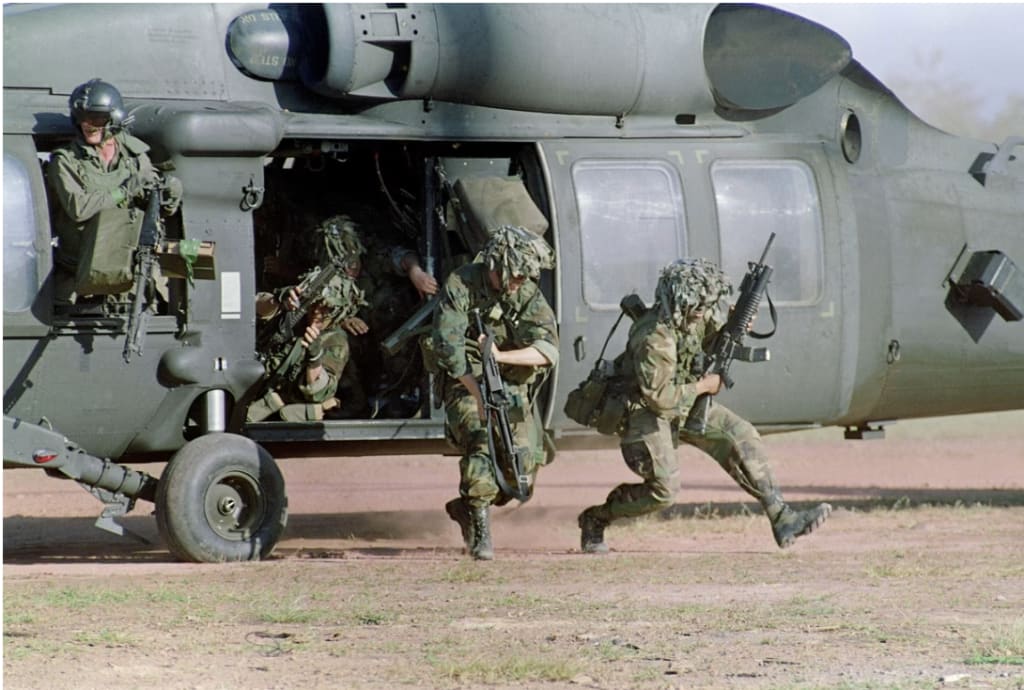
The recent U.S. military operation in Venezuela has sent shockwaves across Latin America and beyond. Described by Washington as a necessary action against corruption, narcotics trafficking, and authoritarian rule, the operation resulted in the arrest of Venezuelan President Nicolás Maduro and marked the most direct American military intervention in the region in decades.
While the Biden-era focus on diplomacy once suggested restraint, the latest operation underscores a familiar reality: U.S. intervention in Latin America is not new. Instead, Venezuela represents the latest chapter in a long and often controversial history of American involvement in the political affairs of its southern neighbors.
A Century of Influence and Intervention
U.S. engagement in Latin America dates back to the Monroe Doctrine of 1823, which warned European powers against interference in the Western Hemisphere. While originally framed as a protective measure, the doctrine eventually evolved into a justification for U.S. dominance in the region.
Throughout the 20th century, Washington repeatedly intervened—politically, economically, and militarily—claiming to defend stability, democracy, or national security. In practice, these actions often prioritized U.S. strategic and economic interests over local sovereignty.
From Central America to the Caribbean, the United States became a powerful external force shaping governments, economies, and conflicts across Latin America.
Cold War Flashpoints
The Cold War era intensified American involvement as fears of communism drove aggressive policies across the region.
In Guatemala (1954), the CIA helped overthrow President Jacobo Árbenz after his land reforms threatened U.S. corporate interests.
In Cuba (1961), the failed Bay of Pigs invasion aimed to topple Fidel Castro’s revolutionary government.
In the Dominican Republic (1965), U.S. troops intervened amid political instability, citing the risk of communist influence.
These actions were often presented as defensive measures, but they left lasting scars—destabilizing nations and fueling distrust toward Washington.
Proxy Wars and Covert Power
During the 1970s and 1980s, U.S. intervention took subtler forms. Intelligence agencies supported right-wing regimes and proxy forces under the banner of anti-communism.
Examples include:
Operation Condor, a coordinated crackdown on leftist movements across South America
Support for the Contras in Nicaragua against the Sandinista government
The 1989 invasion of Panama, which removed General Manuel Noriega and demonstrated Washington’s willingness to use force in the post-Cold War era
These interventions often weakened democratic institutions while entrenching cycles of violence and instability.
The Post-Cold War Shift
After the collapse of the Soviet Union, U.S. justifications for intervention evolved. Instead of communism, Washington focused on:
Drug trafficking
Terrorism
Human rights violations
Military cooperation, sanctions, and political pressure became preferred tools, particularly in fragile states such as Haiti and Honduras.
Venezuela increasingly fell into Washington’s crosshairs as relations deteriorated under Hugo Chávez and later Nicolás Maduro.
Why Venezuela Became a Target
Venezuela’s political and economic crisis has unfolded over more than a decade. Hyperinflation, mass migration, allegations of election fraud, and corruption weakened state institutions and isolated the country internationally.
U.S. officials accused the Maduro government of operating as a narco-state, enabling criminal networks and threatening regional security. Sanctions intensified, diplomatic channels collapsed, and military pressure steadily increased.
By 2025, American naval deployments in the Caribbean and rising rhetoric made it clear that Venezuela was becoming a central focus of U.S. strategy in the hemisphere.
The 2026 Operation: A Turning Point
The 2026 Venezuela operation marked the first direct U.S. military intervention in Latin America since Panama. Airstrikes targeted strategic military sites, followed by special forces operations that resulted in Maduro’s capture.
Washington framed the mission as a necessary step to restore democracy and dismantle criminal networks. U.S. leaders suggested temporary American oversight could stabilize the country and protect its people.
However, many Latin American governments strongly disagreed.
Regional and Global Backlash
Across the region, leaders condemned the operation as a violation of Venezuelan sovereignty and international law. Critics warned that unilateral military action risks destabilizing Latin America and reviving memories of past interventions that caused long-term harm.
For many, the Venezuela operation reinforced fears that powerful nations still feel entitled to decide the fate of smaller states.
A Familiar Debate, Reignited
Supporters argue the U.S. acted where diplomacy failed, confronting authoritarianism and criminal power structures. Critics counter that intervention rarely delivers lasting stability and often deepens resentment.
From Guatemala to Cuba, Nicaragua to Panama, and now Venezuela, the pattern remains contested.
As Venezuela’s future unfolds, one truth is clear: the shadow of U.S. intervention continues to shape Latin America’s political landscape, raising enduring questions about power, sovereignty, and the cost of foreign involvement.
About the Creator
Muhammad Hassan
Muhammad Hassan | Content writer with 2 years of experience crafting engaging articles on world news, current affairs, and trending topics. I simplify complex stories to keep readers informed and connected.
Keep reading
More stories from Muhammad Hassan and writers in The Swamp and other communities.
North Korea Fires Ballistic Missiles, Condemns U.S. Strikes on Venezuela
The world woke up to shocking headlines at the start of 2026. North Korea launched several ballistic missiles while also condemning U.S. military strikes on Venezuela, sending a clear message of defiance toward Washington. These developments have shaken international capitals and are raising serious questions about global stability. Missile Launches: A Bold Statement On January 4, 2026, North Korea fired multiple ballistic missiles from near Pyongyang into waters off its east coast. South Korean military officials confirmed that the missiles traveled about 900 kilometers before landing in the sea. These launches clearly violate United Nations Security Council resolutions that prohibit North Korea from testing ballistic weapons. The timing of these launches was notable. They coincided with South Korean President Lee Jae-Myung’s state visit to China, which focused on nuclear diplomacy and peace talks for the Korean Peninsula. Analysts believe Pyongyang wanted to show not just the U.S., but also China, that it remains a force to be reckoned with and won’t bow to pressure. Sending Messages to Multiple Audiences North Korea’s missile tests are not just about showing off military strength—they carry a layered message. To China: Pyongyang seems to be asserting that it will make independent decisions, even if it risks angering its closest ally. To the United States: The missile tests came right after the U.S. carried out military strikes in Venezuela, which included removing Venezuelan President Nicolás Maduro. For North Korea, this intervention was a stark warning about what they perceive as the U.S.’s willingness to unilaterally intervene in other countries. Pyongyang’s state media called the U.S. strikes “the most serious form of encroachment on sovereignty” and described Washington’s actions as “rogue and brutal.” The North Korean government demanded the international community recognize the “catastrophic consequences” of such interventions. Linking Missile Tests to Political Protest While North Korea didn’t explicitly link the missile launches to the Venezuela operation, the connection is clear to analysts. Historically, Pyongyang views U.S. military interventions as existential threats. Seeing a foreign leader captured and removed by U.S. forces reinforces North Korea’s belief that it needs a strong military deterrent, including nuclear and missile capabilities, to survive. Some experts even argue that the spectacle of Maduro’s swift capture prompted a defensive, show-of-force response from Pyongyang. It’s a reminder that in international politics, symbolic actions—like missile launches—can send as much of a message as direct military strikes. Reactions in the Region The response to North Korea’s missile tests was swift. South Korea convened an emergency security meeting, calling the launches “provocative” and a threat to peace. Japan also condemned the tests, emphasizing the risk they pose to regional security. Meanwhile, global reactions to the U.S. strikes in Venezuela were mixed. Countries like Mexico and Russia strongly criticized Washington, calling the operation a blatant violation of international law. Mexico’s government called it “unlawful,” while Russia demanded clarity on Maduro’s fate. The United States defended its actions, calling the strikes necessary to address corruption and security threats posed by Maduro’s regime. President Donald Trump framed the operation as part of a broader effort to stabilize the region and oversee a transitional period in Venezuela. Implications for Diplomacy and Security These events highlight a major challenge in today’s geopolitics: the clash between great power rivalry and international norms. North Korea’s missile tests and denunciation of the U.S. strike show a regime unwilling to yield to external pressures, especially from Washington. For countries like South Korea and Japan, these developments underscore the persistent threat posed by North Korea’s weapons programs. At the same time, U.S. military actions elsewhere—like in Venezuela—can complicate diplomacy and provoke unintended reactions in other regions. Pyongyang’s rhetoric, including calls for increased weapons production, also suggests it may harden its stance ahead of the upcoming Workers’ Party Congress, where defense strategy will be debated. A Global Flashpoint The combination of missile tests and condemnation of U.S. actions in Venezuela illustrates just how interconnected global security issues have become. Regional events in East Asia and Latin America now have ripple effects worldwide. Actions that might be seen as unilateral or aggressive—whether missile tests or military interventions—can deepen distrust and destabilize international relations. For world leaders, this period is a test: can diplomacy hold firm under such pressures, or are we moving toward more entrenched global rivalries? What Comes Next? As we move further into 2026, all eyes will be on North Korea, the U.S., and the diplomatic channels trying to keep tensions from escalating. The missile tests signal that Pyongyang is prepared to assert its military strength, while U.S. actions in Venezuela suggest Washington is willing to take bold moves to shape the global order. The world now faces a delicate balancing act. Managing these crises will require careful negotiation, strong alliances, and a clear understanding that actions in one part of the globe can have consequences thousands of miles away.
By Muhammad Hassan16 days ago in The Swamp
The Finest in the World: Why the US is Buying Icebreakers from Finland
In a world increasingly defined by shifting geopolitical landscapes and extreme climates, the United States is turning to Finland for a fleet of icebreakers, widely regarded as the finest in the world. This strategic move underscores both the rising importance of the Arctic region and the growing need for advanced maritime technology capable of navigating the icy waters at the top of the globe. Finland’s Icebreaking Legacy Finland has long been a global leader in icebreaker technology. With harsh winters and a northern coastline that stretches into the Arctic Circle, the country has mastered the art of building vessels that can navigate through thick sea ice efficiently and safely. Finnish icebreakers are renowned not just for their raw power, but also for their precision, durability, and technological sophistication. They can cut through ice up to several meters thick, maintain stability in freezing conditions, and even support supply missions in the most remote and hostile environments. This expertise has made Finnish icebreakers a gold standard, sought after by nations that require reliable access to icy waters. While the United States has historically relied on a small fleet of icebreakers, many of these vessels are aging, and the current fleet cannot meet the increasing demands of Arctic operations. By partnering with Finland, the US is gaining access to vessels designed with decades of experience, cutting-edge engineering, and proven operational performance. Strategic Importance of the Arctic The Arctic has emerged as a region of growing strategic importance. Climate change has led to melting ice, opening new maritime routes that were previously impassable for most of the year. This has not only created opportunities for trade but also heightened the need for territorial defense, environmental monitoring, and search-and-rescue operations. The US sees its icebreaker fleet as a key asset in maintaining influence in this rapidly changing region. Having Finnish-built icebreakers allows the United States to expand its operational capabilities. These vessels can escort commercial ships through icy waters, conduct scientific research, and respond to emergencies in the Arctic. The decision to procure icebreakers from Finland is therefore as much about strategic positioning as it is about maritime capability. Technological Edge Finnish icebreakers are equipped with some of the most advanced maritime technology in the world. From hull designs that minimize ice resistance to propulsion systems that combine efficiency with immense power, these vessels are built to perform in conditions that would ground most ships. Many of them also include sophisticated navigation and communication systems, enabling crews to operate safely in regions where conventional navigation is challenging due to ice coverage and limited satellite connectivity. The US will benefit from these technologies, particularly as Arctic operations require not only strength but also precision. Whether escorting supply ships, conducting military exercises, or supporting scientific missions, Finnish icebreakers offer reliability that aging US vessels cannot match. Economic and Diplomatic Considerations Beyond technical superiority, the procurement of icebreakers from Finland also reflects broader economic and diplomatic considerations. By engaging Finnish shipbuilders, the US strengthens its ties with a country that is strategically positioned between the North Atlantic and the Arctic. This cooperation could pave the way for future partnerships in maritime technology, Arctic research, and regional security initiatives. Moreover, the deal highlights the United States’ willingness to invest in specialized, high-quality vessels rather than attempting to build everything domestically. While domestic shipbuilding has its merits, Finland’s decades of expertise provide a shortcut to operational readiness, ensuring that the US maintains a competitive edge in Arctic waters without the delays and costs associated with developing such vessels from scratch. Looking Ahead As the Arctic continues to transform, the importance of icebreakers will only increase. With Finland’s cutting-edge technology at their disposal, the United States is positioning itself to navigate both the literal and geopolitical ice of the north. These vessels are more than ships; they are symbols of preparedness, technological prowess, and strategic foresight. In a region where every meter of ice matters and every decision has global ramifications, having the finest icebreakers in the world is no longer a luxury—it is a necessity. By looking to Finland, the US is ensuring that it remains capable, competitive, and ready for the challenges and opportunities of the Arctic.
By Fiaz Ahmed Brohiabout 12 hours ago in The Swamp



Comments
There are no comments for this story
Be the first to respond and start the conversation.