
US Warns It Could Send Fighter Jets Into Canadian Airspace if F-35 Deal Fails to Proceed
Blunt remarks expose growing tensions over defence readiness, NORAD burden-sharing, and Canada’s prolonged fighter jet procurement delays

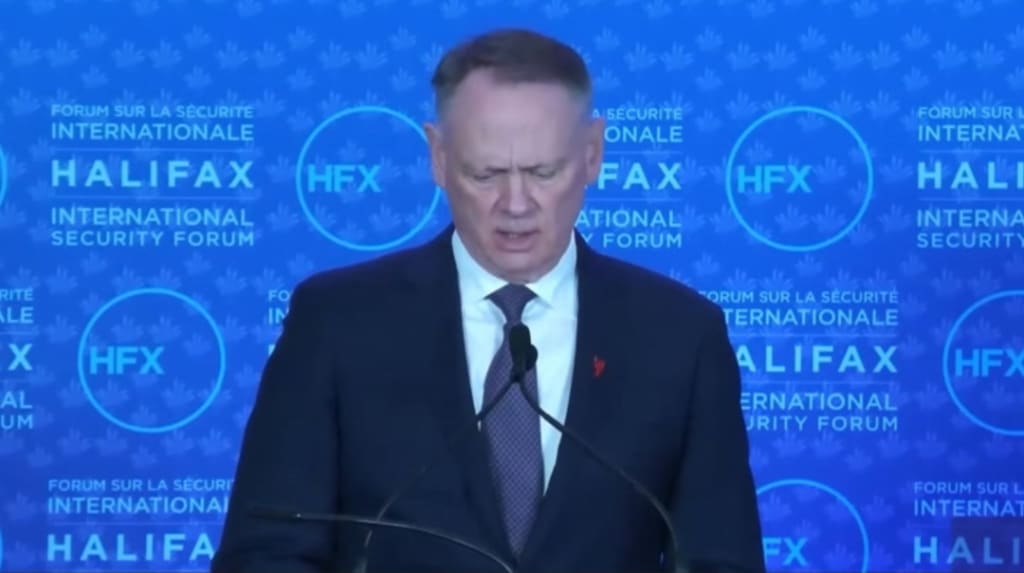
Rarely blunt rhetoric reignites debate over defence sovereignty, NORAD cooperation, and Ottawa’s long-delayed fighter jet decision
---
A warning attributed to US defence officials that American fighter jets could be deployed into Canadian airspace if Canada’s planned F-35 fighter jet deal fails to go through has sparked sharp debate across political, military, and diplomatic circles. While not framed as an ultimatum, the unusually direct message underscores growing frustration in Washington over delays and uncertainty surrounding Canada’s air force modernisation and raises sensitive questions about sovereignty, alliance obligations, and continental defence.
Context: Canada’s long fighter jet saga
Canada has spent more than a decade debating how to replace its aging fleet of CF-18 Hornet fighter jets, which first entered service in the 1980s. Repeated delays, political reversals, and cost concerns have left the Royal Canadian Air Force (RCAF) operating aircraft well beyond their intended lifespan.
After years of uncertainty, Ottawa selected the Lockheed Martin F-35 Lightning II as its preferred next-generation fighter, citing interoperability with allies, stealth capabilities, and compatibility with NORAD and NATO missions. The planned purchase of dozens of aircraft represents one of the largest defence procurements in Canadian history.
However, any sign that the deal could be delayed, scaled back, or revisited has drawn concern from US defence planners, particularly given rising global security tensions and renewed focus on North American air defence.
The warning and what it means
The reported warning — that the US could send its own fighter jets into Canadian airspace if the F-35 deal does not proceed — is less about coercion and more about capability gaps, analysts say. Under the North American Aerospace Defense Command (NORAD), Canada and the US jointly monitor and defend continental airspace. If Canada lacks sufficient modern fighters to meet its obligations, the US would be expected to fill the gap.
“This is not an invasion threat,” said a former NORAD official. “It’s a blunt reminder that if Canada cannot police its own skies, the United States will — because continental defence doesn’t stop at the border.”
Still, the phrasing has raised eyebrows in Ottawa, where defence sovereignty is a politically sensitive issue. While NORAD operations are binational by design, the idea of US jets routinely operating over Canadian territory without equivalent Canadian capability highlights an uncomfortable imbalance.
Rising security pressures
The timing of the warning is significant. North American air defence has taken on renewed urgency due to:
Increased Russian long-range bomber patrols near Arctic and North Atlantic airspace
Growing concerns over hypersonic weapons and cruise missile threats
Heightened US focus on homeland defence amid global geopolitical instability
Modern fighters like the F-35 are seen as central to detecting and responding to advanced threats, especially in the Arctic, where vast distances and harsh conditions demand cutting-edge sensors and interoperability.
US officials have repeatedly stressed that older aircraft struggle to operate effectively alongside newer US platforms, potentially weakening NORAD’s early-warning and response capabilities.
Political reaction in Canada
The warning has triggered mixed reactions within Canada. Defence advocates argue it reinforces the urgency of finalising and fully funding the F-35 program. They say continued delays risk both national security and Canada’s credibility as a US ally.
Opposition critics, however, have pushed back against what they see as pressure tactics, warning that defence procurement decisions should remain sovereign and transparent. Some have revived concerns over the F-35’s lifetime costs, maintenance complexity, and reliance on US-controlled software and supply chains.
“This kind of rhetoric feeds public anxiety and undermines trust,” said one Canadian lawmaker. “Defence cooperation should be based on partnership, not implied threats.”
US perspective: interoperability and burden-sharing
From Washington’s standpoint, the issue is not just Canada’s fleet size but interoperability. The F-35 is rapidly becoming the backbone of allied air forces across NATO and the Indo-Pacific. Operating a different platform could complicate joint missions, logistics, and real-time data sharing.
US defence planners are also increasingly vocal about burden-sharing, urging allies to invest more decisively in modern capabilities rather than relying on American assets as a fallback.
“The message is simple,” said a US defence analyst. “If you want an equal seat at the table in continental defence, you need aircraft that can operate at the same level.”
Sovereignty versus reality
Legally and operationally, NORAD already allows US and Canadian aircraft to operate across borders during joint missions. However, the symbolic weight of US jets stepping in because Canada lacks adequate fighters would be significant.
For many Canadians, the debate goes beyond aircraft. It touches on national identity, Arctic sovereignty, and whether prolonged indecision has quietly eroded Canada’s ability to independently defend its airspace.
What happens next
Ottawa has reaffirmed its commitment to the F-35 program, but timelines and delivery schedules remain under scrutiny. Defence experts warn that any further hesitation could widen capability gaps just as threats to North American airspace are becoming more complex.
At the same time, diplomats on both sides are likely to work to cool rhetoric and refocus attention on cooperation rather than confrontation.
Conclusion
The US warning about deploying fighter jets into Canadian airspace if the F-35 deal falters may be blunt, but it reflects deeper strategic realities. In an era of rapidly evolving threats, continental defence depends on speed, interoperability, and political resolve.
For Canada, the message is clear: delays carry consequences — not just in procurement spreadsheets, but in how the country defends its skies and asserts its role as an equal partner in North American security.
About the Creator
Keep reading
More stories from Salaar Jamali and writers in The Swamp and other communities.
“Brothers Forever”: UAE Announces Week-Long Nationwide Festival Celebrating Decades of Ties with Kuwait
From shared history and Gulf solidarity to culture, trade and people-to-people bonds, the UAE’s nationwide celebration underscores a relationship built on trust, kinship and a shared future.
By Salaar Jamalia day ago in The Swamp
Company Fined £433,000 After Machine Crash Leaves Worker with Life-Changing Injuries
A packaging firm has been fined a substantial £433,333 after a worker at its Scottish facility suffered a severe skull fracture and permanent life-altering injuries when a heavy machine fell on him in an incident that authorities described as “entirely preventable.” �
By Ayesha Lashari6 days ago in The Swamp




Comments (2)
Ok. So if the US DOES do that. Then we sell our current F 35 to Russia, China, North Korea and Iran.
WOW😊📚🔥🌟💡 📝✨🚀🎯💯 🎉📖💥🔍⭐ 🎊📄💪📈🏆 😄📚⚡🔑💎