
US vs Iran’: How Advanced Is the USS Abraham Lincoln’s Drone Interception System?
Carrier strike group’s layered defenses rely on fighters, missiles, and emerging counter-drone technologies as Iranian UAV threats grow.

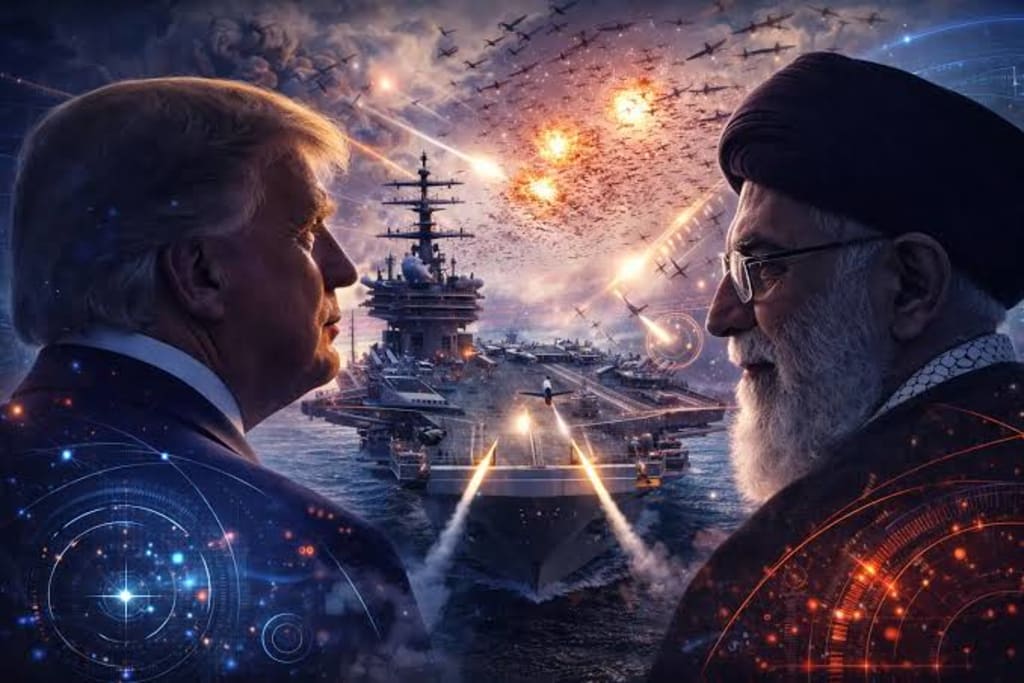
As tensions between the United States and Iran escalate over regional security and nuclear negotiations, attention has focused on the capabilities of U.S. military assets — particularly the aircraft carrier USS Abraham Lincoln — to detect and counter increasingly sophisticated drone threats. Recent incidents in the Arabian Sea have highlighted both the strengths and challenges of current U.S. defensive systems in protecting high-value naval vessels from unmanned aerial vehicles (UAVs) and low-cost swarm attacks.
The War Zone +1
A Real-World Test
On 4 February 2026, U.S. Central Command reported that an Iranian drone approached the Abraham Lincoln carrier strike group before being shot down by an F-35C fighter jet launched from the carrier’s air wing. The incident — described by U.S. officials as a self-defense action — underscores the current reliance on aircraft and conventional missile systems to defeat airborne threats in open water.
The War Zone +1
The drone, identified in open-source reporting as a †Shahed-type UAV, appears to have been on a reconnaissance or potentially hostile trajectory toward the carrier group. Iranian forces later claimed the drone was on a “routine” mission
Layered Defense: Beyond the F-35
The Lincoln’s best-known defensive measure against airborne threats is its carrier air wing, consisting of stealth fighters (F-35Cs), strike aircraft, and early-warning platforms that provide both offensive and defensive capabilities. These aircraft can patrol wide areas around the strike group, extend radar coverage, and intercept aerial threats at long ranges.
The Times of India
However, carriers do not operate in isolation. They are accompanied by a multi-layered protective network that includes escorts such as guided-missile destroyers and cruisers equipped with their own anti-air systems. These ships — typically Arleigh Burke-class destroyers — carry systems like:
RIM-7 Evolved Sea Sparrow Missiles (ESSM) for short-to-medium range defense;
Standard Missiles (SM-2/SM-6) for medium-long-range air defense;
Phalanx Close-In Weapon System (CIWS) for last-ditch point defense;
(*Philips Sea Sparrow and CIWS details are part of typical carrier group defenses.)
The Aegis Combat System aboard escort ships allows integrative radar tracking, coordinated engagement, and layered protection that extends far beyond the carrier’s own systems. These combined assets are designed to detect, track, and destroy threats before they close on the carrier strike group.
Emerging Counter-Drone Technology
While traditional missile and fighter responses remain central, the U.S. Navy is actively developing more specialized counter–unmanned aerial systems (C-UAS) aimed at low-cost threats such as drones. Research efforts include:
Directed energy weapons (lasers) — prototypes like the High Energy Laser With Integrated Optical Dazzler and Surveillance (HELIOS) have been tested on other U.S. Navy ships and offer the promise of low-cost per shot against small UAVs, small boats, and some missile threats.
Marine Insight
Hypervelocity Projectiles (HVP) — guided rounds that can be fired from existing naval guns and provide a more cost-effective interception layer than expensive interceptor missiles, especially against drones and small unmanned threats.
National Security Journal
These systems reflect a broader effort within the U.S. Department of Defense to improve counter-drone defenses across all branches, accelerating deployment timelines and integrating new technologies into existing platforms.
DefenseScoop
The Challenge of Drone Swarms
Despite this technological progress, experts warn that rapid “saturation attacks” involving large numbers of inexpensive drones remain a key concern. Analysts argue that even advanced defenses can be strained if dozens or hundreds of Unmanned Aerial Vehicles arrive simultaneously — a tactic that Iran and allied groups could adopt based on swarm tactics seen elsewhere.
A layered defense approach — relying on aircraft, missiles, and emerging tech — increases the probability of intercept, but no system is entirely foolproof. Modern military strategy acknowledges that asymmetric threats such as drone swarms require a mix of kinetic, electronic, and directed-energy responses.
Strategic Implications
The Abraham Lincoln’s current engagements demonstrate that U.S. naval forces possess robust defensive measures capable of reacting to individual aerial threats. But as UAV technology proliferates and adversaries experiment with swarm and loitering attack methods, the U.S. Navy’s counter-drone architecture must adapt quickly.
The incident in the Arabian Sea illustrates both the capabilities and limitations of current systems. While traditional interceptors like fighter jets remain essential, future conflicts may hinge on how effectively carriers and their escorts integrate next-generation defenses against a new era of unmanned threats.
Amazon Web Services, Inc.
About the Creator
Fiaz Ahmed
I am Fiaz Ahmed. I am a passionate writer. I love covering trending topics and breaking news. With a sharp eye for what’s happening around the world, and crafts timely and engaging stories that keep readers informed and updated.
Keep reading
More stories from Fiaz Ahmed and writers in The Swamp and other communities.
🧭 Inside Iran’s Preparation for War and Plans for Survival
As tensions with the United States and its allies rise, the Iran is not only negotiating on the diplomatic front but also quietly preparing for the possibility of a long, drawn-out conflict. Iranian leaders, military officials, and strategic planners appear to be reinforcing both their defensive readiness and survival strategies, balancing threats from war with efforts to maintain national stability. Heightened Security Posture Amid Diplomatic Standoff According to defense reporting, the Iranian regime has been adjusting its military posture as talks with Washington falter and ultimatums are issued. Despite ongoing nuclear negotiations — including plans to draft a counterproposal — Tehran is simultaneously preparing for the possibility that diplomacy fails and hostilities break out. Sources say Iran’s strategic focus includes reinforcing its deterrence capabilities and planning for a protracted conflict if necessary. Officials in Tehran believe that a show of strength may increase their leverage at the negotiating table and decrease the likelihood of a successful punitive strike by external powers. Military Strategy and Defense Upgrades Iran’s leaders emphasize that they are prepared to defend their territory and interests but have repeatedly stated they do not intend to initiate a war. In speeches to military personnel, senior commanders stress defensive readiness while calling for regional stability. They assert that Iran has boosted its deterrent power, including improvements in ballistic missile capabilities, to ensure it can respond forcefully to aggression The ballistic-missile program is central to Tehran’s defense strategy. It remains the largest in the Middle East and serves as a pillar of deterrence, designed to offset conventional superiority by adversaries. The Iranian leadership calculates that a credible missile threat raises the costs of any potential attack on Iranian soil. Learning from Recent Conflicts Iran’s experience in the June 2025 “12-day war” with Israel and the U.S. has informed its strategic adjustments. Lessons from that conflict — particularly the vulnerability of fixed radar installations and the necessity of mobility and redundancy — are shaping modernization efforts across the Iranian military. New radar units, mobile air-defense deployments, and diversified surveillance systems are being prioritized to improve resilience and complicate potential air attacks by adversaries. The state has reportedly begun focusing on mobile radar units capable of rapid redeployment, use of artificial intelligence to integrate early warning systems, and expanded electronic warfare capabilities. These moves reflect a broader effort to create a more adaptable and survivable defense architecture. Missile Production and Force Expansion Even after Iran lost a significant portion of its missile launcher inventory during past conflicts, reports indicate that Tehran continues to scale up production. Analysts say Iran is producing hundreds of ballistic missiles per month, with a range of capabilities that could overwhelm regional air defenses. This sustained output underscores Tehran’s strategy of building quantity and dispersion alongside quality, making it harder for an opponent to suppress missile forces quickly. Proxy Mobilization and Regional Networks Another key element of Iran’s survival plan is the activation and coordination of its regional allied networks. Proxy groups and allied militias in Iraq, Lebanon, Yemen, and Syria have been mobilized to offer strategic depth and complicate any direct confrontation. This regional network can provide asymmetric pressure on adversaries and act as a deterrent by threatening broader escalation if Iran is attacked. Balancing War Preparation with Diplomacy Despite strong rhetoric and military readiness, Iranian diplomats continue to participate in negotiations. Officials have signaled they prefer a diplomatic solution, reiterating that Iran’s nuclear program doesn’t have a military purpose and that a deal is still attainable. The government maintains that constructive dialogue remains preferable to conflict, even as it prepares for worst-case scenarios. Survival Strategies Beyond the Battlefield Preparations for conflict are not limited to military measures. Iran appears to be reinforcing internal control mechanisms — including digital isolation strategies — to reduce the impact of outside influence and maintain resilience in the face of potential external pressure. Long-term plans include tightening control over internet infrastructure to manage information flows and ensure communications remain intact during crises. Looking Ahead: A Calculus of Caution Iran’s dual track of negotiation and preparation reflects a nuanced approach to survival in an unpredictable geopolitical environment. By reinforcing its defense infrastructure, upgrading missile and radar capabilities, mobilizing regional proxies, and enhancing internal security, Tehran is positioning itself to withstand external pressure while leaving room for diplomatic breakthroughs. Whether these preparations deter military action or simply postpone confrontation remains uncertain — but they underscore a comprehensive strategy aimed at ensuring Iran’s survival even in the face of war.
By Fiaz Ahmed a day ago in The Swamp
A Gathering of Evil Bosses
“I’m the queen of chin jutting while I smooth my hair, attacking, insulting, and deflecting to protect my appointer.” “Oh, please, Blondi, my hair is curled, highlighted, and longer than yours. I feature television commercials telling immigrants that we will give them a free plane ride home, and if they voluntarily turn themselves in, they will be allowed to legally apply for re-entry. It runs everywhere, and I look good in it! You can’t compete because of your blond hair. Mine is nicer, and my lips are prettier than yours.”
By Andrea Corwin 5 days ago in The Swamp
Boundless
A geographical map could take you there. To the places I've been, to the sights I've seen, to the landscapes I've climbed. But no compass could point you in the direction of my memories. To the experiences I've lived, to the happiness I've felt, to the wonder I've held so close to my heart.
By Alyssa Mussoabout 17 hours ago in Writers



Comments
There are no comments for this story
Be the first to respond and start the conversation.