
US talk of Greenland grab already damaging NATO
"Trump’s Greenland remarks spark diplomatic friction, revealing cracks in transatlantic trust and NATO cohesion"

The United States’ flirtation with the idea of acquiring Greenland has sparked alarm in Europe and is already causing diplomatic ripples within NATO. What initially seemed like a quirky proposal by former President Donald Trump has evolved into a serious geopolitical concern, raising questions about transatlantic trust, alliance cohesion, and the future of global security arrangements.
Greenland: More Than Just Ice
Greenland, the world’s largest island, is rich in natural resources, strategically located, and home to a small but politically significant population. Its vast ice sheets are melting due to climate change, exposing minerals, rare earth elements, and potential oil and gas reserves. Moreover, Greenland’s geographic position is crucial for Arctic defense and surveillance, providing the US and its allies with a strategic vantage point over the North Atlantic.
Trump’s repeated comments about buying Greenland, though framed in seemingly offhand terms, immediately drew skepticism and concern in Europe. Denmark, which governs Greenland as an autonomous territory, firmly rejected the notion, describing it as “absurd.” Yet, the diplomatic shockwaves were already felt within NATO, the alliance that has underpinned European security for more than seven decades.
Eroding Trust Among Allies
Alliances are built on trust and predictability, and NATO thrives on collective security agreements and coordinated strategies. Europe’s political leaders, particularly in Denmark and other Nordic nations, viewed the US comments as a sign of unpredictability and unilateralism. “When a major ally publicly discusses acquiring part of another member’s territory, it undermines the very principles NATO relies on,” notes Dr. Ingrid Lykke, a political analyst specializing in transatlantic relations.
The Greenland episode is emblematic of a broader unease in Europe about America’s foreign policy under Trump. Reports and studies indicate that the US was increasingly prioritizing short-term economic gains and domestic political considerations over collective security and long-standing commitments. This trend created uncertainty among NATO members, prompting discussions about the alliance’s strategic autonomy and Europe’s ability to safeguard its own security without relying solely on Washington.
Economic and Military Implications
Beyond the political symbolism, Greenland’s strategic location has real-world military implications. The island hosts key US military installations, including Thule Air Base, which monitors missile launches and maintains early-warning capabilities for both North America and Europe. Any suggestion that Greenland could change hands—or that the US might assert more direct control—raises serious operational questions about NATO’s defensive posture.
Economically, Greenland is poised to become increasingly important due to its untapped natural resources. Mining and energy projects in the region are likely to expand, making it a significant player in global markets. A shift in control or influence could give the US leverage over European economic interests, further complicating transatlantic relations.
The Public and Political Reaction in Europe
European media and policymakers have treated the Greenland saga as more than a humorous anecdote. Danish officials expressed concern over what they perceive as an American disregard for European sovereignty. Other European nations, from France to Germany, quietly questioned the reliability of the US as a security partner. Public opinion also shifted; surveys indicate a growing perception in Europe that the US might not always act as a predictable or cooperative ally.
The Greenland incident has fed broader debates within NATO about the need for strategic independence. European defense initiatives, including joint EU military projects and enhanced regional cooperation, are partly motivated by concerns about the US’s willingness to honor its commitments under all circumstances.
A Lesson for Diplomacy
The Greenland episode underscores how statements—even seemingly offhand remarks—by a major world power can have immediate and lasting diplomatic effects. It highlights the importance of clear communication, mutual respect, and understanding among allies. For NATO, the lesson is stark: unpredictability from one member can ripple across the alliance, prompting questions about cohesion and the credibility of collective defense commitments.
Experts suggest that this is not just about Greenland, but a symbol of a deeper challenge facing NATO. “Europe must prepare for contingencies where the US acts in its own interest, sometimes to the detriment of the alliance,” says Dr. Lykke. “Strategic planning cannot assume unconditional American support.”
Conclusion
While Greenland itself is unlikely to be bought, the conversation surrounding it has already had tangible effects on NATO and European-American relations. Trust between allies is fragile, and public talk of acquiring territory—even as a hypothetical—can erode that trust.
The US’s Greenland rhetoric illustrates a broader truth about modern geopolitics: alliances require predictability, transparency, and respect for mutual sovereignty. NATO remains a cornerstone of European security, but the Greenland episode serves as a cautionary tale of how even seemingly whimsical ideas can disrupt decades of diplomatic stability.
For Europe, the challenge is clear: maintain strong ties with the US while simultaneously preparing for a future in which strategic autonomy is not merely desirable, but necessary. Greenland may be a frozen landmass, but the political thaw it triggered across Europe is anything but.
About the Creator
Keep reading
More stories from Fiazahmedbrohi and writers in The Swamp and other communities.
France’s Macron warns US under Trump is ‘turning away’ from allies – Europe
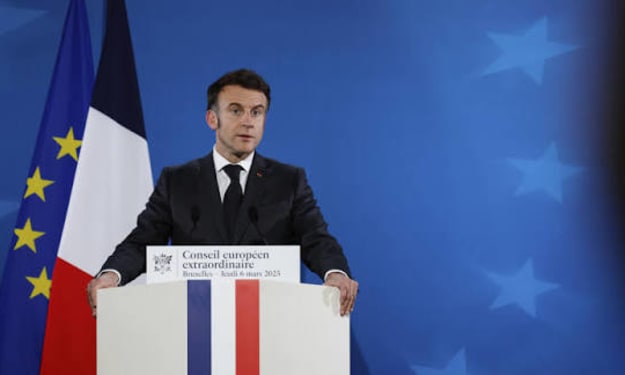
French President Emmanuel Macron has issued a stark warning about the state of transatlantic relations, suggesting that under Donald Trump’s leadership, the United States is “turning away” from its traditional allies in Europe. Macron’s comments, coming amid growing geopolitical uncertainties, have ignited debate across the continent about the reliability of the US as a strategic partner and the need for Europe to reassess its foreign policy priorities. A Wake-Up Call for Europe Macron’s remarks follow a series of studies and reports conducted by European think tanks and policy institutes, which indicate that America’s commitment to NATO and multilateral agreements has weakened during the Trump era. These studies emphasize that the US is increasingly prioritizing domestic interests and transactional diplomacy over the long-term security and political cohesion of its allies. “In the past, Europe could rely on the United States to provide strategic stability and deterrence,” Macron stated during a press briefing. “Today, we see a shift. The United States is focusing inward, and Europe must understand the implications of this transformation.” Experts interpret Macron’s warning not merely as political rhetoric but as a reflection of a deeper structural change in international relations. The studies he references suggest that Europe faces potential vulnerabilities in defense, trade, and global governance if it continues to depend on Washington uncritically. The Evidence Behind the Warning European studies highlight several key indicators of America’s perceived withdrawal from its traditional alliances. These include delays in NATO funding commitments, trade disputes with European nations, and skepticism toward joint international agreements, such as climate accords and multilateral security initiatives. The research also points to a growing sentiment within European populations that the United States may no longer serve as a reliable guarantor of regional security. Dr. Helena Schmidt, a senior researcher at the European Policy Institute, explains: “Our data show that European policymakers are increasingly aware that the US may not intervene militarily in Europe if its interests are not directly threatened. This has significant implications for defense planning and the strategic autonomy of the European Union.” Implications for NATO and European Defense Macron’s warning comes at a time when NATO faces questions about burden-sharing and readiness in the face of global threats, including the ongoing tensions with Russia and instability in the Middle East. While the US remains a central force within the alliance, its perceived retreat from multilateral commitments has prompted European leaders to discuss measures for strengthening their own defense capabilities. France, under Macron, has advocated for increased European strategic autonomy, including greater investment in domestic defense industries and collaborative military initiatives with other EU member states. This approach aims to ensure that Europe can act independently if US support is delayed or unavailable in a crisis. Economic and Political Dimensions Beyond security, Macron’s comments touch on economic and political concerns. Studies show that the Trump administration’s trade policies, including tariffs on European goods, have strained relations and created uncertainty for European markets. Similarly, the US’s ambivalence toward international climate agreements and human rights conventions signals a shift away from shared global governance frameworks. European economists warn that continued reliance on a US-led international order could limit Europe’s economic resilience, particularly in sectors such as energy, technology, and manufacturing. Macron’s call for vigilance underscores the need for diversification of trade partners and strategic alliances beyond traditional US ties. A Call for European Unity Macron’s warning has also fueled broader discussions about the need for a more unified European foreign policy. Some policymakers argue that Europe must speak with a single voice in international forums, coordinate its defense strategies, and reduce dependence on US military and economic support. “The message is clear,” says political analyst Jean-Luc Fournier. “Europe cannot assume that the United States will always act in our interest. Strategic autonomy is no longer an abstract idea—it is a necessity if Europe wants to maintain security, influence, and stability in the 21st century.” Looking Forward Macron’s comments and the supporting European studies reflect a moment of reckoning for transatlantic relations. While the US continues to be an indispensable partner in many areas, Europe is increasingly aware that it must prepare for scenarios in which American support is limited or conditional. For Macron and other European leaders, the challenge is balancing continued cooperation with the United States while simultaneously strengthening Europe’s own capacities. Whether through defense, diplomacy, or economic policy, the continent’s response to these shifts may define its role in global affairs for decades to come. Conclusion President Macron’s warning that the US under Trump is “turning away” from its allies serves as both a caution and a call to action for Europe. Supported by research and studies highlighting changing transatlantic dynamics, his statement underscores the need for strategic reassessment, investment in European autonomy, and a more robust approach to international partnerships. As Europe navigates this uncertain geopolitical landscape, the relationship with the United States remains critical, but it is no longer guaranteed. Macron’s message resonates as a reminder that alliances must be maintained through mutual commitment and foresight, not assumptions about past loyalties.
By Fiazahmedbrohi 3 days ago in The Swamp
MPs Will Vote on Any Deployment of UK Troops to Ukraine, Says Keir Starmer
UK Prime Minister Keir Starmer has pledged that Members of Parliament will vote on any potential deployment of British troops to Ukraine, marking a significant statement about democratic oversight during one of Europe’s most sensitive security crises.
By Aarif Lashari3 days ago in The Swamp


Comments
There are no comments for this story
Be the first to respond and start the conversation.