
US Storm Leaves 230,000 Without Power, Forces Thousands of Flight Cancellations
Severe winter weather disrupts power, travel, and daily life across large parts of the country


A powerful winter storm swept across large parts of the United States, leaving more than 230,000 people without electricity and causing thousands of flight cancellations. The storm brought a dangerous mix of heavy snow, freezing rain, strong winds, and icy temperatures, disrupting daily life for millions and straining emergency services across several states.
From grounded airplanes to darkened homes, the storm highlighted how vulnerable modern infrastructure remains when extreme weather strikes.
Widespread Power Outages Leave Communities in the Dark
One of the most immediate impacts of the storm was the massive loss of electricity. Power lines snapped under the weight of ice, trees toppled onto cables, and high winds damaged substations. Utility companies reported outages across multiple regions, especially in the Midwest, Northeast, and parts of the South.
For many families, the power loss meant more than inconvenience. Homes quickly grew cold as heating systems shut down, forcing some residents to rely on generators, fireplaces, or emergency shelters. Hospitals and nursing homes switched to backup power systems to ensure patient safety, while local authorities urged residents to conserve energy where possible.
Utility crews worked around the clock in hazardous conditions, often struggling to reach damaged lines due to blocked roads and ongoing snowfall.
Air Travel Grinds to a Halt
Airports across the country faced chaos as icy runways and poor visibility made flying unsafe. Major hubs reported thousands of canceled and delayed flights, stranding travelers and creating ripple effects across the national air travel network.
Passengers found themselves sleeping in terminals, rebooking flights days later, or scrambling for alternative transportation. Airlines cited safety concerns as crews battled freezing conditions, aircraft de-icing delays, and staffing challenges caused by the storm.
Even travelers in regions not directly affected felt the impact, as grounded planes and displaced crews disrupted schedules nationwide.
Dangerous Road Conditions and Emergency Responses
Road travel proved equally hazardous. Snow-covered highways, black ice, and near-zero visibility led to numerous accidents and vehicle pileups. State authorities issued travel advisories, urging drivers to stay off the roads unless absolutely necessary.
Emergency responders faced difficult conditions as they worked to rescue stranded motorists and respond to weather-related incidents. In some areas, snowplows struggled to keep up with rapidly accumulating snow, while freezing rain turned roads into skating rinks.
Schools, government offices, and businesses closed in anticipation of worsening conditions, helping to reduce traffic but also disrupting daily routines.
Economic Impact of the Storm
Beyond the immediate safety concerns, the storm delivered a significant economic blow. Flight cancellations cost airlines millions in lost revenue, refunds, and operational expenses. Retail businesses saw reduced foot traffic, while supply chains faced delays due to blocked transportation routes.
Hourly workers, especially in service industries, were among the hardest hit, as missed shifts meant lost income. Power outages also forced some businesses to close temporarily, compounding financial losses.
Insurance companies are expected to receive a surge of claims related to property damage, vehicle accidents, and business interruptions in the storm’s aftermath.
Extreme Weather Becoming More Common
Meteorologists note that storms of this scale are becoming more frequent and intense. Rapid temperature changes, stronger jet streams, and shifting weather patterns have contributed to increasingly unpredictable winter systems.
This storm combined several dangerous elements at once—snow, ice, wind, and cold—making it particularly destructive. Experts warn that such compound weather events are harder to manage and place greater stress on aging infrastructure.
Communities are being urged to invest in more resilient power grids, improved emergency planning, and better public communication to handle future storms more effectively.
How Communities Are Coping and Recovering
Despite the challenges, many communities showed resilience. Emergency shelters opened for those without heat, neighbors checked on elderly residents, and local volunteers helped clear driveways and distribute supplies.
Utility companies provided regular updates, while state officials coordinated with federal agencies to deploy resources where needed. As weather conditions slowly improved, restoration efforts accelerated, bringing power back to thousands of homes.
Still, officials cautioned that full recovery would take time, especially in areas with extensive infrastructure damage.
Lessons for the Future
The storm serves as a reminder of the importance of preparedness. Authorities continue to emphasize the need for emergency kits, backup heating options, and clear communication plans during severe weather events.
For travelers, the storm reinforced the value of flexible travel plans and monitoring weather alerts. For policymakers, it raised urgent questions about infrastructure investment and climate resilience.
As the US faces an uncertain weather future, storms like this one highlight the need for long-term planning to protect lives, livelihoods, and essential services.
Final Thoughts
The massive storm that left 230,000 people without power and grounded thousands of flights was more than a temporary disruption—it was a wake-up call. While recovery efforts continue, the event underscores how deeply weather can affect modern society and why preparation and resilience are more important than ever.
About the Creator
Fiaz Ahmed
I am Fiaz Ahmed. I am a passionate writer. I love covering trending topics and breaking news. With a sharp eye for what’s happening around the world, and crafts timely and engaging stories that keep readers informed and updated.
Keep reading
More stories from Fiaz Ahmed and writers in The Swamp and other communities.
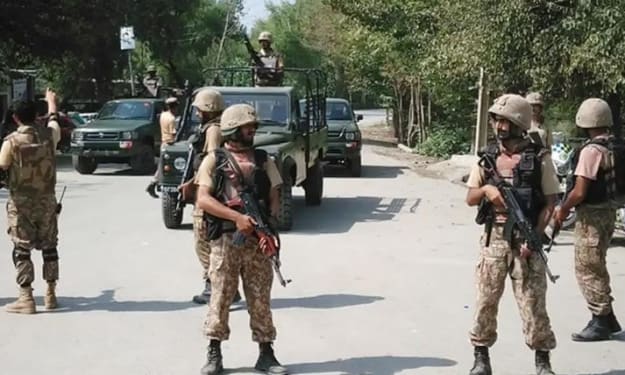
Security Forces Kill 3 Terrorists in Balochistan’s Panjgur During Intelligence-Based Operation: ISPR
A targeted operation highlights ongoing security challenges and counterterrorism efforts in Pakistan’s southwest Pakistan’s security forces killed three terrorists during an intelligence-based operation (IBO) in Panjgur district of Balochistan, according to a statement released by the Inter-Services Public Relations (ISPR). The operation was carried out following credible intelligence regarding the presence of militants involved in attacks against security personnel and civilians. The incident underscores the persistent security challenges in Balochistan and the continued efforts by law enforcement agencies to curb militancy and restore stability in the region. Details of the Intelligence-Based Operation According to ISPR, the operation was launched after security forces received specific intelligence about terrorist activity in the area. Acting on this information, troops moved into Panjgur and conducted a targeted search operation. During the operation, security personnel encountered armed resistance. An exchange of fire followed, resulting in the death of three terrorists. ISPR stated that the militants were actively involved in terrorist activities, including attacks on security forces and acts aimed at disrupting peace in the region. Weapons, ammunition, and other materials were recovered from the site, indicating the group’s operational capability. Importance of Intelligence-Based Operations Intelligence-based operations have become a central element of Pakistan’s counterterrorism strategy. Unlike large-scale military actions, IBOs rely on precise intelligence and limited troop movement, reducing the risk to civilians while targeting specific threats. Security officials say these operations: Minimize collateral damage Disrupt militant networks before attacks occur Strengthen public confidence in law enforcement The Panjgur operation reflects this approach, focusing on accuracy rather than broad force. Security Situation in Balochistan Balochistan, Pakistan’s largest province by area, has faced security and insurgency-related challenges for years. Its strategic location, bordering Iran and Afghanistan, and its vast, sparsely populated terrain make security operations complex. Militant groups have occasionally targeted: Security personnel Infrastructure projects Local officials In response, the government has increased coordination between military, paramilitary, and intelligence agencies to address threats more effectively. Role of ISPR and Transparency ISPR regularly issues statements following counterterrorism operations to inform the public and maintain transparency. These updates serve several purposes: Providing verified information Countering misinformation Reassuring citizens about ongoing security efforts By confirming the Panjgur operation, ISPR emphasized that security forces remain alert and committed to safeguarding the country. Civilian Safety and Local Impact Authorities stressed that civilian safety remained a priority during the operation. No civilian casualties were reported, and forces secured the area after the encounter to prevent any residual threats. Local officials worked with security teams to restore normalcy and reassure residents. Such coordination is essential in maintaining trust between communities and law enforcement, particularly in regions affected by prolonged instability. Community engagement programs have also been expanded in recent years to address underlying issues and prevent radicalization. Counterterrorism Beyond Military Action While security operations are crucial, experts note that long-term stability in Balochistan requires more than military measures. Development initiatives, improved governance, and social inclusion are often cited as key factors in addressing the root causes of unrest. The government has highlighted efforts in: Infrastructure development Education and healthcare access Employment opportunities Officials argue that combining security measures with socio-economic progress is vital for sustainable peace. National and Regional Implications The Panjgur operation sends a clear message that militant activity will not be tolerated, particularly in sensitive border regions. Analysts note that maintaining security in Balochistan is important not only for Pakistan’s internal stability but also for regional security. As Pakistan continues to face evolving security threats, intelligence-led operations are expected to remain a core strategy. Conclusion The killing of three terrorists during an intelligence-based operation in Panjgur reflects Pakistan’s ongoing efforts to counter militancy through targeted and precise action. While challenges remain, such operations demonstrate the role of intelligence, coordination, and restraint in addressing security threats. As authorities continue to balance enforcement with development and community engagement, the focus remains on creating a safer environment for citizens and ensuring long-term stability in Balochistan.
By Fiaz Ahmed a day ago in The Swamp
Hyundai Motor to Recall Nearly 84,000 US Vehicles Over Instrument Panel Display Failure, NHTSA Says
Hyundai Motor Company has announced a major recall affecting nearly 84,000 vehicles in the United States, after the National Highway Traffic Safety Administration (NHTSA) flagged an issue with instrument panel displays. According to officials, the displays in certain models may fail unexpectedly, preventing drivers from seeing critical information such as speed, fuel level, and warning lights. The recall highlights the importance of vehicle safety oversight and timely responses to potential defects.
By Muhammad Hassan2 days ago in The Swamp
Maryland to Get Its Own Smaller Version of the Las Vegas Sphere
For years, Nevada has been synonymous with entertainment innovation. From dazzling live shows to immersive digital experiences, the state has served as a testing ground for ambitious ideas that blend technology, art, and audience engagement. Now, one cutting-edge entertainment landmark that first captured attention in Nevada is preparing to expand beyond state lines, signaling a major shift in how large-scale entertainment experiences are developed and delivered across the country and beyond.
By Aarif Lashari6 days ago in The Swamp



Comments
There are no comments for this story
Be the first to respond and start the conversation.