
US Hits ISIS in Syria with Large Retaliatory Strikes, Officials Say
US Hits ISIS in Syria with Large Retaliatory Strikes: A Response to American Losses and Ongoing Terrorist Threats
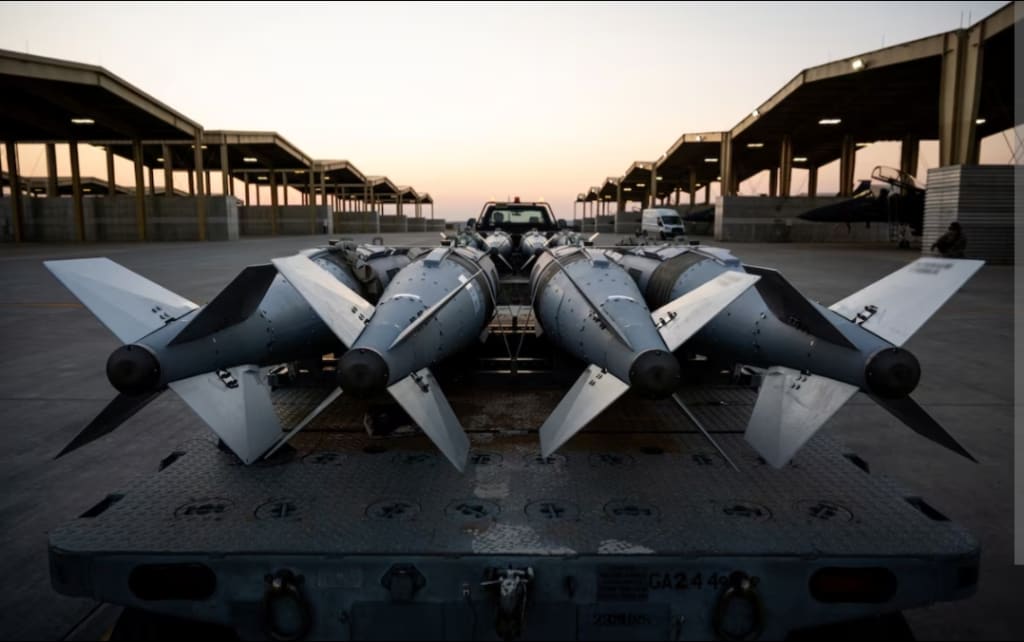
In a powerful show of military might, the United States launched a series of large-scale retaliatory airstrikes against ISIS targets in Syria, following a deadly attack that killed several American personnel. These strikes, coordinated by the Pentagon, are being described as a direct response to the increasing threats posed by ISIS militants in the region. With rising tensions and a volatile security environment, the U.S. is making it clear that it will not tolerate attacks on its forces and is committed to continuing its counterterrorism efforts in Syria.
The Catalyst: A Deadly Attack on American Forces
The U.S. airstrikes come in the wake of an ambush by ISIS militants that resulted in the deaths of American troops. This incident marks a significant escalation in the ongoing security situation in Syria, where U.S. forces have been stationed for years as part of broader efforts to combat ISIS and other extremist factions.
While the identities of the deceased have not yet been fully disclosed, the attack is part of a worrying trend of increased violence targeting U.S. personnel in the region. U.S. forces have been engaged in a complex, multifaceted operation to defeat ISIS and stabilize the region. However, the group, while weakened, has not been completely eradicated and remains a persistent threat.
Pentagon officials confirmed the retaliatory airstrikes as a proportional response to the attack, aimed at degrading ISIS’s operational capacity and sending a clear message to the group that attacks on American forces will not be tolerated.
Strategic Targets and Military Tactics
The U.S. military targeted a series of ISIS positions in eastern Syria, believed to be responsible for the deadly ambush. The strikes were carried out by a combination of fighter jets, drones, and precision-guided munitions, which have become standard tools in the U.S. military’s efforts to eliminate specific threats with minimal civilian casualties.
Among the primary targets were ISIS weapon storage facilities, training camps, and high-ranking militant leaders. According to Pentagon officials, the airstrikes were designed to disrupt ISIS’s ability to launch further attacks on U.S. forces and local allies, including Kurdish and Syrian Democratic Forces (SDF) personnel.
"The precision of these strikes ensures that we can hit ISIS where it hurts most, while minimizing collateral damage," said Pentagon spokesman Brigadier General Patrick Ryder. "We will continue to defend our forces, and our commitment to defeating ISIS remains unwavering."
These strikes are part of a broader strategy that the U.S. has been following in Syria since 2015. Despite the territorial defeat of ISIS in 2019, the group still maintains sleeper cells and continues to conduct asymmetric warfare, targeting both local forces and foreign military personnel stationed in the region.
Growing Tensions in Syria and the Middle East
The situation in Syria is complex and continues to evolve. While the U.S. is primarily focused on defeating ISIS remnants, it is also engaged in a delicate balancing act with other players in the region. Russian forces, Syrian government troops, and Iranian-backed militias all have interests in the region, leading to occasional clashes with U.S. troops.
The U.S. presence in Syria, particularly in the northeast, is seen as vital not only in the fight against ISIS but also in countering the influence of Iran and other adversaries in the region. The U.S. military works closely with Kurdish and Arab forces within the SDF to maintain pressure on ISIS, but the coalition faces numerous challenges, including logistical difficulties, ideological differences, and the threat of hostile forces from both Syrian and Russian factions.
One of the most pressing concerns is the risk of escalation. With various factions operating in the same territory, the possibility of clashes between U.S. forces and other foreign military personnel is ever-present. Despite this, the U.S. has repeatedly stated that its goal is to defeat ISIS and not to become embroiled in the broader Syrian conflict.
The retaliatory airstrikes serve as a reminder of the persistent instability in Syria, where the remnants of ISIS, along with other militant groups, continue to pose significant security risks. As the U.S. continues to assert its presence, it faces mounting pressure to achieve a long-term resolution in Syria—one that includes the defeat of ISIS, the stabilization of the region, and the navigation of geopolitical tensions.
The U.S. Strategy Moving Forward
The U.S. strategy in Syria remains focused on counterterrorism, stabilization, and regional partnerships. The latest airstrikes underscore the U.S. military’s commitment to ensuring the safety of its personnel and allies while continuing to combat extremist threats. However, the broader question remains: how long will the U.S. continue to maintain a military presence in Syria?
The answer is not clear, and many experts are divided on the issue. Some argue that the U.S. should pull out entirely, as the threat of ISIS has been significantly reduced, and the situation in Syria is becoming increasingly complicated. Others believe that continued U.S. involvement is crucial to prevent the resurgence of ISIS and to ensure that Syria does not become a haven for other extremist groups.
The U.S. military's operations are also influenced by diplomatic concerns, particularly with Turkey, Iran, and Russia. While the U.S. maintains its military presence in Syria, it must navigate the complex web of alliances and tensions between these countries. The situation is made even more complicated by the fact that the Syrian government, led by Bashar al-Assad, has been largely hostile to foreign intervention, viewing U.S. forces as occupiers.
Broader Implications for the Region
The retaliatory strikes against ISIS are part of a broader pattern of U.S. military engagement in the Middle East. Since the defeat of ISIS in 2019, the region has remained a volatile hotspot for terrorism, with ISIS seeking to re-establish its caliphate. The U.S. strikes in Syria not only target ISIS but also send a message to other groups operating in the region: attacks on American forces will be met with decisive retaliation.
The strikes also have implications for U.S. foreign policy. As tensions rise between the U.S. and other regional powers, particularly Iran and Russia, the military operations in Syria remain a key point of contention in diplomatic discussions. The U.S. must balance its counterterrorism efforts with broader geopolitical concerns, ensuring that it does not become entangled in larger regional conflicts.
Conclusion: The Ongoing Fight Against ISIS
The U.S. airstrikes in Syria serve as a reminder that the fight against ISIS is far from over. While the group has lost much of its territorial control, it remains a potent threat in the form of sleeper cells and guerilla warfare tactics. The recent retaliatory strikes are a direct response to the killing of American personnel, but they also highlight the ongoing instability in Syria and the broader Middle East.
As the U.S. continues to operate in Syria, the question of long-term strategy remains at the forefront of military and diplomatic discussions. Will the U.S. remain in the region until ISIS is completely eradicated, or is it time for a change in approach? The situation in Syria is evolving, and the U.S. must remain vigilant, adaptable, and strategic in the fight against terrorism, while carefully considering the complex geopolitical dynamics at play. The future of U.S. involvement in Syria will depend on the continued success of its counterterrorism efforts and its ability to navigate the intricate web of alliances and rivalries that define the region.
About the Creator
Keep reading
More stories from Salaar Jamali and writers in The Swamp and other communities.
U.S. Launches Strikes in Syria Targeting Islamic State Fighters After American Deaths
In a dramatic escalation of military operations in the Middle East, the U.S. launched a series of airstrikes in Syria targeting Islamic State (ISIS) fighters, following the deaths of American service members in recent attacks. The airstrikes, which occurred overnight, were aimed at key ISIS positions believed to be responsible for the fatalities, as well as other strategic targets linked to the terrorist organization.
By Salaar Jamali28 days ago in The Swamp
Europeans Prepare Military Exercises in Greenland
The Arctic is no longer a quiet, frozen frontier. Once seen as remote and geopolitically dormant, Greenland has suddenly become one of the world’s most strategically sensitive regions. As former U.S. President Donald Trump renews his controversial interest in acquiring the island, European nations are responding with something more tangible than diplomatic statements — military exercises on Greenlandic soil.
By Aqib Hussain3 days ago in The Swamp



Comments
There are no comments for this story
Be the first to respond and start the conversation.