
United States Debt Result From Interest Rate Cuts
Although borrowing becomes more appealing, total debt levels could rise as a result


The progressive reduction of interest rates over multiple quarters into 2025 will impact the U.S. debt, the USD, and the economy as a whole in various ways. Now, we can dissect this:
1. The Effect on the United States Debt: A number of direct effects on the United States debt result from interest rate cuts:
Reduced interest rates reduce the cost of borrowing money for the United States government. The enormous national debt can be somewhat alleviated by this. The federal government must also pay interest on its current debt, so rate reduction may not have an immediate impact on bonds that are older.
An incentive to borrow money: If interest rates were to drop, the federal government might borrow more money to pay for things like social programs, infrastructure projects, and economic stimulus. Although borrowing becomes more appealing, total debt levels could rise as a result, particularly if the government issues additional bonds to finance its operations.
Although interest payments can be reduced with lower rates, the debt-to-GDP ratio might increase if GDP growth slows down or enters a recession, as a result of stagnant or declining GDP. Even if borrowing costs were to fall, this would still indicate a larger relative debt load, which raises questions about the debt load's sustainability in the long run.
Second, the depreciation of the US dollar:
The dollar is under pressure to fall in value when interest rates are lowered for a number of reasons:
The attractiveness of the returns on dollar-denominated assets, such U.S. bonds, declines when interest rates fall, making them less appealing than assets in nations with higher interest rates. The dollar's demand drops and its value declines relative to other currencies as a result of capital fleeing the country.
Inflationary Pressures: Businesses that rely on imported goods and raw materials may feel the effects of a weakening dollar more acutely, as the cost of imports rises. Nonetheless, a slowdown in domestic demand during a recession can help keep inflation in check.
Global Competitiveness: Conversely, a depreciating dollar might increase U.S. exports due to the lower prices and higher competitiveness of American goods in other markets. By bolstering industries that rely on exports, this could help mitigate the effects of a recession to some extent.
Thirdly, Economic Effects and the Chance of Recession or Recovery:
A combination of a weaker USD, dropping interest rates, and the current economic climate has the potential to either amplify the recession or spur a recovery.
Assuming a Downturn in the Economy: Declining Expenditure and Confidence: In cases where consumer and corporate confidence is low, a reduction in interest rates alone might not be sufficient to spur economic growth. Despite the rate decreases, the economy might still be hit by recessionary pressures if businesses and consumers both hold back on investment and spending in preparation for a downturn.
Risks Associated with Corporate Debt: A decline in interest rates may tempt businesses to take out more loans. But, especially if they are heavily indebted, these businesses can find it difficult to repay their obligations in the event of a sharp economic downturn. This can worsen the effects of the recession by leading to company failures and employment losses.
Weak Labor Market: When the economy is in a downturn, businesses may cut back on hiring or even lay off some employees. Businesses may be hesitant to grow or invest because to uncertainty, even when borrowing prices have decreased. This could result in an increase in unemployment.
The Chance of a Reversal:
Influence of Stimulus: A combination of rate decreases and fiscal stimulus, such as increased government spending or reduced taxes, has the potential to forestall or at least mitigate the severity of a recession. Spending and investment, especially in industries like manufacturing and real estate, can pick up again as borrowing costs fall.
Benefit to the property Market: Reduced mortgage rates have a long history of helping the property market. An area that could see growth even in a slowing economy is the building and home improvement industries, which are boosted by lower mortgage rates, which encourage homebuying and refinancing.
Investors want larger returns in stocks when bond yields are low, which encourages stock market expansion in a low-interest-rate environment. But if stock values start to move independently of economic realities, asset bubbles could form.
The Future—The Dangers of Devaluation: Rising import prices might lead to increased inflation in the United States if the dollar were to lose too much ground. Stagflation, in which inflation increases while economic growth remains flat or even decreases, could result from this. Policymakers must master the art of striking this balance.
Changes in International Investing Patterns: A depreciating dollar may cause changes in international investment trends. If investors believe that there are better returns outside of the US, they may decide to pour more money into emerging markets. But this dynamic could turn around if world growth slows.
After the economy has stabilized, the Federal Reserve may try to prevent a rate spike by gradually raising rates again. This would be known as rate normalization. Raising rates too soon could impede recovery efforts, so it's important to tread carefully when negotiating them following a period of persistent decreases.
Conclusion: A series of intricate economic phenomena, including a reduction in the U.S. debt load and a weakening of the USD, might be triggered by a slow but steady reduction in interest rates until 2025.
There are hazards associated with lower interest rates, despite their intended purpose of stimulating economic growth. These risks include corporate defaults, inflationary pressures, and the likelihood of a protracted recession.
Policymakers' skill in balancing growth, inflation, and debt sustainability will determine whether the U.S. economy will recover. However, external factors like global capital flows and the world economy's health will also have a major impact.
Disclaimer: The content provided in this analysis is for informational purposes only and should not be considered financial, investment, or professional advice
About the Creator
Estalontech
Estalontech is an Indie publisher with over 400 Book titles on Amazon KDP. Being a Publisher , it is normal for us to co author and brainstorm on interesting contents for this publication which we will like to share on this platform
Keep reading
More stories from Estalontech and writers in The Swamp and other communities.
The Possibility of a Self-Implosion of the Immigrant Chaos in the US
There is a possibility that the chaos caused by immigrants in the United States could self-impplode. The SAVE Act and its implications are discussed. ( The SAVE Act, a proposed law that mandates only U.S. citizens can vote in federal elections, has generated considerable debate and controversy.)
By Estalontech2 years ago in The Swamp
A Gathering of Evil Bosses
“I’m the queen of chin jutting while I smooth my hair, attacking, insulting, and deflecting to protect my appointer.” “Oh, please, Blondi, my hair is curled, highlighted, and longer than yours. I feature television commercials telling immigrants that we will give them a free plane ride home, and if they voluntarily turn themselves in, they will be allowed to legally apply for re-entry. It runs everywhere, and I look good in it! You can’t compete because of your blond hair. Mine is nicer, and my lips are prettier than yours.”
By Andrea Corwin 16 days ago in The Swamp
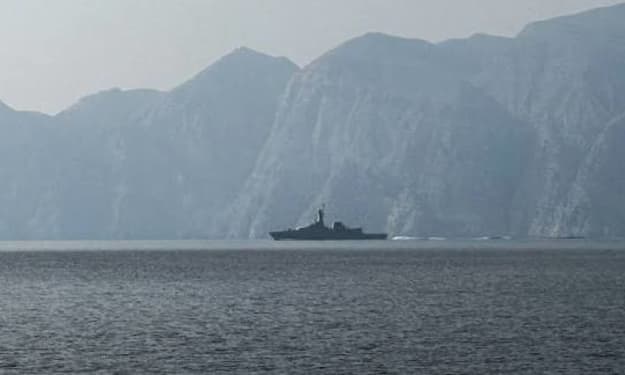
Trump Says U.S. Destroyed 9 Iranian Warships
Former U.S. President Donald Trump has claimed that American forces destroyed nine Iranian warships during a recent confrontation, a statement that has drawn global attention and raised concerns about escalating tensions in the Middle East. The remarks were made during a public address in which Trump defended his administration’s military posture toward Iran, portraying the action as a decisive response to what he described as repeated provocations in strategically sensitive waters. According to Trump, the incident occurred after Iranian naval units allegedly threatened or interfered with U.S. maritime operations in the region. He asserted that the American response was swift and overwhelming, emphasizing that the U.S. military acted to protect freedom of navigation and the safety of its personnel. While details remain limited, the claim suggests a major naval engagement that would mark one of the most serious military encounters between the two countries in recent years. U.S. defense officials have not immediately provided a full breakdown of the operation, but sources familiar with regional security issues indicate that any confrontation would likely have taken place in or near the Persian Gulf, a vital corridor for global oil shipments. The area has long been a flashpoint between Washington and Tehran, with both sides conducting naval patrols and military exercises that often bring them into close proximity. Iranian authorities have disputed aspects of Trump’s statement, calling the claim exaggerated and politically motivated. State media in Iran reported that while there had been heightened naval activity, no such large-scale destruction of warships had occurred. Officials in Tehran accused Washington of inflaming tensions and using military rhetoric for domestic political gain, particularly during a period of sensitive regional diplomacy. The conflicting narratives underscore the fragile nature of U.S.-Iran relations. Over the past decade, both countries have repeatedly clashed over sanctions, nuclear policy, and regional influence. Naval encounters have become increasingly common, with U.S. forces asserting their right to operate freely in international waters and Iran warning against what it considers violations of its territorial security. Military analysts note that the destruction of nine warships, if confirmed, would represent a significant blow to Iran’s naval capabilities. Iran’s navy relies heavily on smaller, fast-attack vessels and patrol boats rather than large warships, meaning even a limited engagement could have symbolic and strategic consequences. However, experts caution that without independent verification, Trump’s claim should be treated carefully. From Washington’s perspective, the statement reinforces a long-standing message of deterrence. Trump has frequently argued that strength and decisive action are the best ways to prevent further aggression from Iran. During his presidency, similar rhetoric accompanied the killing of Iranian General Qassem Soleimani and other military operations, events that sharply increased regional tensions but stopped short of full-scale war. The international reaction has been cautious. Allies of the United States have called for restraint and urged both sides to avoid further escalation. European leaders emphasized the importance of diplomacy and transparency, warning that misunderstandings or miscalculations at sea could spiral into broader conflict. Meanwhile, energy markets reacted nervously, with oil prices showing brief fluctuations amid fears that instability in the Gulf could disrupt supply routes. Domestically, Trump’s statement has reignited debate over U.S. military policy toward Iran. Supporters praised the claim as evidence of strong leadership and a commitment to protecting American interests. Critics, however, questioned the accuracy of the report and warned that such declarations could inflame an already volatile situation without clear evidence or strategic necessity. Security experts stress that naval incidents in the Middle East require careful management. Even small confrontations can have outsized consequences due to the dense military presence in the region and the high economic stakes tied to shipping lanes. Communication channels between rival forces, they argue, are essential to prevent accidental escalation. In conclusion, Trump’s assertion that the U.S. destroyed nine Iranian warships has intensified scrutiny of the already strained relationship between Washington and Tehran. Whether the claim proves fully accurate or not, it highlights the persistent risks of confrontation in the region and the fragile balance between deterrence and diplomacy. As both sides continue to navigate a tense security environment, the international community will be watching closely for signs of either further conflict or renewed efforts at de-escalation.
By Fiaz Ahmed 5 days ago in The Swamp
Review of 'Man on the Run'
My wife and I saw Man on the Run, a nearly 2-hour documentary on Amazon Prime, about Wings, Paul McCartney's group that flew around the world from shortly after The Beatles broke up in early 1970 to shortly after John Lennon was murdered at the end of 1980, making a Beatles reunion forever impossible.
By Paul Levinson6 days ago in Beat


Comments
There are no comments for this story
Be the first to respond and start the conversation.