
Understanding the New Orleans Attack: A Deep Dive into the Tragedy
Analyzing the Tragic New Year's Attack in New Orleans


On the early hours of New Year’s Day, a horrific event unfolded on Bourbon Street in New Orleans, resulting in chaos, fear, and loss of life. This blog aims to dissect the events leading to the attack, the identity of the suspect, and the aftermath that followed. The details surrounding this incident reveal not just the immediate impact but also the broader implications for security and community safety.
The Incident: A Night of Celebration Turns to Terror
Just hours after the clock struck midnight, while revelers were celebrating the New Year, a pickup truck was driven into a crowd on Bourbon Street. According to reports, this act of violence resulted in at least 15 fatalities and numerous injuries. Witnesses described the scene as chaotic and terrifying, with “bodies everywhere” and people screaming in panic.

The driver, later identified as Shamsud-Din Jabbar, a 42-year-old man from Texas, reportedly circumvented barricades set up to protect pedestrians. Eyewitnesses noted the police presence at the scene; however, the mechanical barricades designed to prevent vehicle access had not been fully operational.
Identifying the Suspect
Shamsud-Din Jabbar was a U.S. military veteran who had served from 2007 to 2020, including a deployment to Afghanistan. He was driving a truck rented from Turo, a peer-to-peer car-sharing service. An ISIS flag was discovered attached to the vehicle, prompting an investigation into his affiliations with terrorist organizations.
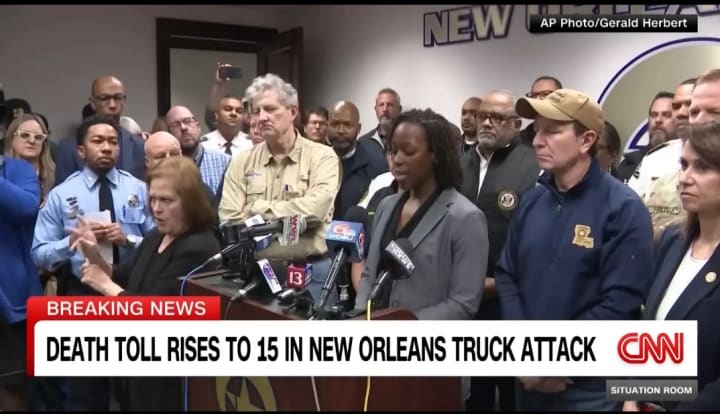
Upon stopping the vehicle, Jabbar opened fire on responding police officers, who returned fire, resulting in his death at the scene. Two officers were injured during this exchange and were taken to local hospitals for treatment.
Questions About Security Measures
The attack raised significant questions regarding the adequacy of security measures in place. Witnesses and officials alike expressed confusion as to why the steel mechanical barricades were not deployed at the time of the incident. Local police were present, but the barricades were reportedly incomplete, which allowed Jabbar to drive onto the sidewalk and into the crowd.

The New Orleans Police Department had previously installed these barriers in response to security concerns, particularly in light of past vehicular attacks in other cities. The failure of these barricades to function as intended has led to calls for an evaluation of security protocols, especially with major events like Mardi Gras and the Super Bowl approaching.
Exploring the Motivations Behind the Attack
Investigators have begun to piece together Jabbar's motivations leading up to the attack. Reports indicate that he made a series of voice recordings while driving from Texas to Louisiana. These recordings revealed a troubled individual, grappling with personal issues, including a bitter divorce and financial difficulties.

In these recordings, Jabbar expressed a desire to bring his family together for a celebration, which was later interpreted as a ruse for his violent intentions. Over time, he reportedly shifted his focus from harming his family to committing an act of terror in the name of ISIS.
The Investigation: A Multi-Agency Effort
The FBI has taken the lead in investigating the attack, working to determine whether Jabbar acted alone or had accomplices. Surveillance footage revealed potential associates who were seen placing improvised explosive devices (IEDs) in the area, although these individuals were later cleared from suspicion.
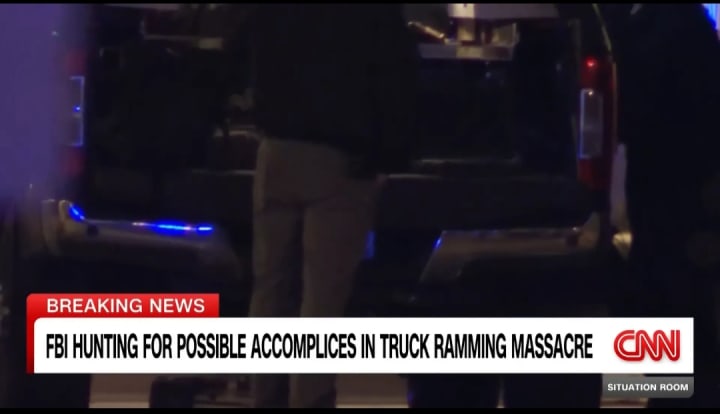
Authorities are looking into Jabbar’s past, including his military service, financial troubles, and any connections he may have had with extremist groups. Forensic analysis of the IEDs found in the vicinity is ongoing, with investigators seeking to establish whether they were constructed by the same individual or group.
Community Impact and Response
The aftermath of the attack has left the New Orleans community in shock. Families of the victims are mourning their loss, with stories emerging about the lives that were cut short. Among the deceased was Reggie Hunter, a 37-year-old father who had just wished his family a Happy New Year moments before the tragedy struck.

Community leaders and officials have expressed their condolences and emphasized the need for strengthened security measures to prevent future incidents. The Sugar Bowl, a major college football event scheduled for the same evening, was postponed as a precautionary measure, highlighting the seriousness of the situation.
Conclusion: Lessons Learned and Moving Forward
The New Orleans attack serves as a grim reminder of the vulnerabilities present in public spaces, particularly during large gatherings. As investigations continue, there will be a critical focus on improving security protocols to ensure the safety of residents and visitors alike.
In light of this tragedy, it is essential for communities to come together, support one another, and advocate for measures that protect against such senseless acts of violence. The memories of those lost should drive efforts to create a safer environment for all.
About the Creator
Anil Tudu
Hi My Name Is Anil
A Gathering of Evil Bosses
“I’m the queen of chin jutting while I smooth my hair, attacking, insulting, and deflecting to protect my appointer.” “Oh, please, Blondi, my hair is curled, highlighted, and longer than yours. I feature television commercials telling immigrants that we will give them a free plane ride home, and if they voluntarily turn themselves in, they will be allowed to legally apply for re-entry. It runs everywhere, and I look good in it! You can’t compete because of your blond hair. Mine is nicer, and my lips are prettier than yours.”
By Andrea Corwin 16 days ago in The Swamp


Comments
There are no comments for this story
Be the first to respond and start the conversation.