
Understanding the H-1B Visa: A Comprehensive Guide for Professionals and Employers
A detailed guide to eligibility, process, and opportunities under the United States H-1B visa program

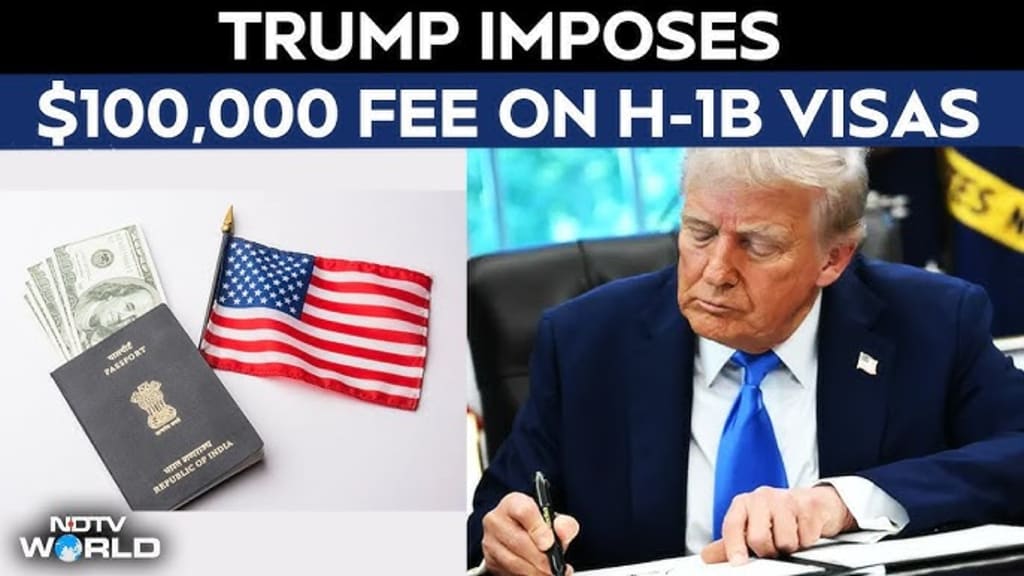
The H-1B visa is one of the most well-known U.S. work visas, providing skilled foreign professionals an opportunity to work in the United States on a temporary basis. It is designed to fill positions that require specialized knowledge, particularly in industries such as technology, engineering, healthcare, and finance. Over the years, the H-1B visa has become a critical pathway for both U.S. employers seeking global talent and professionals aiming to advance their careers in the American job market.
What Is the H-1B Visa?
The H-1B visa is a non-immigrant visa that allows U.S. companies to employ foreign workers in specialty occupations. These occupations generally require a bachelor’s degree or higher in a specific field. Examples include software developers, data analysts, engineers, medical researchers, and professors.
The visa is initially granted for three years and can typically be extended for a total stay of up to six years, depending on individual circumstances. After this period, many H-1B visa holders choose to transition to permanent residency through employment-based green card programs.
Eligibility Requirements
To qualify for an H-1B visa, both the applicant and the sponsoring employer must meet specific criteria:
Specialty Occupation – The job must require specialized knowledge and a minimum of a bachelor’s degree or its equivalent.
Valid Job Offer – The U.S. employer must provide a genuine job offer and act as the official sponsor.
Educational Qualifications – The applicant must hold the relevant degree or equivalent experience in the required field.
Labor Condition Application (LCA) – The employer must submit an LCA to the U.S. Department of Labor, confirming that hiring the foreign worker will not negatively affect the wages or working conditions of U.S. workers.
The Application Process
The H-1B visa process is highly competitive and follows a structured timeline:
Employer Petition Filing: The U.S. employer files Form I-129 (Petition for a Nonimmigrant Worker) with U.S. Citizenship and Immigration Services (USCIS).
H-1B Lottery: Due to the annual numerical cap—currently 65,000 visas plus 20,000 additional spots for candidates with U.S. master’s degrees or higher—USCIS conducts a random lottery to select petitions when applications exceed the quota.
Approval and Visa Stamping: If selected and approved, the applicant applies for a visa at a U.S. consulate and attends an interview before traveling to the United States.
Because the cap is reached quickly each year, early preparation and accurate documentation are essential.
Rights and Responsibilities of H-1B Visa Holders
H-1B visa holders enjoy several rights:
They can legally work for the sponsoring employer in the approved specialty occupation.
They may travel in and out of the United States during their visa validity.
Their spouse and unmarried children under 21 may apply for H-4 dependent visas, allowing them to reside in the U.S. (in some cases, H-4 spouses can apply for work authorization).
However, visa holders must also follow strict guidelines. They can only work for the sponsoring employer unless they formally transfer their visa to another company, and their employment must continue to meet the original terms of the petition.
Key Benefits for U.S. Employers
For American companies, the H-1B program provides access to a global talent pool in sectors where domestic skills may be limited. Technology companies, healthcare institutions, and research organizations rely on the H-1B visa to fill specialized roles. This not only supports innovation but also helps the U.S. maintain a competitive edge in global markets.
Employers must, however, comply with wage regulations and ensure they are paying the prevailing wage to protect the U.S. labor market.
Challenges and Recent Changes
The H-1B visa has been the subject of political debate and regulatory changes. Recent years have seen stricter scrutiny of petitions, changes to the electronic registration process, and proposals to prioritize higher-wage positions.
Applicants and employers should stay updated on policy adjustments, as regulations and lottery procedures may shift based on U.S. government policies and labor market needs. Consulting reliable immigration resources or legal experts is recommended before beginning the process.
Pathway to Permanent Residency
Many H-1B visa holders view this visa as a stepping stone to a green card. While the H-1B itself is temporary, it is considered “dual intent,” meaning holders can apply for permanent residency without jeopardizing their current status. Employers often sponsor H-1B workers for employment-based green cards, allowing them to stay in the U.S. beyond the typical six-year limit.
Conclusion
The H-1B visa remains one of the most important avenues for skilled professionals seeking opportunities in the United States. Despite its competitive nature and evolving regulations, it continues to benefit both foreign workers and U.S. employers. By understanding the eligibility requirements, application process, and long-term opportunities, professionals and companies can navigate the H-1B system more effectively and plan for a successful future.
About the Creator
Asad Ali
I'm Asad Ali, a passionate blogger with 3 years of experience creating engaging and informative content across various niches. I specialize in crafting SEO-friendly articles that drive traffic and deliver value to readers.
Parallel Protests
I haven't written for quite some time, but I have A LOT of thoughts about yesterday's protest rally against our government's involvement and complicity in America's war on Iran, on the harbourside of my home city Bristol, and I need to put them somewhere. My gorgeous girlfriend is always a loving and listening ear and sharing it all with her will always be a healthy and happy way of processing the mental and emotional weight, but getting it straight in my brain to share means writing it all down in straight lines, so, here we are and thanks for being here.
By Steph Cole10 days ago in The Swamp
US Foreign Policy About Iran
Regime change, change control—these are all the issues involved. What do you actually want? Politically, what is your real endgame? The United States has never really cared about what will happen to the people of Afghanistan. You saw it just four or five years ago—how much concern did the U.S. show about the people it was leaving behind and what the Taliban might do to them?
By Ibrahim Shah 3 days ago in The Swamp
Why Didn't Anyone Tell Us
Men, move along. This is not for you. This is for the women. I was forty-five when I began menopause. It is pretty young for that to be going on in a woman’s life, but I had undiagnosed PCOS, my entire life. Thank you to all the gynecologists I had seen my entire life. That in itself should encourage women to keep seeking second opinions, especially when you are not getting correct answers or any at all.
By Alexandra Grant3 days ago in Humans



Comments
There are no comments for this story
Be the first to respond and start the conversation.