
Russian Jets and the Violation of Estonian Airspace: Understanding the Incident and Its Broader Implications
How repeated airspace breaches by Russian military jets are testing NATO’s resolve and reshaping security dynamics in the Baltic region.

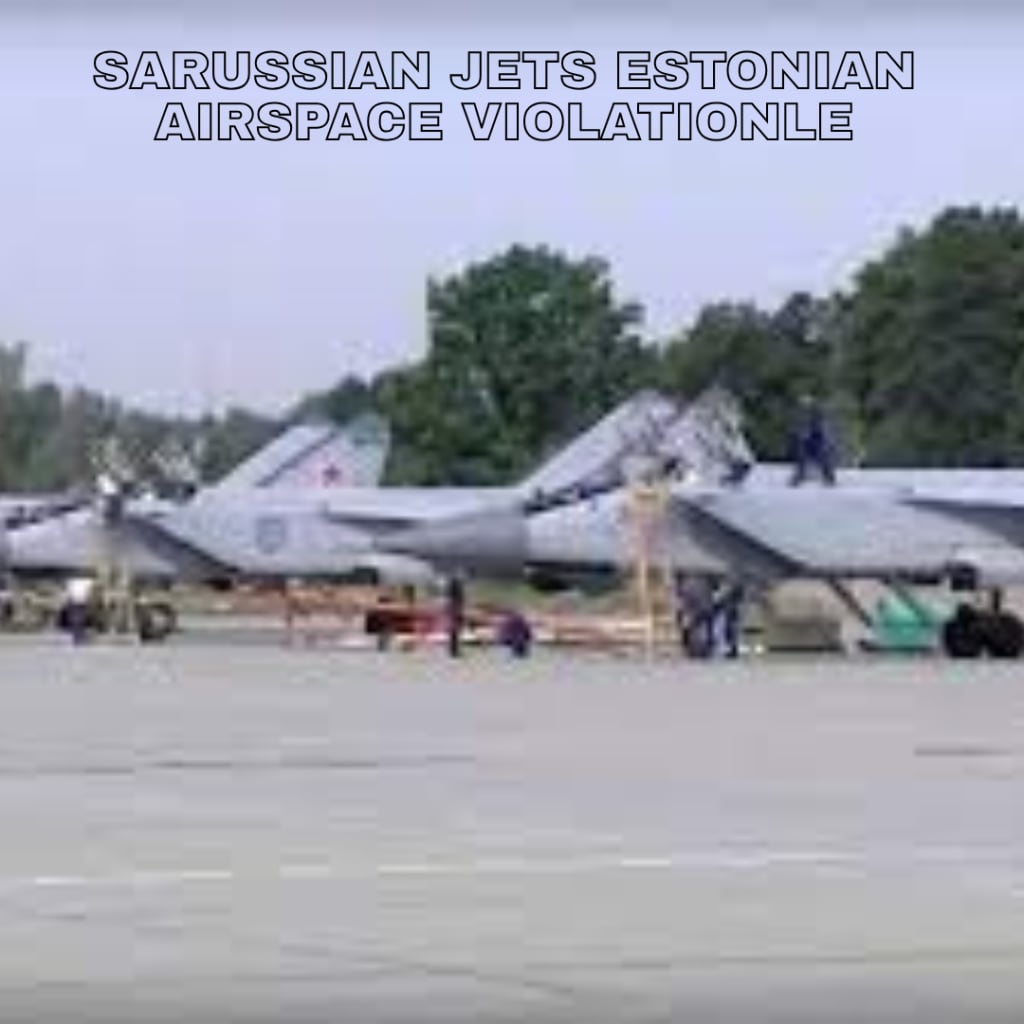
In recent years, the Baltic region has become a focal point of tension between Russia and the West. Among the most notable developments are repeated incidents in which Russian military aircraft have allegedly entered the sovereign airspace of Estonia, a member of the European Union (EU) and the North Atlantic Treaty Organization (NATO). The violation of Estonian airspace by Russian jets is more than a local security concern; it is a signal of the evolving geopolitical landscape in Eastern Europe and an indicator of the challenges facing NATO’s collective security framework.
The Latest Reported Violation
Estonian defense officials have frequently documented incidents where Russian military jets briefly cross into Estonian airspace without prior notification. Typically, these violations involve Russian aircraft flying near the Gulf of Finland or the Baltic Sea. According to Estonia’s Ministry of Defence, these incursions are usually brief—often lasting only a few minutes—but they are taken seriously by both Estonia and its NATO allies. The Estonian authorities consistently summon the Russian ambassador to lodge formal protests and demand explanations.
While Moscow often denies intentional wrongdoing, it rarely provides detailed evidence to counter the accusations. These denials have done little to ease the concerns of Estonian citizens or their NATO partners.
Legal and International Context
Airspace violations are governed by international law, which requires aircraft—especially military ones—to file flight plans and maintain open communication with civilian air traffic control when crossing national borders. Estonia, as a sovereign state and NATO member, has full rights to protect its skies. Any unauthorized entry, even for a brief period, is viewed as a breach of sovereignty and a potential threat.
NATO’s 1949 founding treaty includes Article 5, which states that an attack on one member is considered an attack on all. Although a single brief airspace intrusion does not automatically trigger this clause, repeated incidents increase tension and test the readiness of NATO’s collective defense. This legal framework explains why each violation, no matter how short, carries strategic significance.
NATO’s Response and Regional Security Measures
NATO has maintained an air policing mission in the Baltic states—Estonia, Latvia, and Lithuania—since these countries joined the alliance in 2004. Member nations rotate deployments of fighter jets to monitor and protect the region’s airspace. These missions aim to reassure the Baltic states and to deter potential aggression.
Whenever an unidentified or unauthorized aircraft approaches or crosses into NATO airspace, allied jets are scrambled to intercept and escort the aircraft away. These intercepts are professional and non-escalatory, but they send a clear message that NATO monitors its borders closely. The presence of allied aircraft in Estonia’s Ämari Air Base plays a central role in these operations.
Why Such Violations Occur
Experts suggest several reasons why Russian jets might violate Estonian airspace:
Testing NATO’s Response Time: By crossing into restricted airspace, Russia can measure how quickly NATO forces react and how well they coordinate.
Political Signaling: Such moves can be a form of strategic messaging, reminding neighboring states of Russia’s military reach.
Navigation Errors: While some incidents may be accidental, the repeated nature of these violations raises doubts about purely technical explanations.
These possibilities are not mutually exclusive; a single incident might serve both practical and political purposes.
Broader Geopolitical Implications
The repeated airspace violations highlight the fragile security environment in Europe’s northeast. For Estonia, a nation of about 1.3 million people sharing a 294-kilometer land border with Russia, these events reinforce the importance of NATO membership and regional cooperation.
For the European Union, these incidents underscore the need for a united foreign policy stance and continued investment in defense infrastructure. Beyond Europe, the violations also capture the attention of the United States and other NATO partners, reminding them of the persistent challenges in deterring Russian military assertiveness.
Building Stability Through Diplomacy and Preparedness
Diplomatic engagement remains essential. While Estonia and NATO respond firmly to each incident, dialogue between Russia and Western allies is equally important to reduce the risk of miscalculation. Confidence-building measures—such as renewed agreements on air safety and communication protocols—could help prevent accidental confrontations.
At the same time, Estonia continues to strengthen its defense capabilities and to collaborate with its neighbors. The presence of NATO forces serves not only as a deterrent but also as reassurance to citizens that their security concerns are taken seriously.
Conclusion
The violation of Estonian airspace by Russian jets is more than an isolated event; it reflects broader geopolitical tensions between Russia and the West. While each incident is brief, the pattern signals both strategic intent and the complexities of modern security in the Baltic region. For Estonia and its NATO allies, vigilance, readiness, and diplomatic engagement remain key to maintaining stability and preventing escalation in a region where history and geopolitics are deeply intertwined.
About the Creator
Asad Ali
I'm Asad Ali, a passionate blogger with 3 years of experience creating engaging and informative content across various niches. I specialize in crafting SEO-friendly articles that drive traffic and deliver value to readers.
Zinc Methionine Chelates Market Size and Forecast 2025–2033
Introduction As global agriculture enters a new era of efficiency, sustainability, and precision nutrition, the role of advanced feed additives is becoming more critical than ever. Among these, Zinc Methionine Chelates are gaining notable attention for their superior bioavailability, environmental benefits, and impact on animal productivity. Once considered a niche solution, chelated trace minerals are now reshaping livestock nutrition strategies across developed and emerging economies alike.
By jaiklin Fanandish6 days ago in The Swamp



Comments
There are no comments for this story
Be the first to respond and start the conversation.