
UN Human Rights Agency in ‘Survival Mode’, Chief Warns
Funding shortages and political pressure threaten global rights work Volker Türk says growing crises outpace shrinking resources UN watchdog struggles to meet rising demand amid budget cuts Rights body faces critical moment as conflicts multiply worldwide Calls mount for stable financing and stronger international support
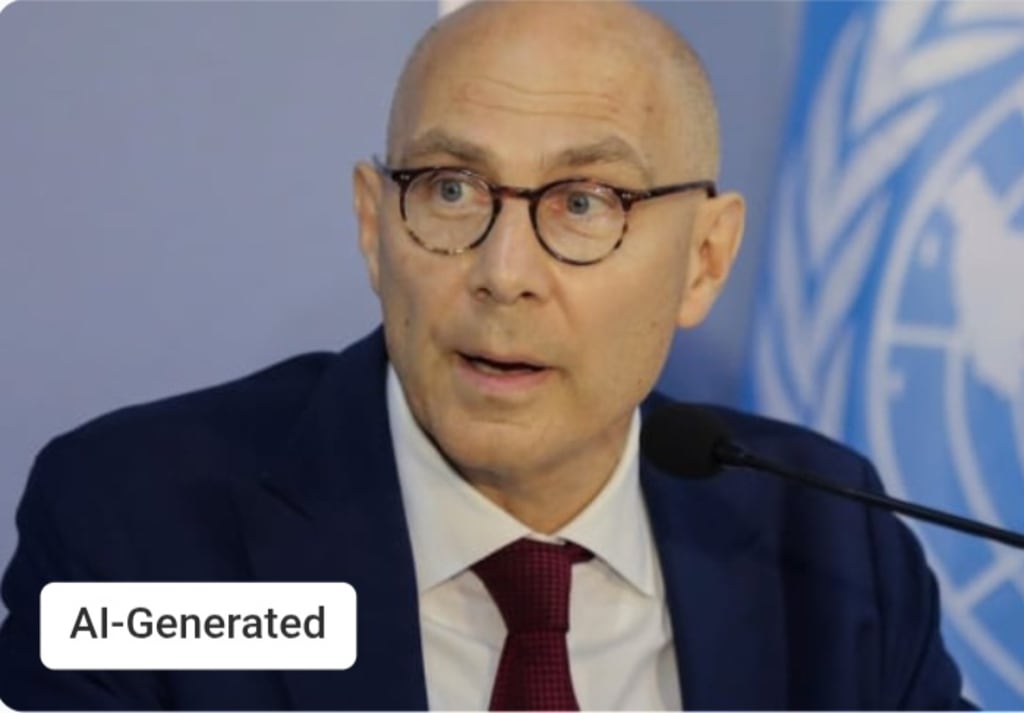
The United Nations Human Rights Office, one of the world’s most important watchdogs for justice, dignity, and accountability, is facing an unprecedented crisis. According to its chief, the agency is now operating in what he has described as “survival mode,” a stark warning that highlights deep financial strain, political pressure, and growing global instability at a time when human rights protections are needed more than ever.
The UN Human Rights Office, formally known as the Office of the High Commissioner for Human Rights (OHCHR), plays a critical role in monitoring abuses, supporting victims, advising governments, and holding powerful actors accountable. From war crimes and mass displacement to censorship and discrimination, the agency often works in the most dangerous and politically sensitive environments. Yet today, its ability to function is under serious threat—not because human rights violations are decreasing, but because funding and political support are drying up.
At the heart of the crisis is money. The OHCHR relies heavily on voluntary contributions from member states, making it uniquely vulnerable to shifting political priorities and global economic pressures. Rising inflation, competing international crises, and donor fatigue have all contributed to severe budget shortfalls. As a result, the agency has been forced to freeze hiring, scale back field operations, and reconsider core programs that support vulnerable populations worldwide.
This financial strain could not come at a worse time. The world is witnessing a surge in armed conflicts, authoritarianism, and attacks on civil liberties. From Gaza and Ukraine to Sudan, Myanmar, and beyond, civilians are paying the highest price. Journalists, human rights defenders, and minority communities are increasingly targeted, while international law is openly challenged or ignored. In such an environment, weakening the very institution tasked with defending human rights sends a dangerous signal.
The warning from the UN’s human rights chief is not merely about organizational survival; it is about moral responsibility. When the agency cannot deploy monitors, investigate abuses, or provide technical assistance to countries trying to improve their human rights records, accountability suffers. Silence and inaction create space for impunity, allowing violations to continue unchecked. History has repeatedly shown that when human rights mechanisms fail, the consequences can be catastrophic.
Political pressure further complicates the agency’s work. Some governments view international human rights scrutiny as an attack on sovereignty rather than a safeguard for citizens. This has led to increasing resistance against UN investigations, reduced cooperation, and, in some cases, deliberate efforts to weaken the agency financially. The irony is clear: those most opposed to oversight are often the ones whose actions most urgently require it.
Despite these challenges, the UN Human Rights Office continues to operate in some of the world’s most hostile environments. Its staff members document atrocities, support survivors of torture and sexual violence, and provide early warnings that can help prevent conflicts from escalating. Many of these workers risk their lives, driven by a belief that human rights are not optional ideals but universal obligations.
The current crisis raises uncomfortable questions for the international community. If governments publicly commit to human rights while privately cutting funding, what does that commitment really mean? Can the world afford to let its primary human rights institution weaken at a time when global norms are already under attack? And perhaps most importantly, who will fill the gap if the UN cannot?
Supporters argue that investing in human rights is not charity—it is prevention. Strong human rights systems reduce the likelihood of conflict, mass displacement, and humanitarian disasters, all of which ultimately cost far more in political, economic, and human terms. From this perspective, starving the UN Human Rights Office of resources is not just shortsighted; it is self-defeating.
Civil society organizations and activists have echoed the chief’s warning, urging governments to treat the situation as an emergency. They stress that human rights should not be the first item sacrificed during budget cuts, especially when military spending and other national priorities continue to grow. The credibility of the international system, they argue, depends on whether it can defend its own values when they are most under threat.
The phrase “survival mode” should serve as a wake-up call. It reflects not only financial distress but a broader crisis of global commitment to human rights. The UN Human Rights Office was created in the aftermath of history’s darkest chapters, with the promise that such atrocities would never be repeated. Allowing it to struggle for survival undermines that promise.
Ultimately, the future of the UN Human Rights Agency depends on political will. Governments must decide whether human rights are central to the global order or merely rhetorical tools used when convenient. In a world increasingly divided by power politics, the choice to support human rights institutions is a choice to stand on the side of humanity itself.
If the warning goes unheeded, the cost will not be measured only in budget deficits or closed offices. It will be measured in silenced voices, unpunished crimes, and lives left unprotected. And that is a price the world can ill afford to pay.
About the Creator
Keep reading
More stories from Ayesha Lashari and writers in The Swamp and other communities.
Japan to Restart World’s Biggest Nuclear Plant
After more than a decade of shutdown, Japan is preparing to restart the world’s largest nuclear power plant, marking a major turning point in the country’s energy policy. The Kashiwazaki-Kariwa Nuclear Power Plant, located in Niigata Prefecture, has remained offline since the aftermath of the Fukushima nuclear disaster in 2011. Its restart signals Japan’s cautious but determined return to nuclear energy amid rising energy demands, climate goals, and global fuel uncertainties.
By Ayesha Lashari2 days ago in The Swamp
Why Black History Matters in America?
The United States of America is celebrating their 250th anniversary in 2026. I'm proud to be an American and as someone who was born here, I wouldn't imagine myself living anywhere else. This is a country where opportunities are possible. Where anyone can be successful in anything they desire to do. Equality, community, and togetherness are the backbones of what America is and should be about. However, we have an administration who wants to erase and disregard those who have made positive, meaningful impacts in our country, specifically Black figures, such as Martin Luther King, Jr., Rosa Parks, and Maya Angelou. President Trump and his administration have been constantly complaining and fighting against what they call the "Woke agenda". They use this excuse as a distraction from other issues they refuse to address, such as the high cost of living, climate change, and inflation. That equality is dividing America, when in reality, it's bringing us together. Being woke is not tied to a specific political party. No matter where you stand on the political spectrum, you can still care about other people and their plights. Compassion and empathy for others isn't tied to a political party, either. We were taught as children to treat others the way we want to be treated and not judge others because they're different from us. Caring about others isn't a personal attack on your beliefs. It doesn't make you any less of a person. People who are easily offended over African American figures, past or present, or anything related to it, are grasping at straws. Current and future generations need to know who people like Harriet Tubman and Shirley Chisholm were, especially in the classroom. Black History is part of American History. It should be recognized, not hidden or forgotten. Besides, you can't shield children from everything, just because your feelings are easily hurt.
By Mark Wesley Pritchard 7 days ago in The Swamp
Senior Liberals Downplay Prospect of Leadership Spill and Urge Colleagues to ‘Get On With the Job’
Senior figures within the Liberal Party have moved to calm growing speculation about a potential leadership challenge, insisting there is no imminent threat of a spill and calling on colleagues to focus on governing rather than internal politics. Their comments come amid weeks of mounting media scrutiny and unrest within party ranks following disappointing polling results and policy disagreements. Speaking to reporters on Monday, several cabinet ministers and senior backbenchers rejected claims that the party was preparing for a leadership showdown. Instead, they stressed the importance of unity and stability at a time when voters are increasingly concerned about economic pressures, cost-of-living issues, and national security. “This is not the time for distractions,” one senior Liberal figure said. “The public expects us to deliver results, not engage in internal warfare. We need to get on with the job.” Rumors Fueled by Polling and Policy Tensions Speculation about a leadership spill intensified after recent opinion polls showed a decline in support for the government, particularly in suburban and regional electorates. Critics within the party have privately raised concerns about messaging and strategic direction, arguing that the government has struggled to connect with voters on housing affordability and inflation. These internal tensions have been amplified by disagreements over climate policy and social reforms, with some MPs pushing for a more centrist approach while others favor maintaining traditional conservative positions. The divisions have fueled media narratives suggesting that a challenge to the party leader could be imminent. However, senior party officials have sought to shut down those narratives, warning that leadership instability would only worsen the party’s standing with voters. “History tells us that constant leadership changes erode trust,” said a former party president. “People want certainty. They don’t want to see politicians fighting among themselves.” Calls for Unity and Discipline In a closed-door meeting with party members, senior Liberals reportedly urged colleagues to avoid public criticism of the leadership and instead focus on policy delivery and constituency work. The message was clear: internal debates should remain private, and public unity must be preserved. One minister described the current atmosphere as “noisy but manageable,” suggesting that frustration within the party was not unusual during difficult political periods. “Every government goes through cycles of pressure,” the minister said. “What matters is how we respond. We can either fracture or show discipline and maturity.” Party strategists are said to be working on a refreshed communication plan designed to highlight recent legislative achievements and upcoming initiatives, including infrastructure spending, health care investment, and business support measures. Leadership Responds The party leader addressed the speculation directly during a press conference, acknowledging that colleagues were frustrated but rejecting the idea that his position was under serious threat. “I understand people want better results and clearer outcomes,” the leader said. “That’s what I want too. But changing leaders doesn’t change the challenges we face. Hard work does.” He emphasized the government’s record on job creation and economic recovery, arguing that the focus should remain on delivering reforms rather than engaging in what he called “political theatre.” Observers noted that his tone was measured and conciliatory, suggesting an effort to reassure wavering supporters within the party. Opposition Reaction The opposition seized on the reports of unrest, accusing the government of being consumed by internal politics while families struggle with rising living costs. “The government is too busy fighting itself to fight for Australians,” an opposition spokesperson said. “This chaos shows they are out of ideas and out of touch.” Despite these attacks, political analysts caution against assuming that a leadership spill is inevitable. Internal dissatisfaction does not always translate into formal challenges, particularly when senior powerbrokers remain loyal. Lessons from the Past The Liberal Party has experienced multiple leadership changes over the past decade, leaving scars that still shape its culture. Many senior figures remember the electoral damage caused by past spills and appear determined to avoid repeating that cycle. “One of the biggest lessons we learned is that voters punish instability,” said a political commentator. “Even if a leader is struggling, a sudden spill can look opportunistic and desperate.” That history has strengthened the resolve of senior Liberals to project calm and continuity, even as private debates continue behind closed doors. What Happens Next For now, the leadership appears secure, but pressure is unlikely to disappear. Upcoming parliamentary sessions and the release of new economic data will test the government’s ability to regain momentum. Party insiders suggest that the next few months will be critical. If polling improves and key policies gain traction, talk of a spill may fade. If not, dissatisfaction could harden into organized opposition. Still, most senior figures insist that the focus must remain on governance rather than personalities. “We were elected to serve the country, not ourselves,” one veteran MP said. “Our job is to pass laws, support families, and keep the economy strong. Everything else is noise.” Conclusion Senior Liberals’ efforts to downplay the prospect of a leadership spill reflect a desire to restore discipline and reassure both voters and party members. By urging colleagues to “get on with the job,” they are attempting to draw a line under speculation and refocus attention on policy delivery and unity. Whether this message will hold depends on the government’s performance in the months ahead. For now, the party’s leadership remains intact, but the episode underscores how fragile political authority can become when public confidence and internal cohesion are tested at the same time. As one senior figure put it bluntly: “We can either fight each other, or we can fight for the country. The choice should be obvious.”
By Fiaz Ahmed 7 days ago in The Swamp


Comments
There are no comments for this story
Be the first to respond and start the conversation.