
UN Aid Convoy Reaches Syria’s Ain al-Arab as Truce Between Army and SDF Holds
Humanitarian access improves in northern Syria as a fragile ceasefire allows relief supplies into a long-isolated city, offering cautious hope amid a complex conflict

Subtitle:
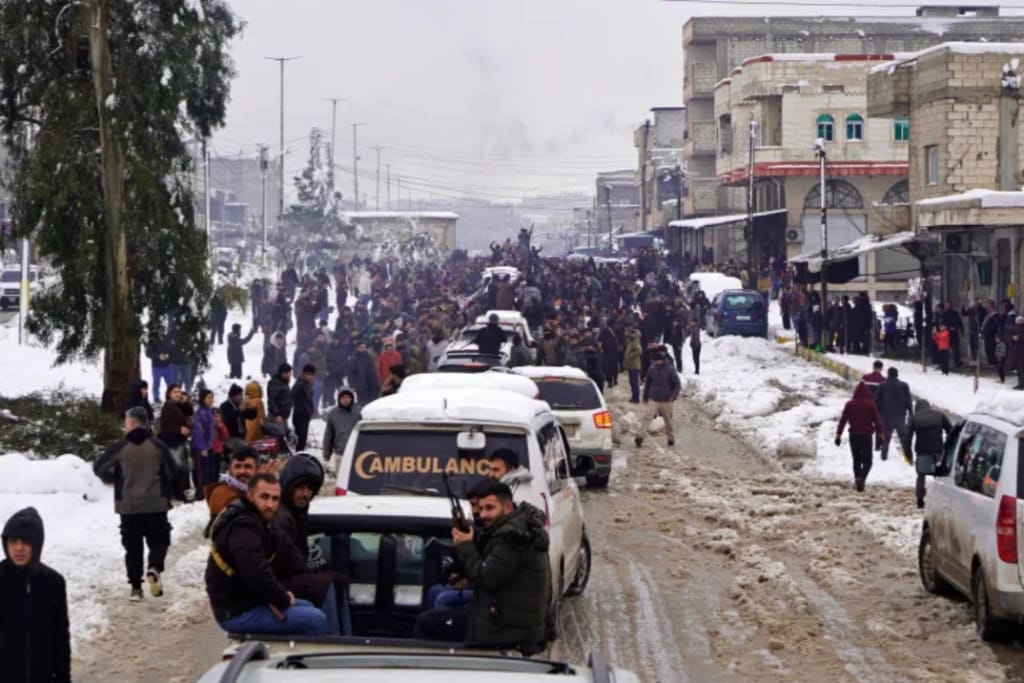
A United Nations aid convoy has successfully reached Ain al-Arab, also known as Kobane, in northern Syria, marking a rare humanitarian breakthrough as a tense truce between the Syrian army and the Kurdish-led Syrian Democratic Forces (SDF) continues to hold. The arrival of aid brings much-needed relief to civilians caught in years of conflict, displacement, and economic collapse, while underscoring how fragile cooperation has become essential for humanitarian access in Syria’s fractured landscape.
The convoy’s entry into Ain al-Arab is significant not only for the supplies it delivered, but for what it represents: a momentary alignment of military restraint, political pragmatism, and international humanitarian pressure in one of the country’s most strategically sensitive regions.
---
A City Scarred by Conflict
Ain al-Arab sits near Syria’s northern border with Turkey and has long been a flashpoint in the country’s civil war. The city gained global attention in 2014 during fierce battles against the so-called Islamic State group, becoming a symbol of resistance and international intervention. Since then, it has remained under the control of the SDF, backed for years by the United States, while surrounded by areas influenced or controlled by the Syrian government, Turkish forces, and allied militias.
Years of shifting front lines, intermittent shelling, and political isolation have taken a heavy toll on the city’s infrastructure and population. Access to food, medicine, fuel, and clean water has been inconsistent, making humanitarian deliveries both urgent and difficult.
---
The Truce That Opened a Corridor
The UN convoy’s arrival was made possible by a temporary truce between Syrian government forces and the SDF, a ceasefire aimed at preventing further escalation in northern Syria. While neither side has framed the truce as a long-term agreement, it has been sufficient to allow humanitarian actors to negotiate safe passage.
The ceasefire reflects a broader pattern in Syria, where localized truces—often informal and fragile—become essential tools for easing civilian suffering. In this case, the truce reduced military movements and shelling along key routes, enabling UN vehicles to pass without incident.
UN officials described the convoy as carrying food assistance, medical supplies, and essential relief items, intended to support thousands of civilians facing shortages worsened by inflation, fuel scarcity, and the lingering effects of displacement.
---
Humanitarian Needs Remain Acute
Despite the successful delivery, humanitarian agencies warn that needs in Ain al-Arab remain severe. Many residents rely on aid as their primary source of food and healthcare. Hospitals and clinics operate with limited equipment, while power shortages disrupt water pumping and sanitation systems.
The broader Syrian context compounds these challenges. After more than a decade of war, the country’s economy is in crisis, with millions living below the poverty line. Sanctions, currency devaluation, and damaged infrastructure have made even basic goods unaffordable for many families.
Aid workers stress that one convoy is not enough. Sustained, predictable access is necessary to stabilize conditions and prevent further deterioration.
---
A Test of Cooperation Between Rivals
The truce between the Syrian army and the SDF is notable given their complicated relationship. While they have clashed in the past, both sides also share overlapping interests at times, particularly in countering external threats or avoiding wider conflict.
For Damascus, allowing aid into Ain al-Arab can help project an image of sovereignty and cooperation with international organizations. For the SDF, facilitating the convoy demonstrates administrative capability and concern for civilian welfare, reinforcing its local legitimacy.
However, analysts caution that trust remains minimal. Any incident—whether a military provocation or political miscalculation—could unravel the truce quickly.
---
Regional and International Implications
Northern Syria remains a chessboard of regional and global interests. Turkey views the SDF as linked to Kurdish militant groups it considers a security threat. Russia maintains influence as a key backer of the Syrian government, while the United States continues limited engagement focused on counterterrorism and regional stability.
In this environment, humanitarian access often becomes entangled with geopolitics. The UN convoy’s success may encourage further negotiations for aid deliveries, but it also highlights how civilians’ welfare depends on shifting power balances rather than durable peace.
International organizations have repeatedly called for depoliticizing aid and ensuring that relief reaches all Syrians in need, regardless of who controls territory.
---
Voices From the Ground
Local residents welcomed the convoy with cautious optimism. Community leaders described shortages of medicine for chronic illnesses and rising food insecurity, particularly among children and the elderly. Many expressed hope that the truce would hold long enough for additional assistance to arrive.
At the same time, there is deep skepticism. Years of broken ceasefires have taught civilians to temper expectations, knowing that calm can give way to violence with little warning.
---
What Comes Next
The immediate question is whether the current truce can be extended or replicated elsewhere. Humanitarian agencies are pushing for regular access corridors, while diplomats quietly explore ways to reduce tensions in the north.
Sustained aid delivery would require continued coordination between rival forces, guarantees of safety for aid workers, and political will from external actors with influence on the ground.
---
Conclusion: A Fragile Window of Hope
The arrival of a UN aid convoy in Ain al-Arab is a rare positive development in Syria’s long and painful conflict. Enabled by a fragile truce between the Syrian army and the SDF, it demonstrates how even limited cooperation can ease civilian suffering.
Yet the moment remains precarious. Without a broader political solution and durable ceasefires, humanitarian gains risk being temporary. For the people of Ain al-Arab, the convoy brings relief—but also a reminder that survival in Syria still depends on fragile truces holding just long enough for help to arrive.
About the Creator
Keep reading
More stories from Salaar Jamali and writers in The Swamp and other communities.
Mike Pompeo-Linked Mining Group Pursues Up to 10 Copper Deals Amid Global Supply Crunch
A mining investment group linked to former U.S. Secretary of State Mike Pompeo is actively pursuing up to 10 copper deals, highlighting the growing strategic importance of the red metal in an era defined by energy transition, geopolitical competition, and supply chain realignment. The move comes as governments and corporations worldwide race to secure access to critical minerals essential for electric vehicles, renewable energy infrastructure, and modern defense technologies.
By Salaar Jamaliabout 16 hours ago in The Swamp
NATO Chief Urges ‘Thoughtful Diplomacy’ in Greenland Row as Trump Lands in Zurich
Tensions in the Arctic region have intensified as the United States and Denmark find themselves at odds over Greenland, a strategically significant territory. Amid the escalating diplomatic friction, NATO Secretary-General Jens Stoltenberg has called for “thoughtful diplomacy” to ensure that alliances are preserved and tensions do not escalate into conflict. Meanwhile, former U.S. President Donald Trump arrived in Zurich for international meetings, further highlighting the global attention on Greenland’s geopolitical importance.
By Aarif Lashari7 days ago in The Swamp
France Seizes Suspected Russian “Shadow Fleet” Tanker in Major Mediterranean Operation
In a bold and highly strategic maritime operation, the French Navy has seized an oil tanker suspected to be part of Russia’s so-called “shadow fleet” as it traversed the Western Mediterranean Sea between Spain and Morocco. The operation — confirmed by French authorities on January 22, 2026 — reflects an escalating effort by Western nations to enforce sanctions on Russia and disrupt covert oil exports used to help finance Moscow’s war against Ukraine. �
By Ayesha Lashari5 days ago in The Swamp
🅼🅸🅳🅽🅸🅶🅷🆃 🆂🅽🅰🅲🅺🆂
"It's 10 in Tuscon! We all know what that means... It's Time for Midnight Snacks with your man, Gerald Gee! Ready to spend the night together? Me too! I'm full of snacks and can't wait to regurgitate them all back into your hungry ears. Crack a brew! Pop some corn! Anything to get ready for one hell of a show where the talk maybe cheap but the words cut deep...
By Lamar Wiggins5 days ago in Fiction


Comments
There are no comments for this story
Be the first to respond and start the conversation.