
Ukraine says it struck Russian shadow fleet oil tanker in Black Sea
A strategic strike disrupts Russian energy logistics, highlighting the evolving naval front in the Black Sea conflict.

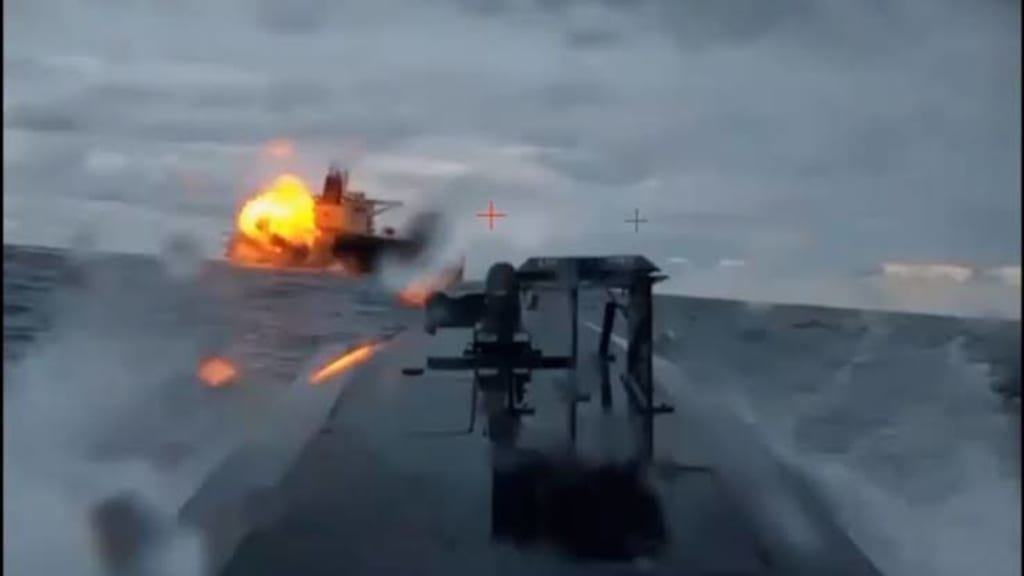
The war in Ukraine has entered a new phase of strategic maritime confrontations, with Ukrainian forces reporting a strike on a Russian “shadow fleet” oil tanker in the Black Sea. The attack underscores the evolving nature of the conflict, the importance of energy resources in modern warfare, and the high-stakes environment that defines Ukraine’s struggle to defend its territory and maritime rights.
Ukraine’s announcement has drawn international attention, raising questions about naval strategy, energy security, and the broader geopolitical consequences for Europe and global oil markets.
What Happened: The Black Sea Strike
According to Ukrainian military sources, the targeted vessel was part of Russia’s so-called “shadow fleet” — tankers used to transport oil and fuel, often circumventing sanctions or international scrutiny. The strike reportedly involved precision-guided munitions, causing damage to the tanker while avoiding major civilian casualties.
Ukraine framed the strike as a strategic operation, aimed at disrupting Russian energy logistics in the region. By targeting fuel supply lines, Ukrainian forces hope to weaken Russia’s operational capacity in southern Ukraine and limit the ability to sustain its forces along contested fronts.
While independent verification is limited due to restricted access in the conflict zone, satellite imagery and intelligence analysts have suggested activity consistent with Ukrainian naval and missile operations in the Black Sea area.
Why the Target Matters
The concept of a “shadow fleet” refers to vessels operating outside standard regulatory frameworks, often used to transport energy commodities while avoiding detection or sanctions. In the context of the Ukraine war, these ships play a vital role in maintaining Russian fuel and energy logistics — essential for both military operations and economic interests.
By striking such a tanker, Ukraine is sending a clear message: disrupting supply chains can be an effective tool in modern conflict. The operation also serves as a symbolic demonstration of Ukraine’s capability to target key strategic assets in contested maritime zones, despite Russia’s overall naval superiority in the region.
Tactics and Strategic Implications
The Black Sea has become a focal point of naval strategy in the conflict. For Ukraine, the ability to strike Russian maritime assets demonstrates both intelligence capacity and precision strike capability. Analysts suggest that Ukraine may have employed missile systems such as the domestically produced Neptune anti-ship missile, known for its long-range accuracy, to neutralize the tanker.
For Russia, the incident highlights vulnerabilities in energy logistics and the need to protect high-value maritime assets. The strike could force a reevaluation of tanker routes, convoy protection, and the deployment of naval escort vessels. It also underscores the challenges of securing maritime supply lines in contested waters, especially when adversaries have access to modern precision weapons.
Civilian and Economic Considerations
While military objectives are at the forefront, the strike also carries economic and regional implications. Oil transported by the shadow fleet contributes to Russia’s energy revenues, which in turn fund both domestic programs and military operations. Disruption of these supplies may impact not only Russia’s war capabilities but also the global energy market, particularly in Europe, where dependence on Russian energy has been a longstanding issue.
Civilian shipping in the Black Sea may also face increased risk. Operations targeting fuel and naval assets necessitate caution, as collateral damage could affect merchant vessels and regional ports, leading to heightened insurance costs, rerouted trade, and global supply chain disruptions.
International Reactions
The strike has drawn attention from global powers monitoring the Ukraine war. Western nations, supportive of Ukraine’s defense, have generally framed the operation as a legitimate military action targeting strategic assets in an ongoing conflict. Conversely, Russia is expected to condemn the strike as unlawful aggression against its commercial and military operations, framing it as an escalation in maritime warfare.
International organizations and maritime authorities are closely monitoring the situation to assess implications for maritime law, freedom of navigation, and the safety of neutral shipping lanes in the Black Sea.
Broader Significance in the Ukraine War
The Black Sea strike demonstrates the modernization of naval strategy in the Ukraine conflict. By leveraging precision strikes, intelligence, and targeting high-value logistical nodes, Ukraine is maximizing impact while minimizing prolonged engagements. The operation also highlights the strategic importance of the Black Sea in controlling energy flows, trade routes, and access to coastal regions under conflict.
Moreover, it signals to Russia that key logistical assets, even in waters under relative control, remain vulnerable to carefully executed attacks.
Conclusion
The reported Ukrainian strike on a Russian shadow fleet oil tanker in the Black Sea is more than a tactical maneuver; it is a strategic signal. It underscores the significance of energy logistics in modern warfare, the evolving capabilities of Ukraine’s military, and the continuing high-stakes environment of the Black Sea region.
As the conflict persists, operations like these will continue to shape the dynamics of naval warfare, influence energy markets, and send a clear message to both adversaries and allies about the lengths to which Ukraine is prepared to defend its sovereignty. The Black Sea, once primarily a commercial and transport route, has now become a frontline in a conflict with far-reaching geopolitical and economic implications.
About the Creator
Fiaz Ahmed
I am Fiaz Ahmed. I am a passionate writer. I love covering trending topics and breaking news. With a sharp eye for what’s happening around the world, and crafts timely and engaging stories that keep readers informed and updated.
Keep reading
More stories from Fiaz Ahmed and writers in The Swamp and other communities.
Poland Arrests Russian Archaeologist Wanted in Ukraine
In a development that underscores the ongoing tensions between Eastern European nations, Polish authorities have arrested a Russian archaeologist who was reportedly wanted by Ukrainian authorities. The arrest has drawn attention from international media, legal experts, and human rights observers, highlighting the complex intersection of criminal justice, diplomacy, and geopolitical disputes in the region.
By Fiaz Ahmed about a month ago in The Swamp
Center Stage with Paul Stewart
*** I'm keen to republish the interviews I did for my series with Vocal creators. It's been a few years and I thought it might be nice to revisit these wonderful conversations. I'll be releasing them one at a time for a few weeks/months.
By Heather Hubler4 days ago in Interview



Comments
There are no comments for this story
Be the first to respond and start the conversation.