
Ukraine Reports Large Russian Mechanised Assault in Battle for Pokrovsk
A major armoured offensive marks one of the fiercest clashes in eastern Ukraine as both sides fight for strategic control.

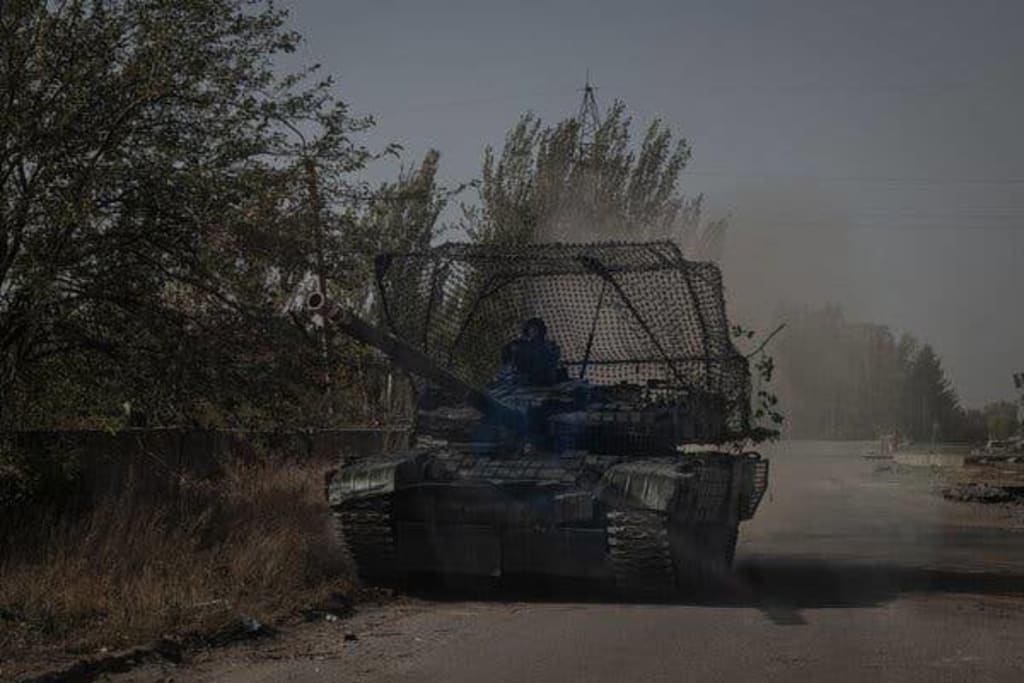
The war in Ukraine continues to unfold with intense ferocity, and one of the latest flashpoints is the battle for Pokrovsk—a city in eastern Ukraine whose control has significant strategic value. Ukrainian officials recently reported a large Russian mechanised assault on the city’s defenses, marking one of the most concentrated offensives in the region in recent months. The assault involved heavy armoured columns, artillery bombardments, and sustained clashes that have raised fears of civilian displacement and heightened tensions across the frontline.
This development underscores the evolving nature of the conflict, the continued strain on Ukraine’s defense forces, and the broader geopolitical implications for Europe and beyond.
Why Pokrovsk Matters
Pokrovsk, located in the Donetsk region, occupies a critical position along major supply routes and serves as a gateway for movement toward deeper Ukrainian territory. Control of Pokrovsk is not merely tactical—it is symbolic. For the Russian military, advancing here could weaken Ukrainian defensive lines and open paths toward other key towns and cities. For Ukraine, holding Pokrovsk is essential to protect civilian populations, maintain morale, and prevent a broader territorial loss in the Donbas.
The city’s strategic position has made it the target of repeated attacks, but the recent mechanised assault represents a significant escalation in both scale and intensity.
What Ukrainian Officials Are Reporting
According to statements from Ukrainian defense authorities, Russian forces launched a coordinated mechanised offensive involving multiple battalion tactical groups. These units included tanks, infantry fighting vehicles, and support armour, all moving under artillery cover toward Pokrovsk’s defensive lines.
Ukraine’s military described the assault as “one of the largest in recent weeks,” emphasizing that the sheer number of armoured vehicles and the pace of advance posed a serious challenge to defenders. Despite being outnumbered in heavy armour, Ukrainian troops reportedly responded with precision artillery strikes, mobile defense tactics, and anti-tank guided missiles to blunt the advance.
While exact casualty numbers on both sides remain difficult to verify independently, Ukrainian sources claimed that dozens of vehicles were damaged or destroyed and that Russian infantry suffered meaningful losses.
Tactics and Terrain: Modern Warfare in Eastern Ukraine
The battle for Pokrovsk reflects the changing nature of warfare on the modern battlefield. Mechanised assaults—once associated with high-speed breakthroughs and territorial gains—are now frequently met with anti-tank systems, drones, and fortified defenses that can disrupt even well-equipped armoured units.
In eastern Ukraine, the terrain often favors defenders: fields broken by hedgerows, pockets of woods, and urban areas offer cover and limit mechanised mobility. Ukrainian forces have capitalized on this, fortifying positions, digging anti-tank ditches, and preparing ambush points.
Russian forces, meanwhile, seem determined to press heavy armour into areas where modern anti-tank weaponry, such as the U.S.-made Javelin and British NLAW systems, have been effective against armoured columns.
This feedback loop—where defence technologies blunt traditional offensive formations—highlights how the Ukraine conflict has become a laboratory for 21st-century combined arms battles.
Civilian Impact and Humanitarian Concerns
As with other frontline cities, the assault on Pokrovsk has raised serious humanitarian concerns. Civilians trapped in combat zones face threats from shelling, infrastructure collapse, loss of essential services, and restricted access to food, medicine, and shelter.
Local authorities have urged residents to evacuate areas near the frontline. However, evacuation is not always an option for the elderly, disabled, or those with limited means. Aid organizations have called for increased humanitarian corridors and protection for civilians under international law.
Schools, hospitals, and residential neighborhoods near the battle zone are at risk of damage as artillery impacts can stray from military targets. This echoes patterns seen earlier in the conflict, where cities like Mariupol and Bakhmut suffered extensive destruction.
International Reactions and Strategic Implications
News of the large mechanised assault has reverberated through diplomatic channels. Western governments and military analysts have expressed concern about renewed Russian offensive operations. Some officials have reiterated support for Ukraine, emphasizing the need for continued military assistance such as air defense systems, artillery, and armoured vehicles.
Moscow, on its part, has framed its actions as part of a broader security strategy—claiming (without independent verification) that its advances protect ethnic Russian populations and counter NATO influence.
The assault on Pokrovsk also comes at a time of ongoing negotiations and sanctions, where the war’s economic impacts are felt globally through energy markets, food insecurity, and geopolitical alliances.
What Comes Next?
The immediate future around Pokrovsk remains uncertain. Ukrainian forces have proven resilient, often repelling attacks that once seemed overwhelming. Yet maintaining defense under sustained pressure drains manpower, equipment, and morale. For Russia, continued offensives risk attrition and international condemnation.
Ultimately, the battle for Pokrovsk represents both a tactical engagement and a symbolic struggle—one that could shape the next phase of the conflict.
The world’s attention may be focused on headlines, but for Ukrainians living near the frontline, the fight for Pokrovsk is deeply personal. It represents the effort to protect homes, families, and a nation’s territorial integrity amid a war that has already reshaped Eastern Europe.
Closing Thoughts
The reported large mechanised assault on Pokrovsk is a stark reminder that the war in Ukraine remains active, complex, and dynamic. It highlights the resilience of defenders, the challenges of modern mechanised warfare, and the profound human cost of conflict.
As global audiences continue to follow this crisis, stories like Pokrovsk illustrate the interplay between military strategy, civilian impact, and international geopolitics—making this more than a battle for territory, but a conflict with deep implications for the future of regional stability and global security.
About the Creator
Fiaz Ahmed
I am Fiaz Ahmed. I am a passionate writer. I love covering trending topics and breaking news. With a sharp eye for what’s happening around the world, and crafts timely and engaging stories that keep readers informed and updated.
Keep reading
More stories from Fiaz Ahmed and writers in The Swamp and other communities.
Pakistan’s Military Sentences Former Spy Chief to 14 Years: A Turning Point in Civil–Military Accountability
In a move that has sent shockwaves across Pakistan’s political and military landscape, the country’s powerful military establishment has sentenced a former senior intelligence chief to 14 years in jail. The decision marks one of the rare moments in Pakistan’s history where a high-ranking figure from within the security apparatus faces such serious consequences. For a nation long shaped by complex civil-military dynamics, this development represents far more than a single conviction—it reflects shifting power balances, internal accountability, and a changing national narrative.
By Fiaz Ahmed about a month ago in The Swamp
Iran Edges Closer to a Revolution That Would Reshape the World
For decades, Iran has existed in a state of controlled tension — balancing public dissent, economic pressure, and rigid political authority. Today, that balance appears more fragile than ever. From widespread protests and economic collapse to generational defiance and geopolitical strain, Iran is edging closer to a revolutionary moment that could dramatically reshape not only the Middle East, but the world.
By Aqib Hussain7 days ago in The Swamp



Comments
There are no comments for this story
Be the first to respond and start the conversation.