
U.S. Interventions in Latin America and the Caribbean Haven’t Always Gone as Planned
How decades of involvement shaped nations, sometimes with unintended consequences

The United States has a long and complicated history of interventions in Latin America and the Caribbean. From the early 20th century to the present day, U.S. actions in the region have ranged from military invasions and covert operations to economic pressure and political support for friendly governments. While some interventions were justified by U.S. policymakers as promoting stability or protecting American interests, the outcomes often deviated sharply from intentions — sometimes destabilizing nations rather than stabilizing them.
A Historical Overview
The history of U.S. intervention in the region dates back to the Monroe Doctrine of 1823, which warned European powers against interfering in the Americas. Over time, the doctrine evolved from a defensive policy into a justification for direct action.
For example, in 1903, the U.S. supported Panama’s separation from Colombia to secure control over the Panama Canal, a vital trade route. While this move advanced U.S. strategic interests, it created lasting tensions with Colombia and contributed to a perception of American interference in sovereign nations.
During the Cold War, U.S. interventions intensified, often motivated by the fear of communism spreading through the Western Hemisphere. This period saw a combination of covert operations, economic support, and military action aimed at influencing elections, toppling governments, or supporting anti-communist regimes.
Notable Interventions That Went Awry
Several interventions in Latin America and the Caribbean illustrate how U.S. actions didn’t always go as planned:
Bay of Pigs Invasion (1961)
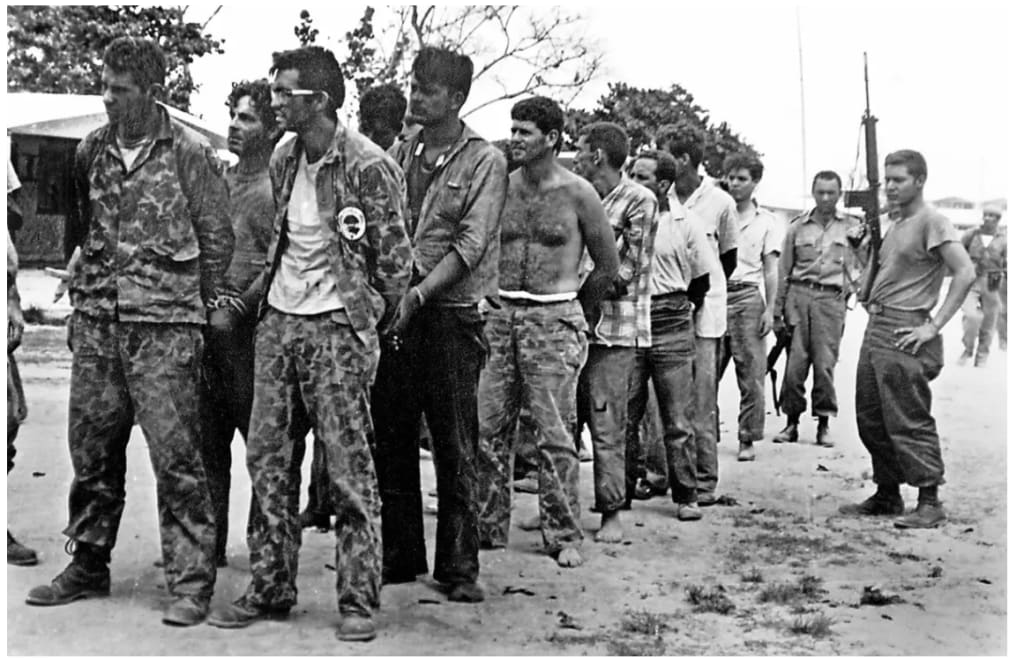
Perhaps the most famous example, the Bay of Pigs invasion in Cuba aimed to overthrow Fidel Castro’s government with a small force of Cuban exiles trained and supported by the CIA. The operation failed spectacularly, strengthening Castro’s grip on power and embarrassing the Kennedy administration.
Chile, 1973
In Chile, U.S. support for the military coup against socialist president Salvador Allende led to Augusto Pinochet’s dictatorship. While the coup aligned with U.S. anti-communist goals, it unleashed years of human rights abuses, political repression, and social unrest that continue to affect Chile today.
Nicaragua, 1980s
During the Reagan administration, the U.S. funded the Contras, a rebel group fighting the Sandinista government. The support included covert operations and aid, sometimes circumventing Congress. The intervention fueled a prolonged civil conflict, caused civilian casualties, and eventually contributed to a controversial scandal in the U.S., known as Iran-Contra.
Haiti, 1994 and Beyond
U.S. military interventions in Haiti were intended to restore democracy after coups ousted elected leaders. While some short-term goals were achieved, long-term stability remained elusive, as political and economic crises continued for decades.
Why Interventions Often Failed
Several factors explain why U.S. interventions in the region frequently went off course:
Underestimating local dynamics: Policymakers sometimes failed to understand the complex political, social, and cultural realities of the countries they intervened in.
Overreliance on military power: Interventions often focused on quick tactical solutions rather than long-term institution-building.
Backlash and nationalism: U.S. involvement sometimes fueled anti-American sentiment, strengthening opposition movements rather than weakening them.
Corruption and human rights violations: Supporting authoritarian regimes for short-term strategic gains often undermined democratic institutions and caused widespread suffering.
Unintended Consequences
Even when interventions achieved immediate objectives, they often triggered unintended consequences. In countries like Guatemala, El Salvador, and Honduras, U.S. involvement during the Cold War helped suppress leftist movements but also contributed to decades of civil war, mass migration, and entrenched inequality.
In the Caribbean, interventions in countries like the Dominican Republic (1965) and Grenada (1983) highlighted the limits of military power. While the U.S. achieved tactical success, the operations sometimes provoked international criticism and complicated relationships with neighboring nations.
Lessons for the Present
The history of U.S. interventions in Latin America and the Caribbean provides several important lessons:
Understanding local context matters: Political, social, and historical nuances can determine the outcome of any intervention.
Military solutions alone are insufficient: Sustainable progress often requires diplomacy, development, and local partnerships.
Short-term gains can produce long-term instability: Policies focused solely on immediate strategic objectives can lead to decades of unintended consequences.
Community engagement is crucial: Interventions that ignore local voices often fail, while those that incorporate local actors and institutions have a better chance of success.
Looking Ahead
Today, U.S. foreign policy in the region is more nuanced, with a mix of diplomacy, economic cooperation, and multilateral engagement. However, the history of missteps underscores the importance of caution, humility, and respect for sovereignty.
For communities across Latin America and the Caribbean, the legacy of U.S. interventions is still felt — from political structures to social movements, migration patterns, and perceptions of American influence. Understanding this history is critical not only for policymakers but also for readers who want to make sense of the region’s complex relationship with the United States.
Conclusion
U.S. interventions in Latin America and the Caribbean serve as a reminder that even well-intentioned actions can have unintended, long-lasting consequences. From failed invasions to covert operations and military support for authoritarian regimes, the lessons are clear: power alone cannot guarantee stability, and understanding the people, cultures, and politics of a nation is crucial for meaningful engagement.
For the region, the story continues. And for the U.S., history serves as both a guide and a cautionary tale for future interventions in its southern neighbors.
About the Creator
Muhammad Hassan
Muhammad Hassan | Content writer with 2 years of experience crafting engaging articles on world news, current affairs, and trending topics. I simplify complex stories to keep readers informed and connected.
Keep reading
More stories from Muhammad Hassan and writers in The Swamp and other communities.
Officials Blame Sparkler Candles for Swiss Ski Resort Fire, as First Victim Named
New Year’s Eve should have been full of laughter, cheers, and celebrations. But for visitors to the popular Swiss ski resort Crans-Montana, the start of 2026 quickly turned into a nightmare. A devastating fire at the packed Le Constellation bar left at least 40 people dead and over 100 injured, many critically.
By Muhammad Hassan15 days ago in The Swamp
Europe Direct Drive Wind Turbine Market Size and Forecast 2025–2033
Market Snapshot The Europe Direct Drive Wind Turbine Market is anticipated to reach US$ 8.94 billion in 2033 from US$ 4.11 billion in 2024, growing at a CAGR of 9.02% during 2025–2033. This expansion is driven by rising investments in renewable energy, supportive government policies, and growing demand for efficient, low-maintenance turbine systems. As Europe accelerates toward carbon-neutral targets, direct drive technology is emerging as a cornerstone of its sustainable energy future.
By Marthan Sir4 days ago in The Swamp
A Dart at Dusk
Seconds ago, the sullen sun set on the two of us… my exuberant furry companion and me. A fresh breeze embraces us, delivering welcome relief from the day’s oppressive heat. His typical stumbling and staggering along — apace with a sloth — has turned into trip-trapping, high-stepping, almost skipping along.
By Angie the Archivist 📚🪶5 days ago in Petlife




Comments
There are no comments for this story
Be the first to respond and start the conversation.