
U.S. Intelligence Says at Least 15,000 at Large After ISIS Detention Camp Collapses in Syria
A humanitarian crisis and security threat converge as thousands disappear into a fractured war zone
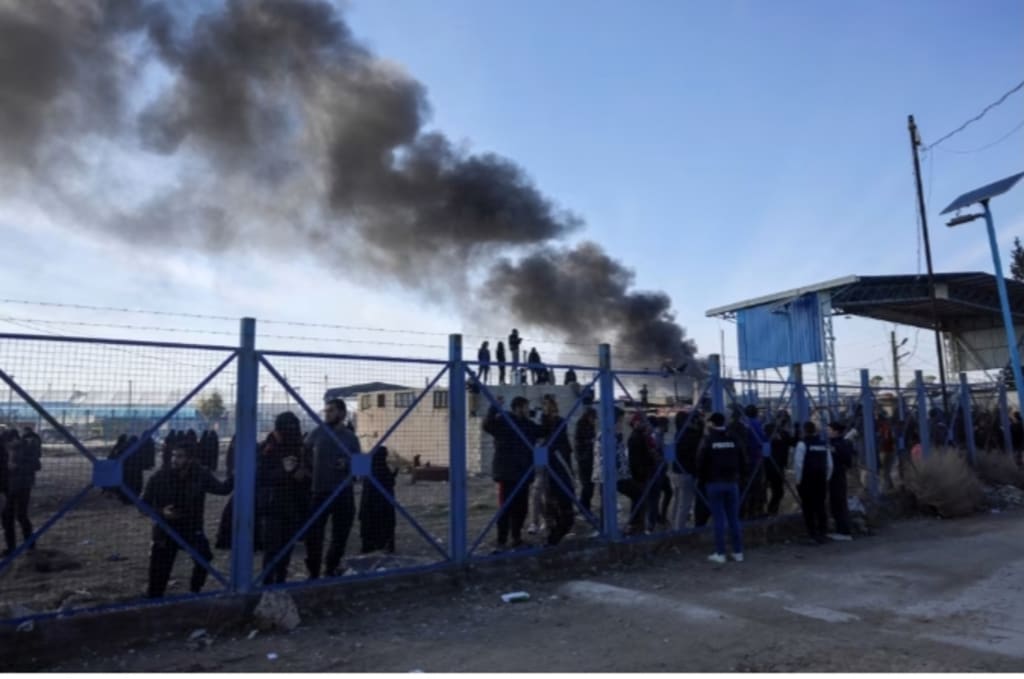
A new U.S. intelligence assessment has sent shockwaves through global security circles: at least 15,000 individuals linked to the so-called Islamic State are now unaccounted for after the collapse of a major detention camp in northern Syria. The development represents one of the most significant reversals in efforts to contain ISIS remnants since the group’s territorial defeat in 2019.
While the so-called caliphate once stretched across vast swaths of Syria and Iraq, the militant organization’s physical territory was dismantled by a coalition led by the United States Department of Defense and local partner forces. Yet the ideology and networks underpinning ISIS never fully disappeared. Now, the collapse of detention infrastructure threatens to reignite instability across an already fragile region.
The Camp’s Breakdown
The facility, located in Kurdish-controlled territory in northern Syria, had long held thousands of suspected ISIS fighters, affiliates and family members. Managed primarily by the Syrian Democratic Forces (SDF), the camp had been described by humanitarian groups as overcrowded, underfunded and increasingly volatile.
Security experts had repeatedly warned that the camps were ticking time bombs. Thousands of detainees were housed in makeshift conditions, with limited oversight and insufficient international assistance. Over time, internal radical networks reportedly flourished inside the camp, with extremist ideology continuing to circulate among detainees.
According to intelligence sources, a combination of internal unrest, coordinated escape efforts and external attacks contributed to the camp’s collapse. In the ensuing chaos, thousands reportedly fled into the surrounding desert and urban corridors.
Who Are the Missing?
The estimated 15,000 now “at large” reportedly include:
Former ISIS fighters
Logistical operatives
Ideological enforcers
Family members and minors raised under ISIS rule
While not all detainees were hardened militants, security officials fear that even a fraction reorganizing into cells could destabilize large parts of Syria and neighboring Iraq.
The concern is not merely theoretical. ISIS has historically relied on prison breaks to replenish its ranks. In past years, coordinated attacks on detention facilities freed experienced fighters who later participated in insurgent operations.
A Resurgence Risk
Although ISIS lost its territorial stronghold during the battle for Baghouz in 2019, the group has continued to operate as an insurgency. Small cells conduct bombings, assassinations and ambushes in remote areas. Intelligence agencies have described ISIS as “degraded but not defeated.”
The mass disappearance of detainees introduces new variables:
Reorganization Potential – Escaped operatives may reconnect with underground networks.
Regional Spillover – Porous borders raise concerns about movement into Iraq or beyond.
Recruitment Symbolism – A large-scale escape could serve as propaganda for extremist sympathizers.
Counterterrorism analysts warn that detention facilities often function as containment mechanisms. When those mechanisms fail, suppressed networks regain oxygen.
The Kurdish Dilemma
The SDF has long argued that it lacks the resources to indefinitely manage tens of thousands of detainees. With shifting geopolitical priorities and fluctuating international funding, Kurdish forces face mounting pressure.
Turkey, which views Kurdish militias as security threats, has conducted operations in northern Syria that complicate regional stability. Meanwhile, the Syrian central government under Bashar al-Assad remains largely disengaged from managing these camps in Kurdish-controlled territory.
The SDF repeatedly urged foreign governments to repatriate their nationals detained in the camps. Many Western countries, however, have been reluctant to bring suspected extremists home, citing legal and political challenges.
The result: a prolonged containment strategy with diminishing support.
Humanitarian Dimensions
Beyond the security implications lies a profound humanitarian crisis.
Many detainees were women and children who lived under ISIS governance, some forcibly relocated or born into the so-called caliphate. Human rights organizations have criticized indefinite detention without trial, particularly for minors.
Conditions inside the camp reportedly included limited medical care, food shortages and internal violence. Radical factions allegedly enforced harsh social codes within sections of the camp, intimidating others.
The collapse, while alarming from a security perspective, also underscores the unsustainability of warehousing thousands of people in limbo for years without long-term solutions.
International Response
The intelligence disclosure has triggered urgent consultations among coalition partners. Officials within the United Nations are reportedly assessing the humanitarian fallout, while regional governments review border security protocols.
The United States has maintained a limited troop presence in northeastern Syria focused on counter-ISIS operations. However, broader U.S. engagement in Syria has waned compared to peak years of the conflict.
European governments now face renewed pressure to repatriate citizens formerly affiliated with ISIS. Failure to do so could leave stateless individuals drifting in ungoverned spaces, vulnerable to re-radicalization.
Broader Geopolitical Implications
Syria remains fragmented after more than a decade of civil war. Competing spheres of influence — involving Russia, Iran, Turkey and Western powers — create a patchwork of control. In such an environment, security vacuums can quickly expand.
If even a modest percentage of the 15,000 missing individuals regroup effectively, they could exploit:
Remote desert terrain
Displaced populations
Political instability
Economic desperation
Extremist movements historically thrive where governance is weak and grievances run deep.
The psychological impact of the camp’s collapse may also resonate. ISIS propaganda has long emphasized narratives of resilience and divine endurance. A mass escape feeds directly into that storyline.
The Path Forward
Counterterrorism experts argue that addressing the crisis requires a multi-pronged approach:
Enhanced Intelligence Coordination – Tracking movements across borders
International Burden-Sharing – Repatriation and prosecution where feasible
Humanitarian Stabilization – Investing in community reintegration and prevention programs
Local Governance Support – Strengthening administrative capacity in northeastern Syria
Simply recapturing escapees, analysts warn, will not solve the structural vulnerabilities that allowed the collapse in the first place.
Conclusion
The revelation that at least 15,000 individuals linked to ISIS are now unaccounted for following a detention camp collapse in Syria is more than a security update — it is a warning.
Years after the territorial defeat of ISIS, the underlying conditions that fuel extremism persist. Overcrowded camps, stalled repatriations and fragile governance created a powder keg. Its ignition now threatens to ripple across borders.
Whether this moment marks a temporary setback or the beginning of a renewed insurgency will depend on coordinated international action. What is clear, however, is that the fight against extremist networks does not end with battlefield victories. Containment without resolution carries its own risks — and the consequences of neglect can surface suddenly, as they have once again in Syria.
About the Creator
Why Black History Matters in America?
The United States of America is celebrating their 250th anniversary in 2026. I'm proud to be an American and as someone who was born here, I wouldn't imagine myself living anywhere else. This is a country where opportunities are possible. Where anyone can be successful in anything they desire to do. Equality, community, and togetherness are the backbones of what America is and should be about. However, we have an administration who wants to erase and disregard those who have made positive, meaningful impacts in our country, specifically Black figures, such as Martin Luther King, Jr., Rosa Parks, and Maya Angelou. President Trump and his administration have been constantly complaining and fighting against what they call the "Woke agenda". They use this excuse as a distraction from other issues they refuse to address, such as the high cost of living, climate change, and inflation. That equality is dividing America, when in reality, it's bringing us together. Being woke is not tied to a specific political party. No matter where you stand on the political spectrum, you can still care about other people and their plights. Compassion and empathy for others isn't tied to a political party, either. We were taught as children to treat others the way we want to be treated and not judge others because they're different from us. Caring about others isn't a personal attack on your beliefs. It doesn't make you any less of a person. People who are easily offended over African American figures, past or present, or anything related to it, are grasping at straws. Current and future generations need to know who people like Harriet Tubman and Shirley Chisholm were, especially in the classroom. Black History is part of American History. It should be recognized, not hidden or forgotten. Besides, you can't shield children from everything, just because your feelings are easily hurt.
By Mark Wesley Pritchard 19 days ago in The Swamp
Exclusive: Riyadh Wants to Replace Israel with Syria for Greece Fibre-Optic Cable Route
Saudi Arabia is pushing for a major revision to a planned undersea fibre-optic cable linking the Middle East with Europe, seeking to reroute the project through Syria instead of Israel, according to regional officials and industry sources familiar with the negotiations. The proposal would connect the cable to Greece, offering a shorter and potentially cheaper digital corridor between Asia and Europe. The project, backed by Saudi investment and supported by several Gulf and European telecom operators, is designed to strengthen data connectivity between the Middle East and Europe while reducing reliance on congested routes through the Red Sea and Egypt. However, Riyadh’s push to bypass Israel reflects broader geopolitical calculations as well as technical and regulatory concerns. Strategic Shift in Routing Under earlier plans, the cable would have passed from the Gulf through Israel and then onward to the Mediterranean before reaching Greece. Saudi officials now argue that routing through Syria would provide greater political control over infrastructure and avoid dependence on a country with which Riyadh does not maintain formal diplomatic relations. A senior regional official said the change was driven by “sovereignty and security considerations” rather than purely commercial factors. “Saudi Arabia wants to ensure that critical digital infrastructure remains under friendly and cooperative jurisdictions,” the official noted. The revised route would cross Saudi territory, enter Syria via Jordan or Iraq, and then continue under the Mediterranean Sea to Greece. Engineers say the route is technically feasible, though it would require new landing stations and regulatory approvals from Damascus and European partners. Syria’s Return to Regional Projects For Syria, the proposal could represent a major economic opportunity and a symbolic step toward reintegration into regional infrastructure networks after years of isolation due to civil war and international sanctions. Syrian authorities have reportedly welcomed the idea, viewing it as a way to generate transit revenue and rebuild damaged telecommunications systems. Telecom analysts say Syria’s geographic position makes it a natural bridge between the Gulf and Europe. “From a purely technical standpoint, Syria offers one of the shortest land corridors to the Mediterranean,” said a regional infrastructure consultant. “The challenge is political risk and long-term stability.” Israel Factor and Regional Politics Israel had been considered a strong candidate for the original route because of its advanced telecom infrastructure and proximity to Europe. But Saudi officials are reluctant to rely on Israeli territory for a project they view as strategically sensitive. Although Saudi Arabia and Israel have cooperated indirectly in security matters, formal diplomatic ties have not been established. The rerouting effort comes amid renewed tensions in the region and shifting alliances following the Gaza war and broader instability in the Middle East. An Israeli industry source said the proposal, if implemented, would be “a missed opportunity for regional digital integration.” “Israel has the infrastructure and experience to handle such a project efficiently,” the source said, adding that excluding Israel could increase both cost and risk. European and Commercial Concerns European partners, including Greek authorities, are said to be cautiously evaluating the Saudi proposal. Greece sees the project as a way to strengthen its role as a digital gateway between Europe and the Middle East, but officials are concerned about the regulatory and security implications of routing through Syria. Brussels has not publicly commented, but diplomats note that European Union sanctions on Syria could complicate financing and insurance for the project. Private telecom companies involved in the consortium are reportedly pressing for guarantees that the route will not expose them to legal or reputational risks. One executive involved in the talks said the consortium is studying multiple options. “We are balancing geopolitics, engineering feasibility, and long-term reliability. This is not just about laying a cable; it’s about creating a stable digital highway for decades.” Saudi Digital Ambitions The fibre-optic project is part of Saudi Arabia’s broader push to become a global data and technology hub under its Vision 2030 economic diversification plan. Riyadh has invested heavily in data centers, cloud services, and international connectivity to attract tech firms and financial institutions. Officials argue that controlling major data routes will enhance national security and reduce dependence on traditional chokepoints such as the Suez Canal. Recent disruptions to Red Sea cables caused by maritime incidents have reinforced Saudi concerns about vulnerability. “Digital infrastructure is now as important as oil pipelines,” said a Saudi technology policy adviser. “Whoever controls the routes controls the future of data trade.” Uncertain Outcome Negotiations over the route are still at an early stage, and no final decision has been made. Industry insiders say pressure from European regulators and commercial partners could yet restore Israel to the plan or result in a hybrid solution with multiple landing points. For now, Riyadh’s push to replace Israel with Syria underscores how geopolitics is reshaping even the most technical infrastructure projects. What was once an engineering decision has become a diplomatic balancing act involving regional rivalries, post-war reconstruction, and Europe’s digital security. As one Western diplomat observed, “This cable is not just about faster internet. It’s about influence, trust, and who sits at the crossroads of tomorrow’s data economy.”
By Fiaz Ahmed about 22 hours ago in The Swamp



Comments
There are no comments for this story
Be the first to respond and start the conversation.