
US Envoy Mike Huckabee Says It Would Be ‘Fine’ if Israel Took All Middle East Land
A controversial remark ignites diplomatic shockwaves across Washington and the region
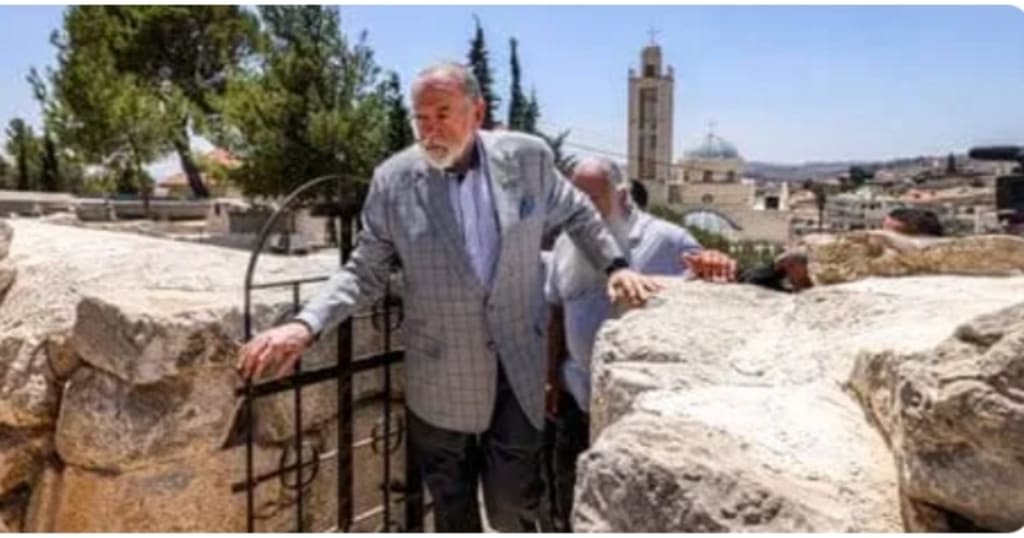
When a senior American envoy suggests it would be “fine” if Israel took control of all Middle Eastern land, the world listens — and reacts. That is precisely what happened after comments attributed to Mike Huckabee, a prominent U.S. political figure serving in a diplomatic capacity, triggered a storm of political debate and international concern.
The remark, delivered during a public discussion about regional security and Israel’s long-term strategic position, immediately reverberated through diplomatic circles. Critics described the statement as inflammatory and destabilizing. Supporters argued it reflected long-standing ideological alignment with Israel’s security priorities. Regardless of interpretation, the comment has intensified scrutiny over U.S. messaging in one of the world’s most volatile regions.
The Context Behind the Comment
The Middle East remains shaped by decades of territorial disputes, fragile peace agreements and unresolved conflicts. Central among these is the Israeli-Palestinian question, which continues to influence regional alliances and global diplomacy.
Israel, officially the Israel, has fought multiple wars since its founding in 1948. Territorial control has shifted over time, particularly following the 1967 Six-Day War, when Israel captured the West Bank, Gaza Strip, East Jerusalem and the Golan Heights. Some of these territories remain at the center of ongoing disputes.
For decades, U.S. policy has officially supported a two-state solution — the creation of an independent Palestinian state alongside Israel. However, rhetoric from certain political figures has at times suggested broader interpretations of sovereignty and security.
Huckabee’s comment, interpreted by many as endorsing the idea of expanded Israeli territorial control beyond its current borders, departed from carefully measured diplomatic language typically used by U.S. envoys.
Political Reactions in Washington
Within hours of the statement becoming public, lawmakers from both parties weighed in. Some Republican figures defended Huckabee’s remarks as hyperbolic but rooted in solidarity with Israel’s right to defend itself. Democratic leaders, meanwhile, criticized the comment as reckless and counterproductive to peace negotiations.
Foreign policy analysts noted that such language risks undermining long-standing diplomatic frameworks. The United States has historically positioned itself as a mediator in Middle Eastern conflicts. Even symbolic deviations from neutrality can carry significant consequences.
Officials at the U.S. Department of State reportedly sought to clarify that official U.S. policy remains unchanged. However, the episode highlighted how individual remarks can complicate already delicate diplomatic balances.
Regional Fallout
Reactions across the Middle East were swift.
In Jordan, where a large Palestinian population resides, commentators warned that rhetoric suggesting sweeping territorial absorption threatens regional stability. In Saudi Arabia, analysts emphasized that normalization talks with Israel depend heavily on credible commitments to Palestinian statehood.
Meanwhile, Palestinian officials described the comment as evidence that some U.S. leaders are abandoning even the pretense of supporting Palestinian self-determination. Social media across the region amplified outrage, with hashtags criticizing American bias trending in multiple countries.
Even nations that have signed normalization agreements with Israel under the Abraham Accords framework expressed caution. The idea of expanded territorial claims contradicts the diplomatic assurances that facilitated those agreements.
Israel’s Position
Within Israel itself, reactions were mixed.
Members of right-wing political factions viewed the comment as validation of long-held arguments regarding historical and security claims. Others within Israel’s political establishment stressed the importance of maintaining international legitimacy and preserving strategic alliances.
Israel’s government has often emphasized security concerns in defending territorial policies, particularly regarding the West Bank and border regions. However, official statements have generally stopped short of endorsing control over the entire Middle East.
The difference between rhetorical support and formal policy is significant. Expansive territorial claims would fundamentally alter regional geopolitics and likely provoke widespread instability.
International Law and Territorial Sovereignty
From a legal standpoint, the suggestion that one nation could legitimately “take” land across the Middle East conflicts with established principles of international law. The United Nations Charter prohibits the acquisition of territory by force. Borders are recognized through treaties, agreements and multilateral recognition.
Any shift toward endorsing large-scale territorial expansion would invite condemnation from international institutions and potentially trigger sanctions or diplomatic isolation.
The Middle East’s complex patchwork of states — from Lebanon to Egypt and beyond — is governed by sovereign agreements shaped over the past century. Redrawing those lines would not only be legally contentious but militarily explosive.
The Power of Diplomatic Language
Diplomacy often hinges less on concrete actions than on the language used to describe intentions. Words signal priorities, alliances and limits.
When a U.S. envoy suggests that sweeping territorial control would be “fine,” it sends signals — intentional or not — about America’s strategic posture. Even if meant rhetorically, such statements can erode trust among partners who rely on Washington’s balancing role.
In a region where mistrust runs deep and narratives of occupation and resistance are politically potent, language matters profoundly.
Domestic Political Implications
Huckabee’s remarks also carry domestic resonance. American politics has seen growing polarization over foreign policy, particularly regarding Israel and Palestine. Some evangelical and conservative constituencies strongly support expansive interpretations of Israeli sovereignty, often grounded in religious conviction.
At the same time, progressive groups have increasingly criticized Israeli settlement policies and advocated stronger protections for Palestinian rights.
The controversy may therefore reflect broader shifts in American political discourse rather than a formal policy pivot. Nonetheless, statements made by diplomats hold weight beyond domestic debates.
Strategic Consequences
If such rhetoric were to translate into policy, the implications would be far-reaching:
Potential collapse of ongoing normalization talks between Israel and Arab states
Escalation of tensions in contested territories
Increased influence for rival powers seeking to expand their footprint in the region
Erosion of U.S. credibility as a mediator
The Middle East remains a strategic crossroads for energy markets, global shipping routes and security alliances. Stability, however imperfect, underpins economic and geopolitical equilibrium.
Conclusion
The statement attributed to Mike Huckabee has ignited controversy not because territorial disputes are new, but because diplomatic language carries extraordinary weight in a region shaped by historical grievances and fragile balances.
Whether intended as rhetorical emphasis or ideological expression, suggesting that it would be “fine” for Israel to take all Middle Eastern land disrupts carefully maintained diplomatic norms. It forces governments, analysts and citizens alike to confront difficult questions about sovereignty, security and the future of U.S. engagement in the region.
In international diplomacy, words are rarely just words. They can reassure allies, provoke adversaries — or, as this episode demonstrates, send shockwaves far beyond the room in which they were spoken.
About the Creator
Why Black History Matters in America?
The United States of America is celebrating their 250th anniversary in 2026. I'm proud to be an American and as someone who was born here, I wouldn't imagine myself living anywhere else. This is a country where opportunities are possible. Where anyone can be successful in anything they desire to do. Equality, community, and togetherness are the backbones of what America is and should be about. However, we have an administration who wants to erase and disregard those who have made positive, meaningful impacts in our country, specifically Black figures, such as Martin Luther King, Jr., Rosa Parks, and Maya Angelou. President Trump and his administration have been constantly complaining and fighting against what they call the "Woke agenda". They use this excuse as a distraction from other issues they refuse to address, such as the high cost of living, climate change, and inflation. That equality is dividing America, when in reality, it's bringing us together. Being woke is not tied to a specific political party. No matter where you stand on the political spectrum, you can still care about other people and their plights. Compassion and empathy for others isn't tied to a political party, either. We were taught as children to treat others the way we want to be treated and not judge others because they're different from us. Caring about others isn't a personal attack on your beliefs. It doesn't make you any less of a person. People who are easily offended over African American figures, past or present, or anything related to it, are grasping at straws. Current and future generations need to know who people like Harriet Tubman and Shirley Chisholm were, especially in the classroom. Black History is part of American History. It should be recognized, not hidden or forgotten. Besides, you can't shield children from everything, just because your feelings are easily hurt.
By Mark Wesley Pritchard 19 days ago in The Swamp



Comments
There are no comments for this story
Be the first to respond and start the conversation.