
U.S. and Iran Hold Nuclear Talks Amid Threats of Regional War
Diplomatic Efforts to Avert Regional Conflict and Nuclear Proliferation
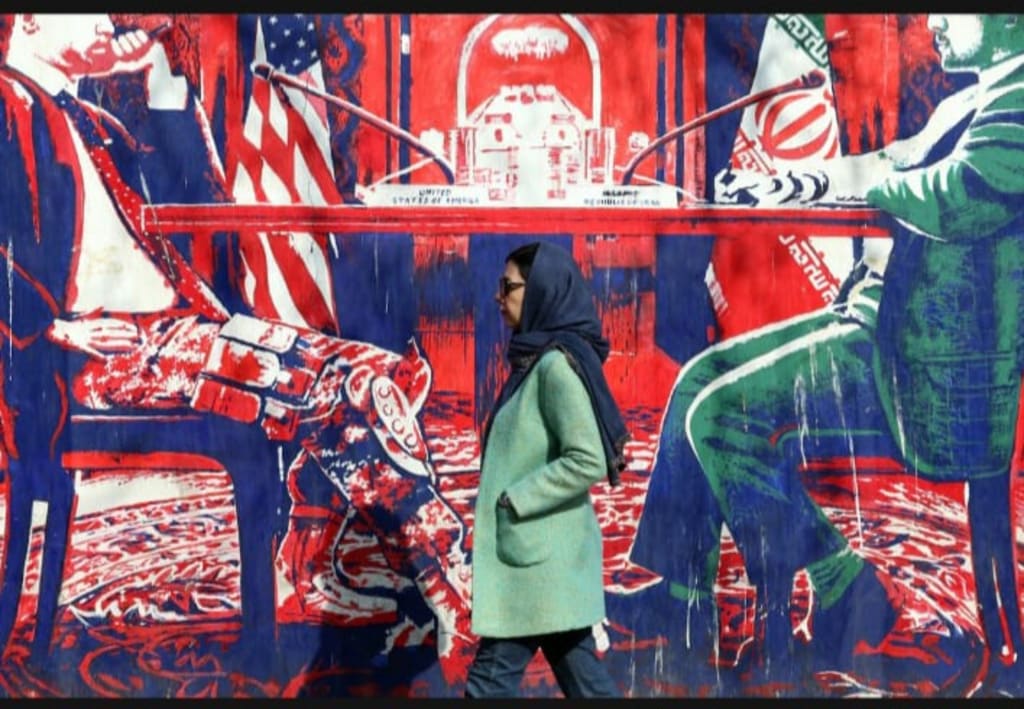
In the midst of rising tensions in the Middle East and growing fears of an all-out regional war, the United States and Iran have resumed critical nuclear talks. After years of escalating hostilities, both nations find themselves at a fragile juncture, with the fate of not only their bilateral relations but also regional stability hanging in the balance. These discussions come at a time when Iran’s nuclear program has once again become a focal point in international diplomacy, with the stakes higher than ever before.
The Shadow of Conflict in the Middle East
The Middle East has long been a region fraught with volatility, and the rivalry between the United States and Iran has been a central pillar of this instability. Over the past decade, tensions between the two countries have escalated dramatically, from the U.S. withdrawal from the Iran nuclear deal in 2018 under President Donald Trump, to the subsequent “maximum pressure” campaign aimed at crippling Iran’s economy, to the violent clashes between Iranian-backed militias and U.S. forces in Iraq and Syria. These provocations have further complicated the security dynamics of an already precarious region.
In parallel, Iran has steadily advanced its nuclear program, reducing its commitments under the Joint Comprehensive Plan of Action (JCPOA), the 2015 agreement that was designed to limit Iran’s nuclear activities in exchange for sanctions relief. Tehran's actions—such as enriching uranium to near-weapons-grade levels and installing advanced centrifuges—have significantly raised alarm within the international community. Iran maintains that its nuclear program is for peaceful purposes, but many fear that the nation’s technological advancements could ultimately be diverted to produce nuclear weapons.
Now, with the region on the brink of war, the U.S. and Iran have decided to re-enter talks in an effort to prevent further escalation. While the discussions hold promise, they also reflect the high stakes involved in averting a devastating conflict.
The Role of the Nuclear Deal
The original nuclear agreement, known as the Iran Deal or the JCPOA, was a landmark moment in diplomatic history. Signed by Iran and six world powers—the U.S., the U.K., France, Russia, China, and Germany—the agreement placed strict limits on Iran’s nuclear program in exchange for relief from international sanctions. For years, the deal was seen as a major diplomatic breakthrough, with the potential to reshape the Middle East's political landscape.
However, the Trump administration’s 2018 withdrawal from the JCPOA and the reimposition of harsh sanctions on Iran led to a dramatic increase in tensions. Iran, in response, began breaching the terms of the deal by ramping up its nuclear enrichment activities and limiting inspections by the International Atomic Energy Agency (IAEA). These actions, combined with the economic devastation caused by U.S. sanctions, pushed both countries to the edge of conflict.
The Biden administration, which took office in 2021, initially sought to return to the nuclear deal, but the path to negotiations has been fraught with challenges. Iran has demanded that the U.S. lift sanctions and return to the agreement without additional preconditions, while Washington has expressed concerns over Iran’s expanding nuclear capabilities and its regional behavior, particularly in terms of support for proxy groups in Syria, Iraq, Lebanon, and Yemen.
The Regional Tensions That Shape the Talks
The nuclear talks cannot be viewed in isolation; they are deeply intertwined with broader geopolitical dynamics in the Middle East. One of the primary drivers of U.S.-Iranian tensions is the growing influence of Iran in the region, particularly through its network of militias and allies. From Yemen to Lebanon, Iran has cultivated relationships with various groups, including Hezbollah, Hamas, and the Houthi rebels, which have destabilized several countries and posed a direct challenge to U.S. interests in the region.
Iran’s nuclear ambitions, in this context, are seen by many as not just a threat to Israel, but also to Arab Gulf states such as Saudi Arabia and the United Arab Emirates. These countries, fearing Iran’s growing power, have aligned themselves more closely with the U.S. in recent years, seeking security guarantees and weapons to counterbalance Iran’s influence. The Arab states, already embroiled in a complex web of rivalries with Iran, worry that a nuclear-capable Iran could embolden Tehran to further destabilize the region, shifting the balance of power in favor of Tehran.
Moreover, Israel has been particularly vocal in its opposition to Iran’s nuclear program. Israel, which has long maintained a policy of ambiguity regarding its own nuclear capabilities, views a nuclear-armed Iran as an existential threat. Israeli officials have repeatedly warned that they would take military action to prevent Iran from acquiring nuclear weapons, further adding to the tension in an already volatile region.
In the face of these challenges, the U.S. finds itself balancing the desire to prevent Iran from acquiring nuclear weapons with the need to maintain regional alliances and avoid a wider conflict. The possibility of a nuclear-armed Iran has the potential to spark a regional arms race, with other nations, including Saudi Arabia, potentially seeking their own nuclear capabilities in response.
The Risk of War and the Urgency of Diplomacy
As the nuclear talks unfold, the threat of regional war looms large. The 2020 assassination of Iranian General Qassem Soleimani by a U.S. drone strike nearly led to full-scale war, and while tensions have cooled somewhat since then, both sides remain on high alert. The risk of miscalculation, accidental escalation, or a rogue attack by proxy groups remains high.
Furthermore, Iranian-backed militias continue to target U.S. assets in Iraq, Syria, and the broader region, while the U.S. has warned that any Iranian attack on American personnel or interests will result in a swift and disproportionate response. This constant state of brinkmanship could easily spiral into a broader conflict.
The current talks are, therefore, an urgent attempt to forestall this scenario. Both sides understand the catastrophic consequences of a full-scale war in the Middle East, not only for their own countries but for the stability of global oil markets, the security of key regional allies, and the threat of radicalization and terrorism. For Iran, a war could further isolate the country and lead to devastating economic consequences. For the U.S., involvement in another Middle Eastern conflict would stretch its military resources and likely generate widespread anti-American sentiment in the region.
The Road Ahead: A Delicate Balance
As the U.S. and Iran navigate these crucial negotiations, both sides must make difficult choices. For the U.S., the challenge will be balancing diplomatic engagement with the firm stance on Iran’s nuclear program and regional behavior. For Iran, agreeing to constraints on its nuclear activities while retaining its sovereignty and regional influence will be a tough sell, particularly given the domestic pressures it faces.
While a comprehensive deal may still be elusive, the ongoing talks offer a glimmer of hope that diplomacy can defuse tensions before the region is pushed into a catastrophic war. The international community, including the European Union, Russia, and China, will likely continue to play a crucial role in facilitating dialogue and encouraging both sides to make the necessary compromises.
The outcome of these talks could determine not only the future of U.S.-Iran relations but also the fate of the Middle East for years to come. For now, the world watches closely, aware that the stakes are higher than ever before.
About the Creator
Keep reading
More stories from Ayesha Lashari and writers in The Swamp and other communities.
Deadly Islamabad Bombing Sharpens Focus on Cross-Border Attacks in Pakistan
On the night of March 21, 2026, the capital city of Islamabad was rocked by a devastating bombing that left dozens dead and hundreds injured. The attack, believed to be a part of an escalating campaign of cross-border terrorism, has sent shockwaves through the nation and raised serious questions about Pakistan's security apparatus. It has also highlighted the growing threat posed by insurgents operating across Pakistan’s porous borders with Afghanistan and India, countries that have long been central to the geopolitical challenges facing the region. This bombing has sparked renewed focus on how Pakistan should handle the rise of cross-border terrorism and what steps need to be taken to combat the increasing threats to its internal security.
By Ayesha Lasharia day ago in The Swamp
Why Black History Matters in America?
The United States of America is celebrating their 250th anniversary in 2026. I'm proud to be an American and as someone who was born here, I wouldn't imagine myself living anywhere else. This is a country where opportunities are possible. Where anyone can be successful in anything they desire to do. Equality, community, and togetherness are the backbones of what America is and should be about. However, we have an administration who wants to erase and disregard those who have made positive, meaningful impacts in our country, specifically Black figures, such as Martin Luther King, Jr., Rosa Parks, and Maya Angelou. President Trump and his administration have been constantly complaining and fighting against what they call the "Woke agenda". They use this excuse as a distraction from other issues they refuse to address, such as the high cost of living, climate change, and inflation. That equality is dividing America, when in reality, it's bringing us together. Being woke is not tied to a specific political party. No matter where you stand on the political spectrum, you can still care about other people and their plights. Compassion and empathy for others isn't tied to a political party, either. We were taught as children to treat others the way we want to be treated and not judge others because they're different from us. Caring about others isn't a personal attack on your beliefs. It doesn't make you any less of a person. People who are easily offended over African American figures, past or present, or anything related to it, are grasping at straws. Current and future generations need to know who people like Harriet Tubman and Shirley Chisholm were, especially in the classroom. Black History is part of American History. It should be recognized, not hidden or forgotten. Besides, you can't shield children from everything, just because your feelings are easily hurt.
By Mark Wesley Pritchard 7 days ago in The Swamp
Nipah Virus: What It Is, Why It Matters, and What You Should Know Now
The world is keeping a close eye on the Nipah virus (NiV) after recent cases surfaced in West Bengal, India. While the risk of international spread is currently low, the virus’s high fatality rate and potential for human-to-human transmission make it a serious public health concern. This blog explains what Nipah is, how it spreads, its symptoms, and practical tips to stay safe.
By Sajida Sikandar6 days ago in The Swamp




Comments
There are no comments for this story
Be the first to respond and start the conversation.