
Deadly Islamabad Bombing Sharpens Focus on Cross-Border Attacks in Pakistan
The Islamabad Attack and the Escalating Threat of Cross-Border Terrorism in Pakistan
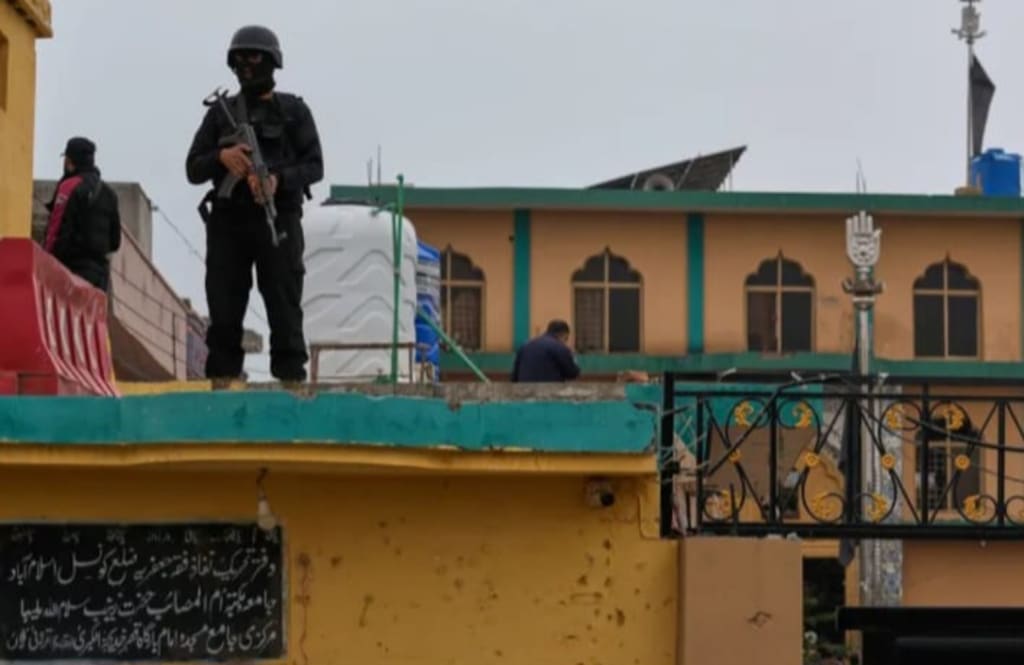
On the night of March 21, 2026, the capital city of Islamabad was rocked by a devastating bombing that left dozens dead and hundreds injured. The attack, believed to be a part of an escalating campaign of cross-border terrorism, has sent shockwaves through the nation and raised serious questions about Pakistan's security apparatus. It has also highlighted the growing threat posed by insurgents operating across Pakistan’s porous borders with Afghanistan and India, countries that have long been central to the geopolitical challenges facing the region. This bombing has sparked renewed focus on how Pakistan should handle the rise of cross-border terrorism and what steps need to be taken to combat the increasing threats to its internal security.
The Islamabad Bombing: A Tragedy that Shook the Nation
The bombing, which targeted a high-security area of Islamabad, was a stark reminder of the fragile security situation in Pakistan. While the city has historically been seen as a safer and more stable part of the country, recent years have seen an increase in violent incidents and terrorist attacks. In this instance, the attackers used a vehicle-borne improvised explosive device (VBIED), which was detonated near a crowded area filled with people celebrating the spring festival. The blast was so powerful that it caused severe damage to buildings and infrastructure, leaving a scene of chaos and devastation in its wake.
Reports suggest that several militant groups, many of which operate from across Pakistan's borders, could have been behind the attack. The Pakistani government has yet to confirm the group responsible, but intelligence reports point to the involvement of insurgent factions with cross-border links. The bombing is just the latest in a series of attacks that have intensified tensions between Pakistan and its neighboring countries, particularly Afghanistan and India.
Cross-Border Terrorism: A Persistent Threat
The bombing in Islamabad is not an isolated incident; rather, it is part of a broader pattern of increasing cross-border terrorism that has plagued Pakistan for decades. The border areas of Afghanistan and Pakistan, particularly the Federally Administered Tribal Areas (FATA) and Khyber Pakhtunkhwa (KP), have been notorious breeding grounds for militants. These insurgent groups have found sanctuary in the rugged terrain that straddles the two countries, taking advantage of weak border security and porous national boundaries.
Historically, Pakistan has faced cross-border terrorism from a variety of groups, some of which have ties to foreign intelligence agencies or ideological networks. The rise of the Taliban in Afghanistan, the resurgence of Tehrik-i-Taliban Pakistan (TTP), and the growing influence of militant groups such as Lashkar-e-Taiba (LeT) and Jaish-e-Mohammed (JeM) in the region have all contributed to the increasing wave of cross-border violence. These groups often find safe havens across the porous Afghan-Pakistan border, from where they launch deadly attacks on Pakistani civilians and security forces.
Additionally, India has long accused Pakistan of supporting cross-border insurgents in Jammu and Kashmir, a contentious region that remains one of the most militarized zones in the world. These ongoing hostilities, coupled with Pakistan’s own security challenges in the western borderlands, have created a volatile and unpredictable security environment in the region.
The Role of Afghanistan in Cross-Border Attacks
Afghanistan has been a critical factor in the rise of cross-border terrorism in Pakistan. While the Afghan Taliban’s resurgence in 2021 has complicated the situation, it has also given insurgent groups operating along the Pakistan-Afghanistan border a boost. Pakistan has repeatedly accused Afghanistan of harboring militants who target Pakistan, with little action taken to curb their operations.
The porous border and difficult geography of the region make it an ideal location for insurgents to regroup, rearm, and launch cross-border attacks. Pakistan's military operations in the tribal areas of FATA and KP have met with limited success, and despite the construction of a security fence along the border, militants continue to find ways to infiltrate Pakistan from Afghanistan.
Moreover, the instability in Afghanistan has exacerbated Pakistan's internal security crisis. With the Taliban in control, it has become increasingly difficult for Pakistan to manage cross-border terrorism, especially when the Afghan government is either unable or unwilling to cooperate in counterterrorism efforts.
Pakistan’s Response to Cross-Border Threats
In response to the rising tide of cross-border terrorism, Pakistan has ramped up its military operations and intelligence gathering efforts. The military has conducted multiple operations in the tribal areas to target insurgent safe havens, and there has been increased cooperation between Pakistan and China in tackling terrorism. However, the country faces significant challenges in fully securing its borders and preventing insurgents from crossing over.
The Pakistani government has also called for more robust international cooperation in dealing with the threat of cross-border terrorism. At forums like the United Nations and the Shanghai Cooperation Organization (SCO), Pakistan has repeatedly urged neighboring countries, including Afghanistan and India, to take stronger action against terrorist networks. Despite this, tensions between Pakistan and India, particularly over Kashmir, remain a significant hurdle in forging any meaningful collaboration in the fight against terrorism.
Furthermore, Pakistan has been advocating for the international community to increase diplomatic pressure on Afghanistan to curtail the activities of militant groups operating within its borders. With Afghanistan now controlled by the Taliban, Pakistan’s role in managing cross-border terrorism has become even more challenging, as it is unclear how much influence the Pakistani government has over Afghanistan's new regime.
The Path Forward: Strengthening Border Security and Diplomacy
In the aftermath of the Islamabad bombing, it is evident that Pakistan must strengthen its approach to combatting cross-border terrorism. This could involve both improving border security and investing in diplomatic efforts to engage with Afghanistan and regional partners.
One of the first steps should be to increase the surveillance and monitoring of the Afghan-Pakistan border. The construction of a security fence along the border has been a step in the right direction, but more comprehensive measures, including joint border patrols with Afghanistan, may be necessary to curb the movement of militants.
Diplomatically, Pakistan should seek to build stronger ties with Afghanistan and other regional players in combating terrorism. This could involve creating multilateral agreements aimed at intelligence sharing and coordinated military action against insurgent groups. Engaging with international partners, including the United States and China, may also help to apply greater pressure on the Taliban to curtail cross-border insurgent activities.
Conclusion
The deadly bombing in Islamabad underscores the gravity of the cross-border terrorism problem in Pakistan. As the country grapples with the aftermath of this tragic event, it must confront the growing challenge of insurgent groups that exploit weak borders and regional instability. While Pakistan’s military has made significant efforts to combat these threats, addressing cross-border terrorism will require a comprehensive strategy that involves not only stronger border security but also deeper diplomatic engagement with Afghanistan and the wider international community. Until these issues are addressed, attacks like the one in Islamabad will likely continue to plague the nation’s security landscape, with far-reaching consequences for regional stability.
About the Creator
Keep reading
More stories from Ayesha Lashari and writers in The Swamp and other communities.
Judge Orders Trump Administration to Restore Funding for NY–NJ Rail Tunnel
A federal judge has ordered the Trump administration to restore funding for a long-delayed rail tunnel project connecting New York and New Jersey, marking a significant legal and political development in the ongoing battle over America’s infrastructure priorities. The ruling is being viewed as a major victory for state leaders, transportation advocates, and millions of commuters who rely on the aging rail corridor beneath the Hudson River.
By Ayesha Lasharia day ago in The Swamp
Why Black History Matters in America?
The United States of America is celebrating their 250th anniversary in 2026. I'm proud to be an American and as someone who was born here, I wouldn't imagine myself living anywhere else. This is a country where opportunities are possible. Where anyone can be successful in anything they desire to do. Equality, community, and togetherness are the backbones of what America is and should be about. However, we have an administration who wants to erase and disregard those who have made positive, meaningful impacts in our country, specifically Black figures, such as Martin Luther King, Jr., Rosa Parks, and Maya Angelou. President Trump and his administration have been constantly complaining and fighting against what they call the "Woke agenda". They use this excuse as a distraction from other issues they refuse to address, such as the high cost of living, climate change, and inflation. That equality is dividing America, when in reality, it's bringing us together. Being woke is not tied to a specific political party. No matter where you stand on the political spectrum, you can still care about other people and their plights. Compassion and empathy for others isn't tied to a political party, either. We were taught as children to treat others the way we want to be treated and not judge others because they're different from us. Caring about others isn't a personal attack on your beliefs. It doesn't make you any less of a person. People who are easily offended over African American figures, past or present, or anything related to it, are grasping at straws. Current and future generations need to know who people like Harriet Tubman and Shirley Chisholm were, especially in the classroom. Black History is part of American History. It should be recognized, not hidden or forgotten. Besides, you can't shield children from everything, just because your feelings are easily hurt.
By Mark Wesley Pritchard 7 days ago in The Swamp



Comments
There are no comments for this story
Be the first to respond and start the conversation.