
Tsunami Evacuations Ordered in South America, but Worst Risk Passes for U.S. After Huge Quake
Tsunami evacuations ordered in South America, but worst risk appears to pass for US after huge quake

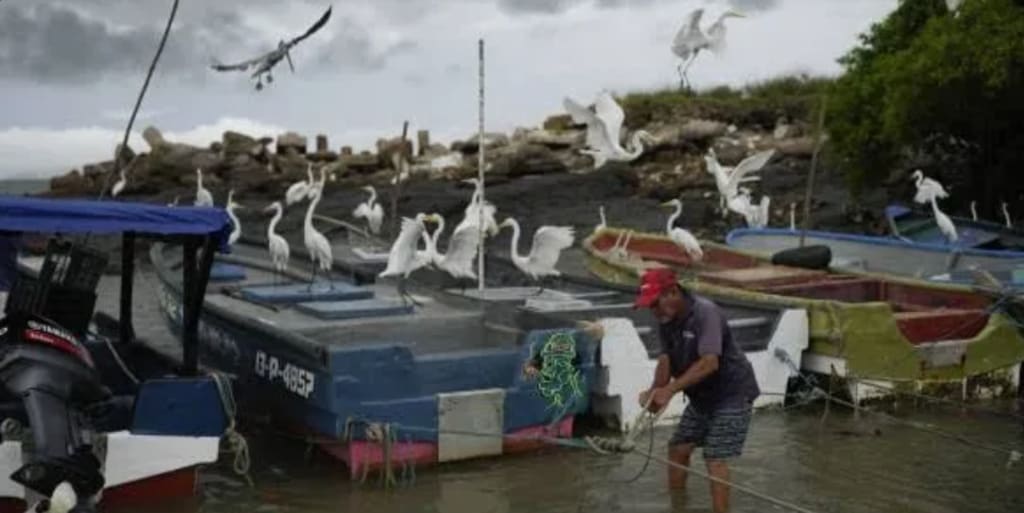
Early on Wednesday, a powerful earthquake with a magnitude of 8.8 struck off the Kamchatka Peninsula in Russia, triggering widespread tsunami warnings and mass evacuations across the Pacific Rim. Officials later determined that the greatest tsunami threat to the United States had passed, despite the frantic efforts of countries in South America to evacuate individuals. At a depth of 19 kilometers, the quake, one of the strongest in recent memory, occurred approximately 75 miles offshore from Petropavlovsk-Kamchatsky. The quake's shallowness made it particularly capable of moving large volumes of water. From Japan to Chile to Hawaii, tsunami warnings were quickly issued across the Pacific Basin. Response times to emergencies were quick in South America. Chile began evacuating vulnerable coastal areas after raising its tsunami alert level to the highest level. Authorities emphasized the danger of after-waves, reminding citizens that the first wave is rarely the most dangerous. Chilean officials coordinated with local governments to evacuate thousands from low-lying areas.
The Galápagos Islands and coastal areas were evacuated by Ecuador. Schools were closed, and people were advised to move to higher ground. In Colombia, coastal communities were also evacuated, and maritime activity was suspended. Peru shut down over 65 ports and issued a coastal warning due to the possibility of moderate tsunami waves. Over two million people on Japan's northeastern coast were given orders to evacuate at the same time. Memories of the 2011 tsunami loomed large as emergency teams mobilized and citizens sought safety. Initial reports indicated waves of over three meters in some regions.
In the early hours of the tsunami, Hawaii residents and tourists were prompted to seek higher ground by tsunami sirens. A tsunami warning was issued by authorities, but as the threat diminished, it was later downgraded to an advisory. Nevertheless, officials advised residents to stay off beaches and refrain from ocean activities because of the erratic wave patterns. The U.S. mainland experienced much less impact than initially feared. Small surges were recorded along the California coast, including a 3.6-foot wave in Crescent City. Oregon and Washington saw similarly modest effects. According to the National Tsunami Warning Center, there was no significant flooding or property damage, despite the presence of unusual currents and wave activity. U.S. By midday, Kristi Noem, secretary of homeland security, had confirmed that the worst-case scenario had not occurred. California, Oregon, and Washington no longer had tsunami warnings, but some areas, particularly Alaska and Hawaii, still had low-level advisories in place. Experts explained that the tsunami energy, though widely dispersed, lost strength as it traveled across the ocean. The impact was reduced in some areas by factors such as the direction of wave propagation, ocean depth, and coastal geography. Russia’s Far East bore the initial brunt of the disaster. Waves of up to six meters caused flooding and damage to some coastal infrastructure in Severo-Kurilsk and the islands nearby. Fortunately, early alerts helped move people to safety. No fatalities were reported, though several injuries occurred.
Volcanic activity began shortly after the earthquake, adding complexity to the situation. Klyuchevskaya Sopka, one of the world’s most active volcanoes, erupted, releasing ash and lava. Emergency response teams had to navigate both seismic and volcanic threats simultaneously.
Scientists emphasized that tsunami threats are difficult to predict. The subsequent waves may be larger and more destructive than the initial waves. In this instance, effective early warning systems and international cooperation probably saved lives. Officials in charge of emergency management praised the affected nations' preparedness and responsiveness. In Chile, decades of experience with seismic events contributed to efficient evacuations and public cooperation. Residents of Japan swiftly followed routine drill-based evacuation procedures. Although the earthquake caused concern across the globe, it also highlighted the effectiveness of modern tsunami monitoring and alert systems. Governments swiftly responded, and people listened, from South America to the Pacific Islands. As aftershocks continue and coastal regions assess damage, authorities remain cautious. Marine warnings persist in isolated areas, and the possibility of further seismic activity is being closely monitored.
This event serves as a stark reminder of the power of nature and the importance of preparedness. Even when the worst is avoided, the potential for disaster remains real, especially around the seismically active Pacific “Ring of Fire.”
About the Creator
GLOBAL NEWS
World News Updated
Short News upload
Technology News
Keep reading
More stories from GLOBAL NEWS and writers in The Swamp and other communities.
US-Japan trade deal gives Trump control over $550 billion in investments. It could be ‘vapor ware’ — and a model for other countries
**The US-Japan trade agreement grants Trump control over investments worth $550 billion. It Might Be "Vapor Ware" and Serve as an Example for Other Countries** Former President Donald Trump claimed in a high-profile announcement that a new US-Japan trade deal gave the United States leverage over 550 billion dollars in Japanese investment. The deal has been met with both enthusiasm and skepticism, with Trump hailing it as a landmark achievement for American manufacturing and job creation. Some have dubbed it potential "vapor ware" due to critics' claims that the numbers may be exaggerated, the agreements are non-binding, and the economic impact is speculative. Nonetheless, the way the deal is structured and presented may be used as a model for US trade negotiations in the future, especially if the administration is focused on optics and unilateral gain. At the heart of the agreement is a framework wherein Japan pledged to direct investment toward American industries — especially manufacturing, infrastructure, and emerging technologies. During his presidency, Trump put bilateral trade agreements ahead of multilateral ones and hailed the agreement as an example of nationalist economics. It is in line with his "America First" platform, which places an emphasis on bringing manufacturing jobs back to the United States and reducing reliance on supply chains from other countries. However, experts caution that the headline figure of \$550 billion is misleading. Before the agreement was signed, a significant portion of the pledged investment was already in the works. Financial analysts point out that Japanese companies like Toyota, SoftBank, and Mitsubishi have been present in the United States for a considerable amount of time. Trump can take credit for the trade deal because it simply brings together anticipated and existing investments under a new political banner. Furthermore, the agreement lacks specific enforcement mechanisms. It does not include tariff adjustments, guarantees of market access, or procedures for resolving disputes like traditional trade pacts do. Instead, it resembles a memorandum of understanding, which is advantageous from a political standpoint but has no legal force. Because of this, some economists have referred to it as "vapor ware," which refers to a policy that makes headlines but does not result in significant change. The deal's strategy reflects a larger trend in the way trade agreements are being used as political capital, despite the ambiguity. By framing the deal as a huge economic win — regardless of its actual substance — Trump leveraged it for domestic approval and international prestige. His administration argued that the mere announcement of the deal created a “confidence effect,” encouraging private-sector investment and lifting stock markets.
By GLOBAL NEWS6 months ago in The Swamp
Trump Signals Tariffs on Nations That Oppose Greenland Goal
Former U.S. President Donald Trump has once again placed himself at the center of a global controversy — this time by signaling that tariffs could be imposed on countries opposing his ambition to bring Greenland under U.S. influence. The statement has ignited debate not only about international trade but also about sovereignty, alliances, and the future of Arctic geopolitics.
By Aqib Hussaina day ago in The Swamp


Comments
There are no comments for this story
Be the first to respond and start the conversation.