
Trump: World Is Calming Down Thanks to Me
“Trump claims credit for easing global tensions, sparking debate over his diplomatic legacy”

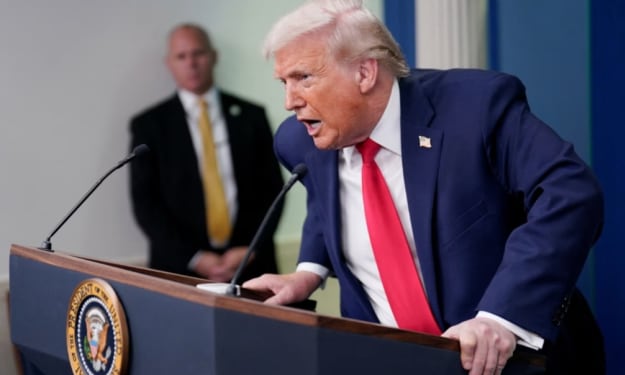
Former U.S. President Donald Trump recently made headlines with his statement that the global situation is “calming down” thanks to his leadership. The claim, made during an interview and amplified across social media, has sparked debate among political analysts, journalists, and world leaders about the extent of Trump’s influence on international affairs.
Trump’s Claim
Trump stated that his policies, negotiations, and diplomatic interventions have contributed to a reduction in global tensions, particularly in regions affected by geopolitical conflicts. Key areas he referenced include:
Middle East diplomacy: Notably his administration’s initiatives on peace agreements and regional stability.
Trade negotiations: Efforts to manage tensions between major economies, including China and Europe.
Military posture: Strategic positioning and deterrence measures intended to prevent escalation in conflict zones.
While supporters echo his sentiment, highlighting perceived accomplishments during his tenure, critics argue that the current state of global affairs involves a complex web of factors far beyond any single leader’s influence.
Global Reactions
Trump’s claim has generated mixed reactions internationally:
Supporters:
Emphasize his role in brokered agreements and deterrence strategies.
Credit his “America First” foreign policy with reducing direct U.S. involvement in certain conflicts, potentially calming global tensions.
Critics:
Point out ongoing conflicts in Ukraine, the Middle East, and elsewhere as evidence that global tensions persist.
Note that domestic political considerations may color the narrative of success.
Neutral Observers:
Stress the role of multiple actors, including international organizations, regional powers, and economic trends, in shaping the global security environment.
Suggest that while Trump may have had some impact, attributing worldwide calm solely to one individual oversimplifies complex issues.
Trump’s Diplomatic Legacy
Several aspects of Trump’s foreign policy are cited in support of his claim:
Middle East Agreements: Initiatives such as the Abraham Accords aimed to normalize relations between Israel and several Arab nations, which analysts see as a step toward regional stability.
North Korea Negotiations: Direct talks with North Korean leadership, although ultimately inconclusive, were historic in terms of diplomatic engagement.
Trade Policies: Tariff negotiations and agreements with China and Mexico were intended to rebalance trade relations and reduce economic friction.
Despite these measures, some experts argue that the long-term impact of his policies is mixed, with many global issues persisting or evolving in ways unrelated to U.S. actions.
The Role of Media and Social Perception
Trump’s announcement also highlights the role of media and social perception in shaping narratives about global stability:
Media Amplification: News outlets and social media platforms have magnified Trump’s statement, prompting debates among political commentators and analysts.
Public Opinion: Among his supporters, the claim reinforces the image of Trump as a strong global leader who influences world events.
Criticism and Satire: Opponents have pointed out inconsistencies and used the statement as a springboard for commentary on current global crises.
The controversy illustrates how statements by high-profile political figures can shape public perception even when the facts are complex or nuanced.
Geopolitical Context
While Trump’s claim is bold, the current geopolitical climate is shaped by multiple factors:
Russia-Ukraine Conflict: Ongoing tensions in Eastern Europe are largely influenced by regional dynamics and alliances.
Middle East Unrest: Civil conflicts, humanitarian crises, and power struggles continue to affect stability.
Global Economic Pressures: Inflation, trade disputes, and supply chain disruptions also play a role in international calm or instability.
Experts caution that no single leader, past or present, can fully account for global fluctuations, and attributing improvements solely to Trump oversimplifies these interconnected issues.
Public and Political Debate
Trump’s statement has fueled discussions in both U.S. domestic politics and international circles:
Supportive Politicians: Many Republican leaders have echoed the narrative that Trump’s policies contributed to a safer and more stable world.
Opposition Parties: Critics argue that the current global situation is more a result of ongoing diplomacy under subsequent administrations and multilateral efforts.
International Leaders: Officials abroad have generally avoided validating the claim, focusing instead on multilateral cooperation and long-term strategies for peace and stability.
These debates highlight the challenge of measuring the tangible impact of political leadership on global peace.
Conclusion
Former President Donald Trump’s statement that the “world is calming down thanks to me” is both provocative and polarizing. While supporters cite his diplomatic and trade initiatives as evidence, critics argue that global stability is shaped by a complex network of factors beyond the influence of any single leader.
Regardless of interpretation, the statement has sparked renewed discussions about leadership, diplomacy, and the perception of influence in international affairs. Whether one agrees with Trump or not, it serves as a reminder that the narrative of global stability is often shaped as much by perception as by concrete policy outcomes.
As the world continues to navigate conflicts, economic pressures, and environmental challenges, the debate over the impact of individual leadership versus multilateral cooperation remains central to understanding geopolitics in the 21st century.
About the Creator
Keep reading
More stories from Aarif Lashari and writers in The Swamp and other communities.
Is Spotify Lossless Truly Lossless? Understanding the Audio Quality Debate
Spotify recently introduced its lossless audio tier, promising listeners high-fidelity sound and studio-quality tracks. With audiophiles and casual listeners alike questioning whether this new offering lives up to its claims, it’s worth exploring what lossless audio means, how Spotify delivers it, and whether it truly offers the quality it promises.
By Aarif Lashariabout 18 hours ago in The Swamp
Trump’s Presser Set the Stage for a Doozy at Davos
Donald Trump’s pre-Davos press conference was supposed to be a scene-setter. Instead, it became a spectacle that sent shockwaves through diplomatic circles and boardrooms alike, ensuring that this year’s World Economic Forum in Davos would be anything but routine. In trademark fashion, Trump used the presser to air grievances, make sweeping claims, and sketch out a vision of global economic relations that left allies uneasy and critics energized. By the time he boarded his plane for Switzerland, it was clear that Davos was bracing for what many attendees privately described as “a doozy.”
By Salaar Jamalia day ago in The Swamp



Comments
There are no comments for this story
Be the first to respond and start the conversation.