
Trump Warns Iran of “Bad Things” Without a Meaningful Nuclear Deal
Renewed pressure on Tehran signals a tougher phase in US-Iran relations as diplomatic uncertainty continues

Rising Tensions Over Nuclear Talks
Former US President Donald Trump has issued a public warning to Iran, stating that “bad things” will happen if Tehran fails to agree to what he described as a “meaningful” nuclear deal. His remarks, made during a campaign-style appearance and later amplified through political channels, have brought renewed attention to the long-standing dispute over Iran’s nuclear program.
The statement adds pressure to an already fragile diplomatic situation. Nuclear negotiations between the United States and Iran have faced repeated setbacks in recent years, with both sides accusing each other of failing to meet commitments. Trump’s latest comments suggest a return to a firm negotiating posture.
What Trump Meant by “Meaningful”
Trump did not provide detailed specifics in his remarks but indicated that any agreement must ensure strict oversight and prevent Iran from advancing its nuclear capabilities. His use of the word “meaningful” appears to refer to stronger inspection mechanisms, limits on uranium enrichment, and clear consequences for violations.
During his previous term in office, Trump withdrew the United States from the 2015 nuclear agreement negotiated under President Barack Obama. That agreement, formally known as the Joint Comprehensive Plan of Action (JCPOA), had placed restrictions on Iran’s nuclear activities in exchange for sanctions relief. Trump argued at the time that the deal was flawed and did not sufficiently limit Iran’s long-term capabilities.
His recent comments signal that, if negotiations resume under his leadership or influence, he would seek stricter terms than those in the original agreement.
Background: The Nuclear Deal Dispute
The nuclear agreement signed in 2015 involved Iran and several world powers, including the United States, the United Kingdom, France, Germany, China, and Russia. It aimed to prevent Iran from developing nuclear weapons while allowing peaceful nuclear energy development under international monitoring.
After the United States withdrew from the deal in 2018, Iran gradually reduced its compliance with certain limits on uranium enrichment and stockpiles. Economic sanctions were reimposed, increasing pressure on Iran’s economy.
Efforts to revive the agreement have faced political resistance in Washington and skepticism in Tehran. The lack of consistent progress has left the future of the deal uncertain.
Iran’s Position
Iran has maintained that its nuclear program is intended for civilian purposes, including energy production and medical research. Iranian officials have stated that sanctions relief is a key condition for any renewed agreement.
Tehran has also criticized US withdrawal from the 2015 deal, arguing that Washington’s decision undermined trust and made future negotiations more difficult. Iranian leaders have insisted that any new agreement must include guarantees against another unilateral US exit.
Trump’s warning is likely to be viewed by Iranian officials as part of a broader pressure strategy rather than a diplomatic opening.
Domestic Political Context
Trump’s remarks come during a period of active political campaigning in the United States. Foreign policy, particularly relations with Iran, remains a topic of debate among US voters and lawmakers.
Supporters of Trump’s approach argue that a firm stance deters Iran from pursuing nuclear weapons and strengthens US leverage. Critics say that threatening language can complicate negotiations and reduce the likelihood of diplomatic progress.
The issue of Iran’s nuclear program has historically drawn bipartisan concern, but disagreement remains over the best method to address it—through diplomacy, sanctions, or a combination of both.
Regional Implications
The Middle East closely watches US-Iran relations, as shifts in policy can affect regional stability. Countries such as Israel and several Gulf states have expressed concern over Iran’s nuclear ambitions.
A breakdown in negotiations could increase tensions across the region, potentially affecting security partnerships and economic cooperation. On the other hand, a renewed agreement could ease pressure and reduce the risk of confrontation.
Trump’s warning, therefore, carries significance beyond Washington and Tehran. It signals to allies and rivals alike how future US policy might unfold.
The Role of Sanctions
Economic sanctions have been a central tool in US policy toward Iran. After withdrawing from the 2015 deal, the Trump administration imposed a “maximum pressure” campaign, targeting Iran’s oil exports, banking sector, and international trade.
Supporters of sanctions argue that they limit Iran’s financial capacity to fund nuclear development and regional activities. Critics contend that sanctions disproportionately impact ordinary citizens while failing to change government policy.
If negotiations do not progress, sanctions could remain or even intensify, depending on political leadership and international cooperation.
Diplomatic Challenges Ahead
Reaching a new nuclear agreement presents several challenges. Trust between the United States and Iran has been strained by previous withdrawals and non-compliance claims. Both sides face domestic political pressures that limit flexibility in negotiations.
International partners, including European nations, may seek to mediate or encourage dialogue. However, past attempts to revive the agreement have stalled over verification measures, sanctions relief timelines, and regional security concerns.
Trump’s warning adds urgency but also raises questions about whether pressure tactics will encourage compromise or deepen divisions.
Public Reaction
Public reaction in the United States has been mixed. Some voters support a hardline approach, viewing it as necessary for national security. Others prefer renewed diplomatic engagement to avoid escalation.
International observers have noted that rhetoric can influence market stability, regional security calculations, and diplomatic relationships. Statements from prominent political figures often shape expectations even before official policy decisions are made.
What Happens Next
The path forward depends on several factors, including political developments in Washington, internal decision-making in Tehran, and international diplomatic efforts.
If talks resume, negotiators will need to address uranium enrichment limits, inspection protocols, and the sequencing of sanctions relief. Clear communication and defined enforcement mechanisms will likely be central to any new framework.
If no agreement is reached, tensions may continue at current levels or increase, depending on regional developments and domestic political shifts.
Conclusion
Donald Trump’s warning that “bad things” will happen if Iran fails to reach a “meaningful” nuclear deal underscores the continuing uncertainty surrounding US-Iran relations. His comments reflect a preference for stricter oversight and a tougher negotiating position.
The future of nuclear diplomacy remains unclear. While some see strong language as leverage, others caution that lasting solutions require sustained dialogue and compromise.
For now, the issue remains a key element of US foreign policy debate and a matter of global concern. The coming months will show whether pressure leads to renewed negotiations or further distance between Washington and Tehran.
About the Creator
Saad
I’m Saad. I’m a passionate writer who loves exploring trending news topics, sharing insights, and keeping readers updated on what’s happening around the world.
Why Black History Matters in America?
The United States of America is celebrating their 250th anniversary in 2026. I'm proud to be an American and as someone who was born here, I wouldn't imagine myself living anywhere else. This is a country where opportunities are possible. Where anyone can be successful in anything they desire to do. Equality, community, and togetherness are the backbones of what America is and should be about. However, we have an administration who wants to erase and disregard those who have made positive, meaningful impacts in our country, specifically Black figures, such as Martin Luther King, Jr., Rosa Parks, and Maya Angelou. President Trump and his administration have been constantly complaining and fighting against what they call the "Woke agenda". They use this excuse as a distraction from other issues they refuse to address, such as the high cost of living, climate change, and inflation. That equality is dividing America, when in reality, it's bringing us together. Being woke is not tied to a specific political party. No matter where you stand on the political spectrum, you can still care about other people and their plights. Compassion and empathy for others isn't tied to a political party, either. We were taught as children to treat others the way we want to be treated and not judge others because they're different from us. Caring about others isn't a personal attack on your beliefs. It doesn't make you any less of a person. People who are easily offended over African American figures, past or present, or anything related to it, are grasping at straws. Current and future generations need to know who people like Harriet Tubman and Shirley Chisholm were, especially in the classroom. Black History is part of American History. It should be recognized, not hidden or forgotten. Besides, you can't shield children from everything, just because your feelings are easily hurt.
By Mark Wesley Pritchard 18 days ago in The Swamp
China is Building Submarines Faster Than Ever, Think Tank Says. Why That’s a Problem for Washington
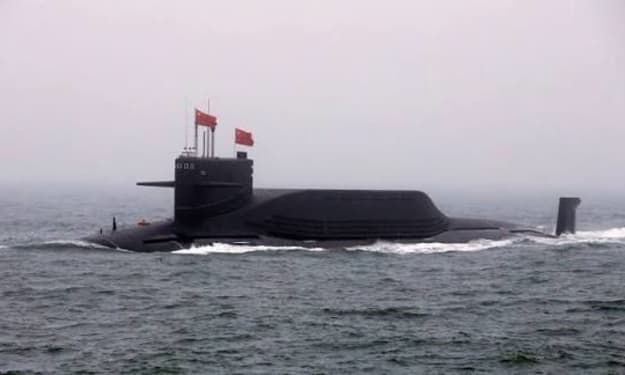
China is rapidly expanding its submarine fleet at an unprecedented pace, according to a new report from a leading U.S. think tank, raising concerns in Washington about the strategic balance in the Indo-Pacific. Analysts warn that the accelerated construction of both nuclear and conventional submarines could challenge U.S. naval dominance and complicate regional security dynamics. Submarine Expansion on Record Pace The think tank, Center for Strategic and International Studies, notes that the People’s Liberation Army Navy has commissioned multiple new submarines annually, marking the fastest growth in the force’s history. This expansion includes nuclear-powered ballistic missile submarines (SSBNs), nuclear-powered attack submarines (SSNs), and diesel-electric attack submarines (SSKs), all of which enhance China’s ability to project power far from its coast. Submarines are considered some of the most strategically significant assets in modern naval warfare. SSBNs form the backbone of China’s second-strike nuclear deterrent, while SSNs and SSKs allow for stealthy operations, intelligence gathering, and the ability to threaten shipping lanes critical to regional trade. Implications for U.S. Strategy For Washington, the rapid growth of China’s undersea fleet presents multiple challenges. First, it increases the risk to U.S. and allied naval vessels in contested waters. Submarines can operate undetected for long periods, complicating surveillance and defensive operations. Second, China’s ability to project nuclear deterrence from submarines strengthens its strategic leverage in potential conflicts, particularly in the South China Sea and Taiwan Strait. “The speed and scale of this buildup is alarming,” said a U.S. defense analyst. “It could undermine U.S. freedom of action in key areas of the Indo-Pacific and put pressure on regional allies who rely on American naval presence for security assurances.” Regional Security Concerns China’s neighbors are also paying close attention. Countries like Japan, India, and Australia have long expressed concerns about Chinese naval expansion, particularly in strategic choke points such as the Malacca Strait and the Taiwan Strait. Analysts suggest that the growing submarine fleet could embolden Beijing to assert control over contested waters, increasing the risk of regional incidents. The think tank’s report indicates that China is also improving its domestic shipbuilding infrastructure, allowing for faster and more efficient submarine production. This includes advanced dry docks, automated assembly processes, and a larger pool of trained engineers and technicians. U.S. Response The United States has responded by accelerating its own undersea capabilities and strengthening partnerships in the region. This includes deploying advanced anti-submarine warfare (ASW) assets, improving sonar detection networks, and collaborating with allies for joint patrols. Programs to modernize the U.S. submarine fleet, including the Virginia-class SSNs, are being prioritized to maintain undersea dominance. Additionally, U.S. policymakers are considering strategies to counter China’s second-strike capability, such as enhanced missile defenses, surveillance of key submarine bases, and investments in unmanned underwater vehicles (UUVs) for reconnaissance and deterrence. Strategic and Political Implications The submarine expansion is not just a technical issue but a signal of China’s broader ambitions. By rapidly building its undersea fleet, Beijing is sending a message about its ability to contest U.S. influence and assert regional dominance. For Washington, it means recalibrating strategies that have relied on undersea superiority as a cornerstone of deterrence. Analysts warn that without continued investment in both technology and regional partnerships, the balance of power in the Indo-Pacific could shift in Beijing’s favor, increasing the risk of miscalculations or confrontations at sea. Looking Ahead As China continues to build submarines faster than ever, the U.S. and its allies face an urgent challenge: maintaining strategic advantage in an increasingly contested maritime environment. While the buildup itself is not a cause for immediate alarm, the pace and scale of expansion signal that Washington must remain vigilant and proactive to ensure regional stability and protect its interests in the Indo-Pacific.
By Fiaz Ahmed 3 days ago in The Swamp
Think for Me
"How do you calculate the circumference of a circle? Submit your answer when ready." [Pause] "Excellent! Every student was able to call up the answer electronically very quickly. If I, as a robot had feelings, I would express pride. You may break for lunch. Return to this cyber room in 45 minutes."
By Julie Lacksonen6 days ago in Humans


Comments
There are no comments for this story
Be the first to respond and start the conversation.