
Trump Travel Ban 2.0: Major Crackdown Hits 19 Countries
Trump had indicated the possibility of a renewed ban during his recent campaign stops, and this rollout follows a directive tied to a January executive order.
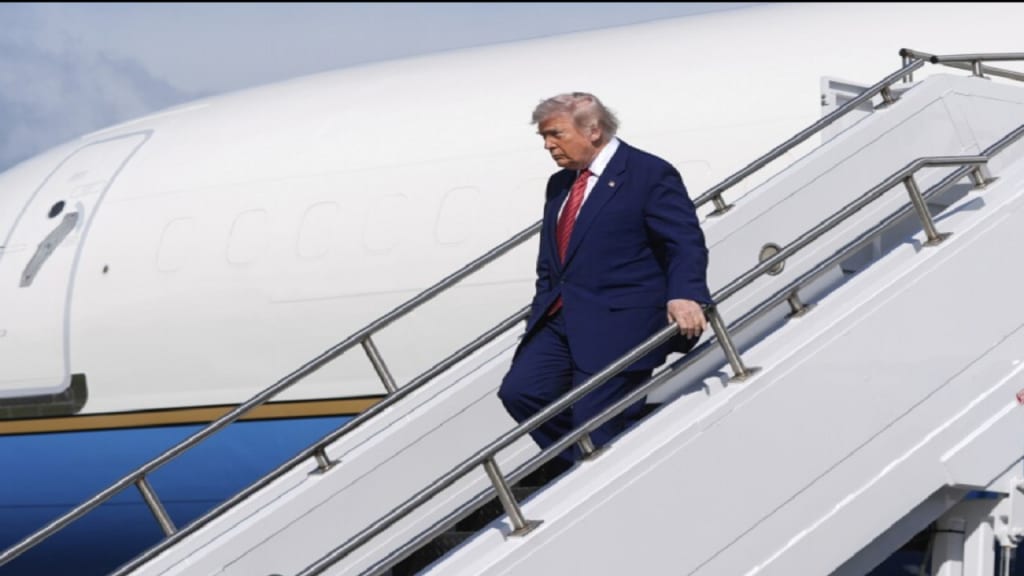
President Donald Trump reignited a controversial pillar of his previous administration on Wednesday, unveiling a sweeping travel ban that affects citizens from a combined 19 countries. The new policy, which will go into effect at 12:01 a.m. Monday, prohibits entry from 12 nations outright and imposes strict limitations on travelers from seven others.
The move harks back to Trump's original 2017 travel ban, which provoked airport chaos and widespread protests due to its abrupt rollout. This time, however, the administration is attempting a more measured approach, providing several days' notice and citing national security as the justification. Trump had indicated the possibility of a renewed ban during his recent campaign stops, and this rollout follows a directive tied to a January executive order.
Countries Affected and the Rationale
The 12 countries facing full travel bans are: Afghanistan, Myanmar, Chad, the Republic of Congo, Equatorial Guinea, Eritrea, Haiti, Iran, Libya, Somalia, Sudan, and Yemen. Meanwhile, visitors from Burundi, Cuba, Laos, Sierra Leone, Togo, Turkmenistan, and Venezuela will be subject to enhanced restrictions rather than outright bans.
Trump tied the decision to a recent terror attack in Boulder, Colorado, committed by an Egyptian national who had overstayed a tourist visa. Notably, Egypt does not appear on the restricted list, which critics say undermines the consistency of the policy. The Department of Homeland Security reported the attacker’s immigration violation in the days following the incident.
Security Concerns and Visa Overstay Metrics
The new restrictions lean heavily on findings from a Department of Homeland Security visa overstay report, which assesses the rate at which tourists, students, and business travelers fail to depart the U.S. once their visas expire. Trump emphasized that certain nations were either “non-compliant” in returning their nationals or “deficient” in the vetting processes used to issue passports and travel documents.
“We don’t want them,” Trump said during a press briefing, reiterating that the administration’s stance is about safeguarding Americans from threats linked to weak border control practices abroad.
Outcry Over Afghanistan Inclusion
The addition of Afghanistan has sparked fierce backlash, particularly from veterans’ groups and refugee advocates who have supported Afghan resettlement efforts in the wake of the U.S. withdrawal. The country, which sent over 14,000 refugees to the U.S. in the 12 months preceding September 2024, was once seen as a priority for humanitarian relocation.
“To include Afghanistan — a country whose people stood shoulder-to-shoulder with American troops — is not only unjust, it’s a betrayal,” said Shawn VanDiver, chairman of #AfghanEvac, a group supporting Afghan allies.
In the executive summary, Trump claimed the country “lacks a centralized authority capable of issuing secure travel documents,” a charge that refugee groups argue punishes vulnerable populations rather than resolving any systemic threats.
Haiti and Ongoing Instability
Haiti, which was previously left off Trump’s travel ban during his presidency, is now included. The administration cited high visa overstay rates and a surge in illegal entries. The Caribbean nation is currently grappling with extreme political unrest and a surge in gang violence, with over 85% of the capital, Port-au-Prince, under the control of armed groups.
Trump’s executive order stated that Haiti “lacks effective law enforcement data-sharing capabilities,” making it impossible to guarantee that incoming travelers don’t pose a national security threat.
Middle East Nations and Persistent Conflict
Other Middle Eastern nations on the list — Iran, Libya, Sudan, and Yemen — continue to struggle with internal conflict and governmental fragmentation. Sudan is embroiled in an escalating war, while Yemen’s civil war remains in stalemate. Libya remains divided among militias and rival administrations.
The Iranian government has yet to respond publicly to the announcement. The U.S. continues to categorize Iran as a “state sponsor of terrorism,” barring most nationals except for those seeking asylum or already holding specialized visas.
Critics Decry Political Motives, Not Security
Human rights organizations and immigration advocacy groups have condemned the renewed travel restrictions, accusing Trump of weaponizing immigration policy for political gain rather than national defense.
“This policy does not make Americans safer — it scapegoats people who are often fleeing violence and instability,” said Abby Maxman, President of Oxfam America. “It's not about security; it’s about division.”
A Familiar Policy, Repackaged
The executive order stems from a January 20 directive instructing federal agencies to assess global “hostile attitudes” toward the United States. It echoes Trump’s earlier 2017 order — widely dubbed the “Muslim ban” — which initially restricted travel from seven predominantly Muslim countries, sparking global outrage and prompting multiple legal battles before a revised version was upheld by the Supreme Court in 2018.
That earlier policy affected not just tourists but also students, family members, and professionals, leaving many stranded or detained in transit.
Trump continues to argue the bans are about vetting processes, not religion. Still, critics cite his earlier campaign call for a “total and complete shutdown of Muslims entering the U.S.” as evidence of discriminatory intent.
Reporting contributed by [Your Newsroom] Staff Writers and Wire Services.
Would you like this rewritten in a different tone (e.g., more neutral, opinionated, or simplified), or formatted for a specific platform like a blog, op-ed, or news site?
Tools
About the Creator
arafat chowdhury
I am a web content writer and a freelancer i love to write and learn.
Keep reading
More stories from arafat chowdhury and writers in The Swamp and other communities.
Trump Nominates Emil Bove III, Controversial DOJ Powerbroker, to Federal Appeals Court
In a move that’s already igniting political controversy, former President Donald Trump announced Wednesday his intention to nominate Emil Bove III—one of the Justice Department’s most formidable and polarizing figures—to serve on the U.S. Court of Appeals for the Third Circuit.
By arafat chowdhury10 months ago in The Swamp
The Forsyth House Fire
Since 1851, Forsyth House has stood on the corner of Union Street and Gordon Street in the heart of Glasgow. Its iconic, or was... because on Sunday 8th of March, 2026, a fire broke out in a small, seemingly un-named shop in the building and tore all that history down. As I write, the rubble is still unsettled and the street is still blocked off. Central Station is quiet on the upper level, and around 30 small businesses have quite literally gone up in smoke.
By S. A. Crawford3 days ago in The Swamp
Canada Ties $20 Billion Submarine Deal to a Korean Auto Plant Demand
Canada has reportedly made the approval of its $20 billion submarine procurement contingent on a significant industrial commitment from South Korea, including the establishment or expansion of an automobile manufacturing plant. The move underscores the growing intersection between defense spending and economic diplomacy as Ottawa seeks to secure both military capabilities and industrial benefits abroad. The deal, which involves the acquisition of advanced diesel-electric submarines for the Royal Canadian Navy, is among the largest defense contracts in the country’s history. Sources familiar with the negotiations said the Canadian government has emphasized that South Korea’s defense contractors must contribute to domestic or regional economic development, with a particular focus on the automotive sector. Officials in Ottawa view the dual-purpose strategy as a way to strengthen Canada’s economic footprint while modernizing its naval fleet. By linking the submarine contract to a Korean auto plant, the government hopes to secure jobs, investment, and technology transfer that could benefit Canadian workers and industries. The specifics of the plant’s size, location, and projected production capacity have not been publicly disclosed, reflecting the confidential nature of the negotiations. Strategic Defense and Industrial Goals The submarines under discussion are expected to replace aging vessels in Canada’s maritime defense fleet. Military analysts say the new submarines will enhance Canada’s ability to patrol its extensive coastline, monitor Arctic waters, and respond to emerging security challenges. The inclusion of an industrial clause linking the purchase to an auto plant represents an unusual but increasingly common approach where defense procurement is used to achieve broader economic and political objectives. The Canadian government has faced criticism in the past for long delays and budget overruns in military procurement projects. By tying the submarine deal to a Korean industrial investment, Ottawa appears to be attempting to balance strategic needs with domestic and international economic benefits. South Korea’s Role South Korea is already a recognized leader in both shipbuilding and automotive industries. Its defense firms have experience producing advanced naval vessels, while its automotive companies are global players with extensive manufacturing capabilities. Analysts suggest that linking the submarine contract to an auto plant ensures that Canada can leverage South Korea’s industrial expertise while promoting cross-sector collaboration. The deal is expected to generate significant economic activity in South Korea and potentially in Canada if joint production or technology-sharing arrangements are implemented. Such arrangements could include parts manufacturing, research collaborations, or workforce training programs, providing long-term benefits beyond the initial defense contract. International and Domestic Reactions Observers have noted that combining defense procurement with industrial investment can complicate international trade relations. Critics argue that linking a military contract to unrelated industrial projects may create tensions with other potential suppliers or trading partners. Others see the strategy as a pragmatic move to ensure that large government expenditures also generate economic returns. In Canada, the announcement has sparked debate among policymakers and industry leaders. Some advocate for more aggressive use of defense contracts to promote domestic industry, while others caution against making defense deals contingent on unrelated industrial commitments. South Korean officials have remained largely diplomatic, acknowledging the potential for collaboration while signaling a need for detailed discussions to finalize commitments. Negotiations are ongoing, and the final terms of the submarine contract—including delivery schedules, financing arrangements, and the specifics of the auto plant—are expected to be revealed once agreements are formally signed. Looking Ahead As Canada moves forward with its ambitious submarine procurement program, the inclusion of industrial conditions demonstrates a broader trend in government contracting: blending national security objectives with economic diplomacy. Whether this approach will deliver the desired benefits for both countries remains to be seen, but it reflects an evolving strategy in which defense and industry are increasingly interconnected. For Canada, the $20 billion submarine deal represents not only an opportunity to modernize its naval fleet but also a chance to foster industrial collaboration on the global stage. By tying the contract to a Korean auto plant, Ottawa is signaling that defense spending can serve multiple objectives—enhancing national security while promoting economic growth.
By Fiaz Ahmed 7 days ago in The Swamp



Comments (1)
This travel ban seems rushed. It's concerning that Egypt isn't on the list after that terror attack. Relying on visa overstay metrics might not be the best way to ensure security. The way this ban is rolled out reminds me of the chaos in 2017. Citing national security is one thing, but the lack of consistency makes it hard to trust the policy.