
Trump, the Nobel Peace Prize, and the Politics of Recognition
Why the conversation turned to who didn’t win — and what that says about how we value recognition and results.

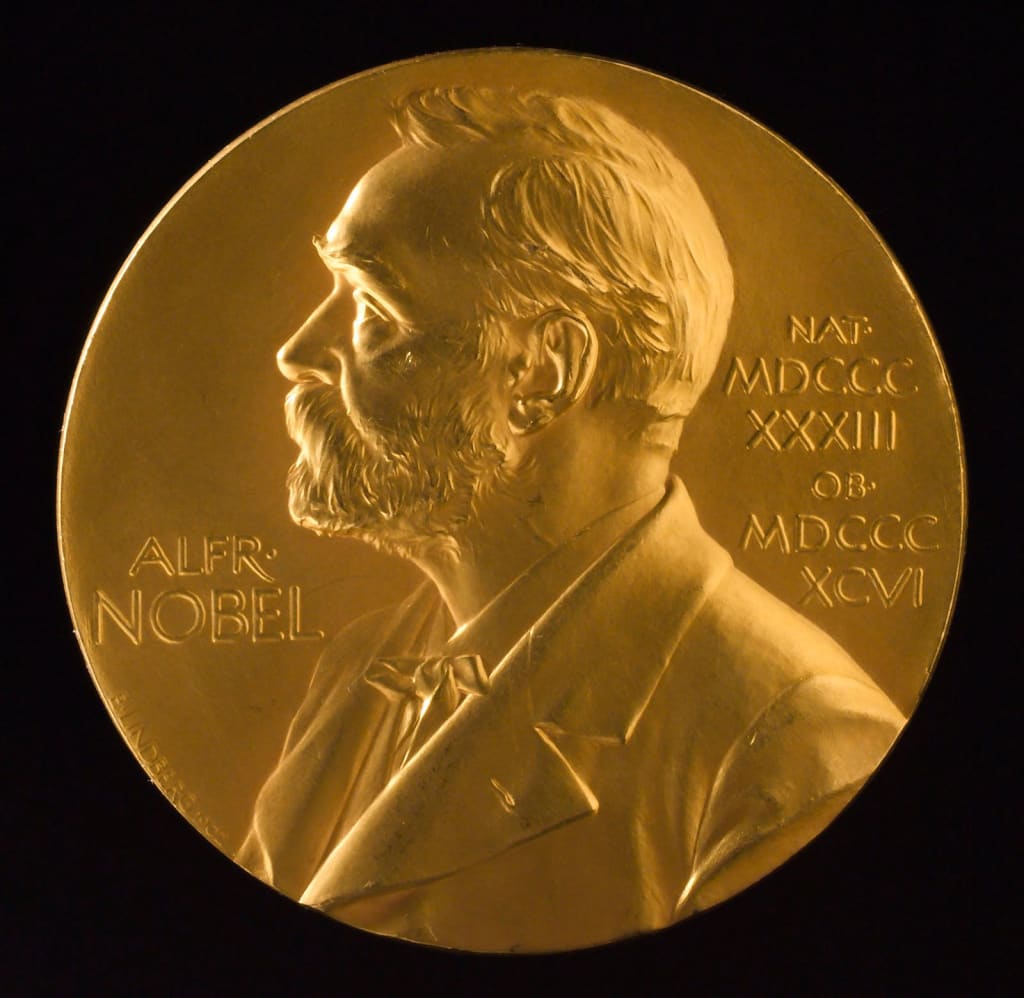
In the aftermath of the 2025 Nobel Peace Prize announcement, the social media landscape was quick to zero in on one name: Donald J. Trump — not as the winner, but as someone who didn’t win.
And yes, full disclosure — I’m focusing on him too.
But to be fair, I’m reacting to what I saw: a wave of commentary more obsessed with the fact that he wasn’t awarded than with the person who was.
That reaction, more than anything else, says something about how we’ve come to view recognition — and who we think deserves it.
Let’s Clear This Up First
The Nobel Committee doesn’t publish its nomination list until 50 years after the fact. That’s not speculation — it’s policy. So unless a nominator steps forward and confirms it, any talk of who was or wasn’t nominated is just guesswork.
Still, that didn’t stop the media from treating Trump’s “loss” like it was a snub or failure. Ironically, in all that noise, a genuinely notable detail got buried: this year’s winner, María Corina Machado, mentioned Trump in her acceptance post on X.
That alone tells us this is more complex than people want to admit.
Who is María Corina Machado?
Machado is a Venezuelan opposition leader and long-time advocate for democracy and civil liberties in Venezuela. She co-founded the electoral watchdog group Súmate, served multiple terms in the National Assembly, and has continued her activism despite being banned from public office by the Maduro regime.
Her career spans decades of political struggle — she survived assassination attempts, imprisonment, and exile — all while working to shine light on human rights abuses and election fraud.
In 2023, she won a landslide victory in the opposition primaries — only to be blocked from running in the 2024 presidential election.
The 2025 Nobel Peace Prize recognized her tireless, peaceful efforts to promote democratic transition in Venezuela, often in the face of harsh repression, censorship, and grave personal risk.
By the Nobel Committee’s own standards, her win honors sustained, high-impact activism that embodies the spirit of the prize.
Trump’s Diplomatic Moves: Brief but Bold
Even after leaving office in 2021, Donald Trump has stayed involved in international diplomacy, and his role in the 2025 ceasefire between Irael and Hamas has drawn global attention. According to The Independent and others, Trump helped pressure Israeli Prime Minister Benjamin Netanyahu to apologize to Qatar — a key move that helped restart stalled negotiations.
The ceasefire agreement, announced in October 2025, includes several major parts: ending active fighting, returning both Israeli hostages and Palestinian prisoners, a phased withdrawal of Israeli forces from Gaza, and a plan to establish a transitional governing body supported by international actors like Egypt, Qatar, Turkey, and the U.S.
Trump’s involvement is seen by many as a turning point after months of failed negotiations. While other world leaders also played important roles, some are crediting Trump with making the key moves that helped finalize the deal.
Whether this agreement holds up over time is still uncertain — but it adds to the list of complex international issues where Trump has had real influence.
During his presidency (2017–2021), Trump oversaw several significant diplomatic efforts:
• He brokered the Abraham Accords, normalizing relations between Israel and several Arab nations — a major shift in Middle Eastern diplomacy.
• He broke precedent by meeting directly with North Korean leader Kim Jong-un, ending decades of high-level isolation.
• His administration supported economic normalization efforts between Serbia and Kosovo, advancing dialogue in the Balkans.
These weren’t minor or symbolic gestures — they represented real shifts in long-standing geopolitical tensions. However, many of these developments were either still unfolding or came after the Nobel Peace Prize's annual January 31 deadline for consideration during his presidency.
Trump himself has made no secret of his desire to win the Nobel Peace Prize. He’s mentioned it publicly on several occasions — sometimes critically, pointing out that past winners received it for what he sees as less substantial achievements. That public desire ...may help explain why reactions to the 2025 prize have focused more on his not being awarded than on the actual winner.
This Wasn’t Simply Fan-Driven Buzz Online
Despite how it may have looked online, Trump wasn’t only floated for the Nobel Peace Prize by fans or partisan voices. Sitting world leaders publicly backed the idea:
• Benjamin Netanyahu, Prime Minister of Israel, credited Trump for bringing Arab nations and Israel to the table.
• Moon Jae-in, then President of South Korea, praised Trump’s role in opening dialogue with North Korea — something South Korea had long been pushing for.
• Yoshihide Suga, Japan’s Prime Minister at the time, supported Trump’s approach to denuclearization and diplomatic engagement in East Asia.
These were real endorsements — not just Twitter buzz. And in at least one case, a Norwegian MP submitted a formal nomination, giving it procedural legitimacy.
Other Nobel Peace Prize Winners — and What They Did
To understand how the Nobel Committee thinks, it helps to look at who they’ve awarded in the past:
• Barack Obama (2009) – awarded early in his presidency for setting a new tone in international diplomacy and promoting nuclear disarmament and multilateral cooperation, though the award was controversial due to the limited achievements at that stage.
• Malala Yousafzai (2014) – for advocating girls’ right to education in Pakistan, particularly under Taliban rule in the Swat Valley, where girls' schools were attacked and banned.
• Abiy Ahmed (2019) – for negotiating peace between Ethiopia and Eritrea — ending a 20-year border conflict that had killed tens of thousands and remained unresolved since the late 1990s.
• Denis Mukwege & Nadia Murad (2018) – for fighting sexual violence as a weapon of war: Mukwege for treating survivors in conflict zones in the Democratic Republic of Congo, and Murad for speaking out after surviving ISIS captivity during the 2014 Yazidi genocide in Iraq.
These winners come from different backgrounds and causes, but what they share is a commitment to peace over time — not just flash-in-the-pan achievements.
What Does This All Mean?
Framing Trump as someone who “lost” the Peace Prize ignores the real question: Will the peace efforts he helped launch last?
That’s what the Nobel Committee really looks for — not popularity or personality, but endurance. And maybe that’s why Trump wasn’t awarded. Not because his efforts weren’t significant, but because their long-term impact is still up in the air.
And that leads to a fair question: What does it say about global diplomacy that someone as unconventional, polarizing, and unpolished as Trump was able to break through diplomatic barriers that had held for decades?
If the Abraham Accords hold, if progress continues in East Asia or the Balkans, or if the new Gaza ceasefire proves durable, then maybe his moment of recognition will come later — once the dust settles and the results are clear.
Give Credit Where It’s Due
Right now, María Corina Machado is the one whose work has been recognized — and she deserves that fully. Her life’s work has brought hope, resistance, and a democratic vision to a country long gripped by authoritarianism.
The fact that she mentioned Trump in her Nobel message suggests that, even among respected peace advocates, his efforts are being taken seriously — or at least not entirely dismissed.
So maybe the takeaway isn’t that Trump lost the Nobel Peace Prize — but that the world, and the Nobel Committee, is watching to see whether peace treaties, from the Abraham Accords to this new Gaza ceasefire, will last. That’s the real test of recognition.
Until then, ignoring Trump’s role entirely isn’t just premature — it's intellectually dishonest.
About the Creator
Rena Thorne
Unfiltered. Unbought. Unapologetic.
I’m not here to provoke—I’m here to make you rethink.
Keep reading
More stories from Rena Thorne and writers in The Swamp and other communities.
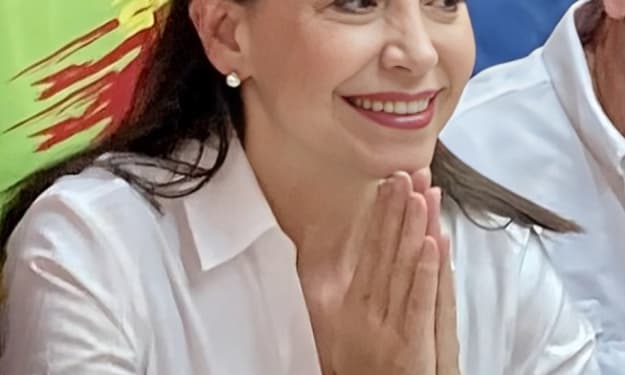
Machado Took the Nobel — and Handed Trump a Win
When the 2025 Nobel Peace Prize was announced, the internet erupted. Not because of who won — but because of who didn’t. For many, the biggest victory wasn’t that Venezuelan opposition leader María Corina Machado was honored. It was that Donald Trump wasn’t.
By Rena Thorne3 months ago in The Swamp
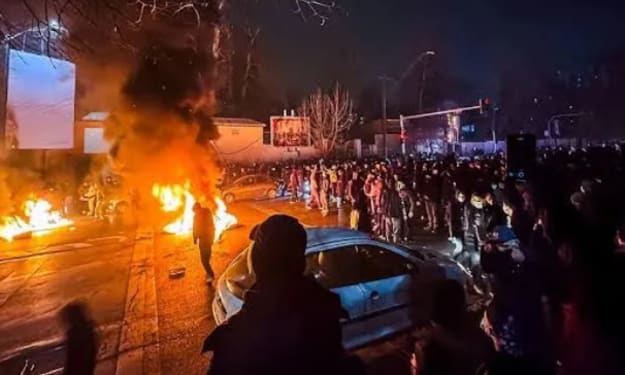
Iran Edges Closer to a Revolution That Would Reshape the World
For decades, Iran has existed in a state of controlled tension — balancing public dissent, economic pressure, and rigid political authority. Today, that balance appears more fragile than ever. From widespread protests and economic collapse to generational defiance and geopolitical strain, Iran is edging closer to a revolutionary moment that could dramatically reshape not only the Middle East, but the world.
By Aqib Hussain7 days ago in The Swamp


Comments
There are no comments for this story
Be the first to respond and start the conversation.