
Trump Team Ramps Up Attack on Fed’s Powell With Criminal Indictment Threat
Former president’s camp escalates rhetoric against the Federal Reserve amid economic debates and political tensions

Introduction
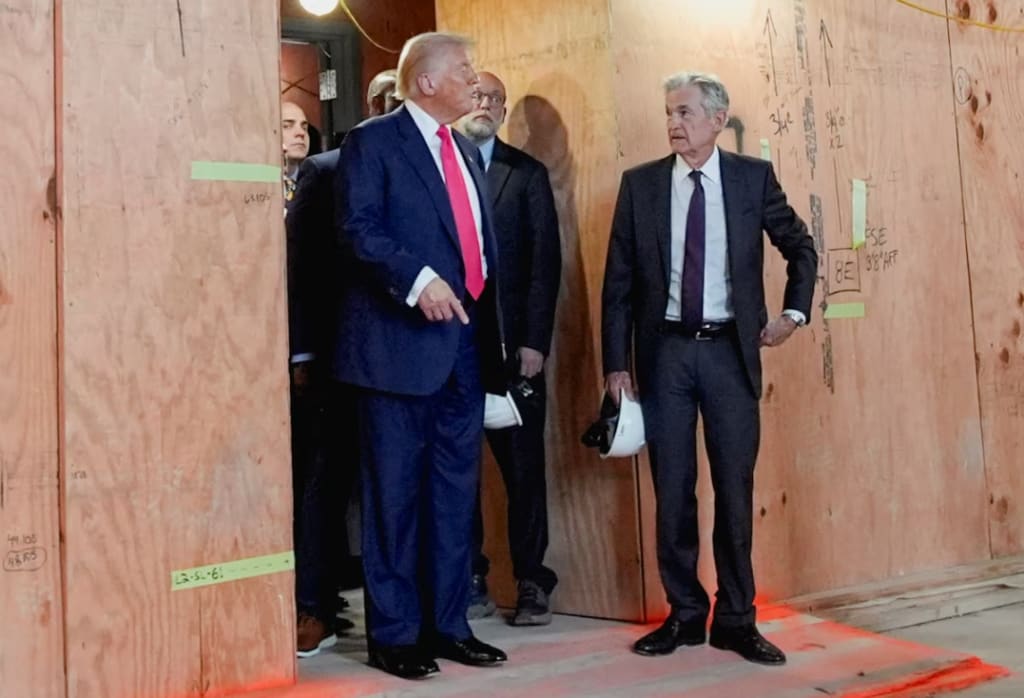
Former President Donald Trump’s political team has intensified its attacks on Federal Reserve Chair Jerome Powell, raising the unprecedented possibility of a criminal indictment as part of a broader effort to challenge the Fed’s policy decisions. This escalation follows months of criticism from Trump and his allies over interest rate hikes, inflation, and perceived mismanagement of the U.S. economy.
Trump’s aggressive stance highlights the increasing politicization of economic institutions and underscores the deepening tensions between former and current administrations over monetary policy, financial stability, and accountability in governance.
Background: Trump vs. Powell
During his presidency, Trump frequently clashed with Powell over interest rate adjustments. He argued that higher rates hurt the economy, hindered job growth, and stifled consumer confidence. Even after leaving office, Trump has maintained a vocal critique of the Fed, framing Powell as responsible for inflationary pressures and economic slowdowns.
Recently, Trump’s team has escalated rhetoric from verbal criticism to threats of legal action, hinting that Powell and other Federal Reserve officials could face criminal charges for actions they claim harmed the American economy. While largely symbolic, these statements signal the former president’s strategy of directly challenging independent institutions that play a critical role in national economic stability.
Political Motivation Behind the Threats
Political analysts suggest that Trump’s intensified attacks on Powell are not purely economic. The messaging is clearly aimed at energizing his political base ahead of the 2026 election cycle. By framing Powell as an antagonist who allegedly undermined Trump-era economic gains, the former president strengthens his narrative of a government and bureaucracy working against the interests of ordinary Americans.
Additionally, Trump’s rhetoric pressures other Republican figures and lawmakers to align with his criticism of the Fed, creating a unified front against what he portrays as “elitist” financial decision-making.
Legal and Institutional Challenges
While Trump’s team has raised the idea of criminal liability, legal experts note that Federal Reserve officials operate with significant independence. Their policy decisions are generally protected under law, and there is limited precedent for criminalizing actions taken in pursuit of monetary policy objectives.
Moreover, such threats risk undermining confidence in the central bank, which could destabilize financial markets. Economists warn that politicizing the Fed may lead to increased volatility, higher borrowing costs, and uncertainty for investors and consumers alike.
Reactions From Washington and Wall Street
Government officials and financial experts have expressed concern about Trump’s approach. Some lawmakers have criticized the rhetoric as an attack on institutional independence, arguing that monetary policy should remain insulated from partisan politics.
Wall Street analysts have also responded cautiously. While markets have been sensitive to Fed policy decisions, direct threats against Fed officials are unprecedented and could increase market anxiety, especially if the rhetoric escalates in the lead-up to midterm elections or the 2026 presidential cycle.
Broader Implications
Trump’s campaign against Powell reflects a larger trend in American politics: the increasing intersection of economic policy and political strategy. Attacks on central bank officials, once rare and measured, are becoming a tactic for rallying public support and framing narratives about accountability and performance.
Observers warn that continued escalation could have long-term consequences. Threatening independent institutions risks eroding public trust, discouraging expert leadership, and injecting political considerations into decisions that ideally rely on data and economic fundamentals.
What’s Next
The situation is likely to intensify as the 2026 election cycle approaches. Trump’s team is expected to continue leveraging rhetoric about Powell and the Federal Reserve to energize supporters and frame economic debates in political terms. Meanwhile, the Fed is likely to continue its work independently, although it faces the added challenge of maintaining credibility amid increasing politicization.
Conclusion
Trump’s renewed attacks on Federal Reserve Chair Jerome Powell, including hints at criminal indictments, mark an unprecedented escalation in the politicization of U.S. economic policy. While largely rhetorical, these actions reflect a broader strategy to mobilize supporters, shape public perception, and cast blame for inflation and economic challenges on independent institutions.
The move carries significant implications: it tests the independence of the Fed, risks undermining public confidence in monetary policy, and highlights the increasingly blurred line between governance and political strategy. Economists and policymakers warn that continued attacks could inject uncertainty into financial markets and complicate efforts to manage the economy effectively.
As the 2026 election cycle progresses, Trump’s rhetoric against Powell is likely to remain a central narrative in shaping public debate over economic leadership, institutional accountability, and the role of independent oversight in American democracy.
About the Creator
Asad Ali
I'm Asad Ali, a passionate blogger with 3 years of experience creating engaging and informative content across various niches. I specialize in crafting SEO-friendly articles that drive traffic and deliver value to readers.
The Forsyth House Fire
Since 1851, Forsyth House has stood on the corner of Union Street and Gordon Street in the heart of Glasgow. Its iconic, or was... because on Sunday 8th of March, 2026, a fire broke out in a small, seemingly un-named shop in the building and tore all that history down. As I write, the rubble is still unsettled and the street is still blocked off. Central Station is quiet on the upper level, and around 30 small businesses have quite literally gone up in smoke.
By S. A. Crawford3 days ago in The Swamp



Comments
There are no comments for this story
Be the first to respond and start the conversation.