
Trump Tariffs Over Greenland Are an Error, Says Ursula von der Leyen
European Commission chief calls out U.S. tariff threats, warning of strain on transatlantic ties.
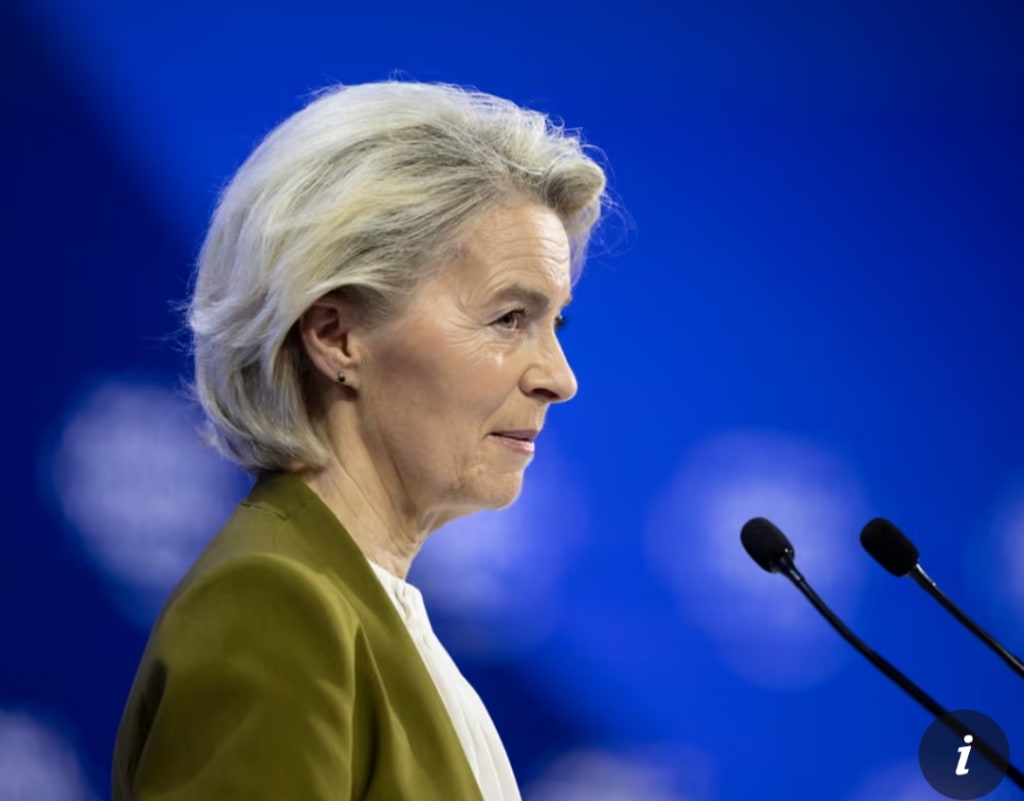
The tensions between the U.S. and Europe escalated this week when European Commission President Ursula von der Leyen criticized President Donald Trump’s proposed tariffs linked to Greenland. Speaking at the World Economic Forum in Davos, von der Leyen called the tariffs a strategic mistake that could damage trust and cooperation between long-standing allies.
Tariff Threats That Sparked a Firestorm
Trump recently announced plans to impose 10% tariffs on imports from eight European countries, including Denmark, Norway, Sweden, France, Germany, the UK, the Netherlands, and Finland. The aim: to pressure allies who opposed U.S. influence over Greenland, a semi-autonomous Danish territory with growing strategic importance in the Arctic.
European leaders responded sharply. Von der Leyen called the tariffs a mistake “especially between long-standing allies”, reminding that the EU and U.S. signed a trade deal last July. “A deal is a deal,” she emphasized.
Alliance Under Strain
Von der Leyen warned that the Greenland tariffs could push U.S.–European relations into a downward spiral, unintentionally strengthening rival powers like Russia and China. “Plunging us into a downward spiral would only help adversaries,” she said, highlighting the stakes of the dispute.
She also stressed the human and historical ties between Europe and the U.S., framing the tariff plan not just as a trade issue, but as a potential breach of trust between friends and allies.
Greenland’s Sovereignty Is Non-Negotiable
Von der Leyen made a clear statement: “The sovereignty and integrity of Greenland are non-negotiable.”
While Trump has floated ideas about U.S. involvement in Greenland, European officials insist that the island’s autonomy remains fully protected, a point supported by Denmark and other European nations.
Strengthening Arctic Security
At Davos, von der Leyen outlined plans to bolster Arctic security, including:
Economic and infrastructure support for Greenland
Deepening cooperation with NATO members and Arctic states like Canada, Norway, and Iceland
Boosting strategic assets, including icebreakers and Arctic defense capabilities
These measures show that Europe is ready to protect its interests in the Arctic while maintaining diplomatic channels with the U.S.
Retaliation and Trade Risks
The tariff threat has triggered discussions about European retaliation, including:
Invoking the EU’s Anti-Coercion Instrument (ACI)
Reinstating tariffs on U.S. products worth billions
Delaying or halting parts of the broader EU-U.S. trade deal
Some lawmakers have already suggested blocking portions of the trade agreement if the U.S. continues with the tariffs.
Global Reactions
European governments have uniformly condemned Trump’s plan:
France’s President Emmanuel Macron denounced the intimidation tactics
Denmark’s officials reaffirmed Greenland’s autonomy
Irish leaders warned of economic consequences if tensions escalate
Even within the U.S., voices urge diplomacy over escalation, highlighting the sensitivity of trade disputes among allies.
Implications for NATO and Global Politics
The Greenland dispute adds pressure on NATO, at a time when unity is critical for global security. Von der Leyen’s choice of words — “unflinching, united, and proportional” — underscores Europe’s intent to stand firm while still engaging diplomatically.
Analysts warn that prolonged tensions could impact defense cooperation, counterterrorism, trade, and Arctic policy.
Conclusion: A Diplomatic Fault Line
Ursula von der Leyen’s critique exposes a growing fault line between the U.S. and Europe. By calling the tariffs a mistake between allies, she defends European interests and highlights the importance of trust and mutual respect.
With Europe preparing both diplomatic and strategic responses, what began as a tariff threat has evolved into a complex geopolitical confrontation with global implications.
Community Category:
Politics & International Affairs (Best Community)
Suggested Tags:
Trump Administration, Greenland, Ursula von der Leyen, EU Tariffs, U.S.–Europe Relations, Arctic Security, NATO, International Diplomacy, Trade Policy, Transatlantic Alliance
About the Creator
Keep reading
More stories from Aarif Lashari and writers in The Swamp and other communities.
Trump Administration Live Updates: President Targets European Leaders and Doubles Down on Greenland Threats
The Trump administration has once again grabbed global headlines with its direct statements targeting European leaders and renewed threats regarding Greenland, intensifying diplomatic tensions. This comes amid ongoing discussions about trade, territorial influence, and the United States’ strategic interests in the Arctic region.
By Aarif Lasharia day ago in The Swamp
Japan 40-Year Bond Yield Hits 4% for First Time Since 2007 Debut
Japan’s financial markets are witnessing a historic moment as the yield on the 40-year Japanese government bond (JGB) has surged to 4% for the first time since its debut in 2007. This milestone reflects changing market dynamics, rising global interest rates, and evolving investor sentiment toward Japan’s long-term debt. Economists and market analysts are closely monitoring the implications of this shift, as it could signal broader changes in Japan’s fiscal strategy and economic outlook. Long-term government bonds are crucial indicators of investor confidence and market expectations for future economic conditions. Japan’s 40-year bond was initially introduced in 2007 to provide long-term financing for government projects while giving investors a safe, stable investment option. For years, the yield remained relatively low, reflecting Japan’s long-standing low-interest environment, persistent deflation, and the Bank of Japan’s (BOJ) accommodative monetary policy. However, recent developments in both domestic and global markets have altered the landscape. A combination of rising inflation expectations, global interest rate hikes, and concerns over Japan’s fiscal deficit has driven yields higher. The move to 4% represents a significant increase for a market accustomed to ultra-low borrowing costs and stable yields. The increase in yields has multiple implications. For investors, a 4% return on a 40-year bond is historically attractive and may draw increased attention from pension funds, insurance companies, and long-term savers seeking fixed-income returns. On the other hand, higher yields also indicate higher borrowing costs for the government, which could impact fiscal planning, especially as Japan continues to grapple with a high national debt exceeding 250% of its GDP. Analysts suggest that this yield spike is partially driven by global trends. Central banks around the world, including the U.S. Federal Reserve and the European Central Bank, have been raising interest rates to combat inflation. These actions create upward pressure on long-term yields worldwide. Investors, comparing global options, may demand higher yields from Japanese debt to remain competitive with foreign bonds. Domestically, the Bank of Japan’s long-standing policy of yield curve control has limited the movement of long-term interest rates, including the 40-year bond yield. But subtle shifts in BOJ policy or market expectations of future rate adjustments can have an outsized impact on long-term yields. Investors now appear to be pricing in expectations of tighter monetary policy or reduced BOJ intervention in the long-term bond market. The 4% yield also reflects changing perceptions about Japan’s economy. While Japan has long battled low inflation and slow growth, recent data suggests moderate recovery in certain sectors, coupled with rising energy and commodity prices, is affecting market sentiment. Higher yields may signal that investors expect the BOJ to gradually adjust its ultra-accommodative stance to keep pace with global monetary tightening. For Japanese households and businesses, the rise in long-term yields is a double-edged sword. On one hand, savers may benefit from better returns on long-term government bonds. On the other hand, increased borrowing costs could affect government spending and debt servicing, potentially influencing fiscal policy and taxation. Companies relying on debt financing may also face higher costs in the long term. Financial strategists emphasize that while a 4% yield is significant, it is still manageable compared to other economies with similar long-term debt profiles. Japan’s strong credit rating and status as a safe-haven market continue to attract domestic and international investors. The key question now is whether the yield will stabilize, continue to rise, or trigger a broader reevaluation of Japan’s bond market. Historically, such shifts in long-term yields have served as important economic signals. Investors and policymakers worldwide view them as indicators of inflation expectations, monetary policy credibility, and fiscal sustainability. For Japan, the 4% milestone may mark the beginning of a new era in debt management, investment strategy, and economic planning. In conclusion, Japan’s 40-year government bond reaching a 4% yield for the first time since its 2007 debut is a landmark event in the country’s financial history. The move reflects global and domestic economic trends, shifts in investor expectations, and potential adjustments in monetary policy. While it offers opportunities for long-term investors, it also raises questions about fiscal sustainability and the future trajectory of Japan’s bond market. As policymakers, investors, and economists assess the implications, the milestone will likely remain a focal point for discussions on Japan’s economic strategy and its role in the global financial system.
By Fiaz Ahmed Brohia day ago in The Swamp
The World’s Largest Factory Employs More Than 30,000 Workers and Builds Eight Jets Simultaneously
In the sprawling industrial heart of East Asia, a factory like no other hums with activity. It is the world’s largest aircraft manufacturing facility, capable of constructing eight jets simultaneously under a single roof. With more than 30,000 workers on staff, this colossal complex is not only a marvel of engineering and logistics but also a symbol of modern industrial might, demonstrating the scale at which aerospace production has evolved in the 21st century. The factory’s sheer size is staggering. Covering millions of square meters, the facility resembles a small city, complete with specialized zones for fuselage assembly, wing construction, avionics integration, and final testing. Every section of the plant is meticulously coordinated, allowing for multiple aircraft to be built in parallel. This simultaneous construction process dramatically reduces production time, ensuring that jets can move from blueprint to runway-ready in record speeds. A workforce of over 30,000 people contributes to every aspect of production, from engineers designing cutting-edge systems to assembly line technicians installing components with precision. Advanced robotics and automated guided vehicles supplement human labor, moving heavy parts and assembling delicate structures with unmatched accuracy. This hybrid model of human skill combined with automation enables the factory to maintain high efficiency without compromising quality. One of the most impressive achievements of the facility is its ability to handle eight aircraft at once. Each jet requires hundreds of thousands of individual components, from engines and avionics to interior fittings and safety systems. Coordinating such complexity across multiple planes simultaneously is a logistical feat that few factories anywhere in the world can match. The success of this model has positioned the facility as a global benchmark for large-scale aerospace manufacturing. Beyond its production capacity, the factory also serves as a hub for innovation. Research and development wings within the plant focus on improving jet efficiency, integrating new materials, and developing advanced avionics systems. Engineers and designers work closely with assembly teams, ensuring that innovations move seamlessly from concept to production. This synergy between R&D and manufacturing accelerates the adoption of new technologies in commercial aviation. The economic impact of the factory is equally significant. Employing tens of thousands of workers, it sustains numerous local communities and drives ancillary industries such as logistics, electronics, and specialized aerospace component manufacturing. Beyond employment, the facility has become a source of national pride, demonstrating the country’s ability to compete with long-established aerospace giants. Safety and quality control are paramount in a plant of this magnitude. Each jet undergoes rigorous testing at multiple stages, including structural integrity assessments, engine performance evaluations, and avionics calibration. With aircraft capable of carrying hundreds of passengers or performing critical defense roles, there is no room for error. The factory’s systematic approach ensures that every plane leaving its doors meets the highest international standards. The scale and efficiency of the factory also reflect broader trends in global aviation. As demand for air travel and defense capabilities grows, manufacturers are seeking ways to increase output while maintaining quality. Mega-factories like this one offer a solution, centralizing production, reducing costs, and accelerating delivery timelines. They also highlight the importance of supply chain integration, with thousands of suppliers worldwide contributing components that must arrive on time and in perfect condition. Critically, the factory represents more than just industrial might—it is a strategic asset. By producing large numbers of aircraft domestically, countries reduce reliance on foreign suppliers, strengthen national defense capabilities, and enhance their global aerospace competitiveness. For commercial aviation, it ensures airlines have access to the latest aircraft technologies and models without long delays. However, operating a facility of this size is not without challenges. Coordinating 30,000 employees, managing complex supply chains, and ensuring quality across multiple aircraft simultaneously requires constant oversight and adaptive management. Seasonal shifts, component shortages, and technological upgrades all demand agile solutions. Yet, the success of the factory demonstrates that with meticulous planning, investment in talent, and integration of modern technologies, even the most ambitious manufacturing projects are achievable. In the global aerospace landscape, this factory stands as a monument to human ingenuity, industrial ambition, and organizational excellence. Its ability to produce eight jets at once under one roof, powered by the combined efforts of tens of thousands of workers, is unmatched. For industry observers, it offers a glimpse into the future of aircraft manufacturing—a future defined by scale, precision, and innovation. Substitle:
By Fiaz Ahmed Brohi3 days ago in The Swamp




Comments
There are no comments for this story
Be the first to respond and start the conversation.