
Iran and the Limits of American Power
Why U.S. Strategy Toward Iran Has Struggled — and What It Reveals About Global Influence
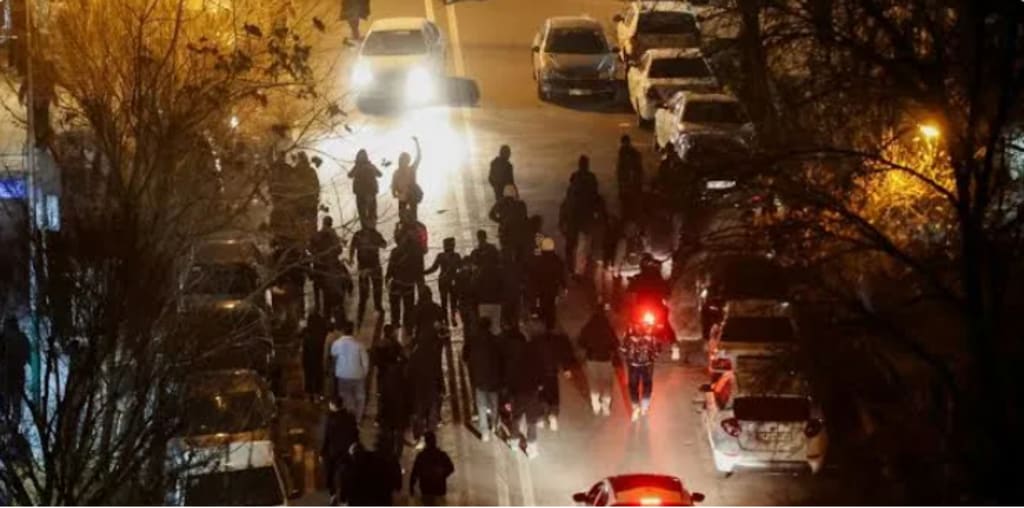
For over 40 years, the relationship between Iran and the United States has been tense, complicated, and often confrontational. From the 1979 Islamic Revolution to today, U.S. attempts to shape Iran’s behavior — through diplomacy, sanctions, or even military threats — have often hit a wall. Despite America’s vast power, Iran has repeatedly shown the limits of U.S. influence. Understanding this dynamic is essential for anyone trying to make sense of today’s global politics.
A History of Tension and Miscalculation
The roots of U.S.-Iran hostility go back to 1979, when revolutionaries overthrew a U.S.-backed monarchy and took over the American Embassy in Tehran. Since then, Iran has positioned the U.S. as its main adversary. That famous slogan, “Death to America,” isn’t just rhetoric — it reflects decades of defiance.
The U.S. response has ranged from sanctions and diplomatic talks to threats of military action. The 2015 nuclear deal showed that diplomacy could work, but when President Trump pulled out in 2018 and introduced “maximum pressure” sanctions, it hurt Iran’s economy without forcing major political change.
Even in 2026, threats of tariffs and military action continue to surface, while polls show most Americans are wary of another conflict in the Middle East. This tension highlights a key point: American power is not unlimited.
Why American Power Faces Limits in Iran
Several factors explain why the U.S. struggles to fully influence Iran:
1. Deep-Rooted National Identity
Iranians have a long history of resisting foreign influence — from ancient empires to modern invasions. This history fosters strong national pride and resistance to external pressure, especially from the U.S.
2. Regional Influence
Despite sanctions, Iran wields significant influence in Iraq, Syria, Lebanon, Yemen, and beyond. Its regional alliances give it leverage that isn’t easily undone by economic or military pressure.
3. U.S. Domestic Politics
American policy toward Iran often shifts with each administration. These inconsistencies give Tehran room to maneuver and weaken the impact of U.S. actions.
4. Global Geopolitics
Other major powers, including China and Russia, maintain strong ties with Iran. This reduces the effectiveness of unilateral U.S. measures, like sanctions, and complicates efforts to isolate Tehran.
Containment and Diplomacy: A Balanced Approach
Recognizing the limits of power doesn’t mean giving up. Experts suggest a mix of containment, deterrence, and diplomacy is the most realistic strategy.
Containment focuses on managing threats rather than trying to force regime change. Diplomacy, meanwhile, can reduce risks and sometimes deliver tangible results — as seen in the 2015 nuclear deal. Patience and careful negotiation are key.
What Iran Teaches About American Influence
Iran shows that even a superpower like the United States cannot dictate political transformation in another country. Military strength and sanctions are tools, but they have limits.
In today’s multipolar world, influence requires strategy, nuance, and respect for the realities of other nations’ sovereignty. Understanding these limits is crucial for shaping smarter, more sustainable U.S. foreign policy.
Bottom Line
The U.S.-Iran dynamic isn’t just a Middle East issue — it’s a lesson in the limits of power. For policymakers and global watchers alike, the takeaway is clear: influence matters, but it must be exercised wisely. Force alone cannot solve complex political and cultural realities.
This version is easier to read, uses subheadings for navigation, has short paragraphs for online readers, and maintains a conversational tone while staying informative.
If you want, I can also add SEO optimization with meta description, alt text for images, and suggested keywords to make it more blog-friendly.
About the Creator
Keep reading
More stories from Aqib Hussain and writers in The Swamp and other communities.
Europeans Prepare Military Exercises in Greenland
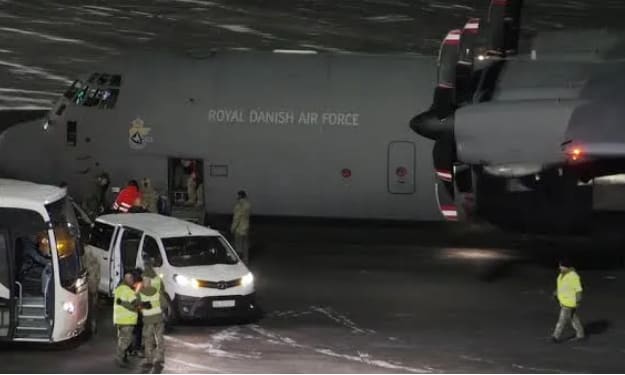
The Arctic is no longer a quiet, frozen frontier. Once seen as remote and geopolitically dormant, Greenland has suddenly become one of the world’s most strategically sensitive regions. As former U.S. President Donald Trump renews his controversial interest in acquiring the island, European nations are responding with something more tangible than diplomatic statements — military exercises on Greenlandic soil.
By Aqib Hussaina day ago in The Swamp
What Is the Old Name of Turkey? A Journey Through History, Empires, and Identity
When people hear the name Turkey, they often think of a modern nation bridging Europe and Asia, rich with culture, cuisine, and history. But Turkey’s land has carried many names long before it became the Republic of Türkiye in the 20th century. Understanding the old names of Turkey is more than a geography lesson—it is a journey through ancient civilizations, powerful empires, and shifting identities that shaped the world. Anatolia: The Earliest Known Name The oldest and most widely used historical name for much of modern-day Turkey is Anatolia. Derived from the Greek word Anatolē, meaning “the east” or “sunrise,” Anatolia referred to the lands east of mainland Greece. For ancient Greeks, this region was literally where the sun rose. Anatolia was not a single kingdom but a vast region that hosted some of the world’s earliest civilizations, including the Hittites, Phrygians, Lydians, and Urartians. Archaeological discoveries show that Anatolia was a cradle of early human settlement, agriculture, and trade, making it one of the most historically dense regions on Earth. Even today, historians and scholars frequently use “Anatolia” to describe Turkey’s Asian portion, which makes up about 97% of the country. Asia Minor: A Roman and Byzantine Label Another well-known old name for Turkey is Asia Minor. This term was popularized during the Roman and Byzantine Empires to distinguish the region from the larger continent of Asia. “Asia Minor” literally means “Lesser Asia,” emphasizing its role as a western extension of the Asian landmass. Under Roman and later Byzantine rule, Asia Minor became a hub of administration, commerce, and Christianity. Many early Christian communities, councils, and churches—mentioned in biblical texts—were located in this region. Cities like Ephesus, Smyrna, and Nicaea were central to religious and political life for centuries. Constantinople and the Byzantine Identity While the land itself had regional names, the capital city—Constantinople—often symbolized the entire territory. Founded by Roman Emperor Constantine the Great in 330 AD, Constantinople became the heart of the Byzantine Empire. For over a thousand years, the Byzantine Empire ruled much of what is now Turkey, blending Roman governance, Greek culture, and Christian theology. During this period, the region was not called Turkey at all, as the term “Turk” had not yet become dominant in Anatolia. The Arrival of the Turks and the Name “Turkey” The name Turkey comes from the word “Turk”, referring to the Turkic peoples who migrated from Central Asia. After the Battle of Manzikert in 1071, Seljuk Turks defeated the Byzantine army, opening Anatolia to Turkish settlement. Over time, European sources began referring to the region as “Turcia” or “Turkey,” meaning “the land of the Turks.” This marked a major shift in identity—from a Greco-Roman-Christian region to a predominantly Turkic and Muslim one. The Ottoman Empire: A Global Power Without the Name “Turkey” Interestingly, during the height of Turkish power, the state was not officially called Turkey. Instead, it was known as the Ottoman Empire, named after its founder Osman I. From the late 13th century until the early 20th century, the Ottoman Empire controlled vast territories across Europe, Asia, and Africa. Ottoman rulers referred to their realm as the Devlet-i Aliyye-i Osmaniye (The Sublime Ottoman State). However, European diplomats and writers still casually referred to the empire’s core lands as Turkey, reinforcing the name internationally. From Ottoman Empire to the Republic of Turkey After World War I and the collapse of the Ottoman Empire, Mustafa Kemal Atatürk led a successful independence movement. In 1923, the modern Republic of Turkey was officially established. This marked the first time “Turkey” became the formal name of the state, symbolizing a break from imperial rule and the beginning of a secular, nation-based identity. In recent years, the country has also emphasized the spelling “Türkiye” internationally to reflect its native pronunciation and cultural identity. Why These Old Names Still Matter The old names of Turkey—Anatolia, Asia Minor, Byzantine lands, and Ottoman domains—tell a story of continuity and transformation. They reveal how geography, culture, religion, and power shape national identity over time. Turkey is not just a modern nation-state; it is a living archive of human civilization. Each old name represents a chapter in its long and complex story, making Turkey one of the most historically layered countries in the world. Final Thoughts So, what is the old name of Turkey? The answer depends on the era. From Anatolia and Asia Minor to Byzantine territories and the Ottoman Empire, Turkey has worn many names—each reflecting the people and powers of its time. Understanding these names helps us appreciate Turkey not just as a country, but as a crossroads of civilizations that continues to influence global history today.
By Fiazahmedbrohi a day ago in The Swamp
Center Stage with Paul Stewart
*** I'm keen to republish the interviews I did for my series with Vocal creators. It's been a few years and I thought it might be nice to revisit these wonderful conversations. I'll be releasing them one at a time for a few weeks/months.
By Heather Hublera day ago in Interview


Comments
There are no comments for this story
Be the first to respond and start the conversation.