
Trump Says ICE Victim Wasn’t a ‘Would‑Be Assassin’
President distances himself from administration aides’ claims about the Minneapolis shooting of Alex Pretti

Introduction
President Donald Trump has rejected a narrative advanced by senior aides that the man killed by immigration enforcement agents in Minneapolis over the weekend was a “would‑be assassin.” The victim, 37‑year‑old Alex Pretti, was shot dead during an operation in the city, prompting debate over how officials described the incident and the broader response from the Trump administration.
Trump’s remarks come amid heightened scrutiny of federal law enforcement actions and disagreements within his own administration about characterising the events that led to Pretti’s death. His comments represent a shift from earlier statements by senior aides, who strongly framed Pretti’s actions as posing an violent threat.
Who Was Alex Pretti?
Alex Pretti was a 37‑year‑old intensive care unit nurse who lived and worked in Minneapolis. He had been employed as a registered nurse with the U.S. Department of Veterans Affairs.
According to reports, Pretti was present during protests and federal law enforcement operations in Minneapolis when he was shot by U.S. Border Patrol agents on January 24, 2026, as part of an immigration enforcement campaign known as Operation Metro Surge.
Initial Statements from Administration Officials
In the immediate aftermath of the shooting, senior members of the Trump administration offered a sharp portrayal of the incident. White House Deputy Chief of Staff Stephen Miller described Pretti on social media as a “would‑be assassin” who had tried to murder federal law enforcement officers. Homeland Security Secretary Kristi Noem also characterised Pretti as violent and said he had brandished a weapon.
These statements were echoed by a former senior Border Patrol commander involved in the operation, adding that it appeared Pretti intended to “massacre law enforcement.” However, those claims were issued before independent verification of the facts and were based on initial reports from agents in the field.
Video Evidence and Conflicting Accounts
Video footage of the incident that has circulated online appears to contradict early official descriptions of Pretti’s actions. In the footage, Pretti is seen holding a phone and not visibly wielding a weapon when agents confront him. Witness statements noted that agents disarmed him before shots were fired.
Multiple witnesses reported that Pretti was trying to help others and was not acting aggressively toward agents. One description noted Pretti held up his phone to film and later raised his hands when agents used pepper spray against him and other bystanders.
Trump’s Public Response
When asked whether he agreed with the “would‑be assassin” description, President Trump replied, “No. Not as a — no,” indicating disagreement with that characterisation. He said he viewed the incident as “very unfortunate” and emphasised that he was seeking to “de‑escalate” the situation in Minneapolis after speaking with local officials.
Trump also noted his belief that Pretti “shouldn’t have been carrying a gun,” and reiterated general concerns about armed confrontations at protests. At the same time, he acknowledged the right to bear arms would be protected under the U.S. Constitution, noting the legal framework governing gun ownership.
Policy Tension Within the Administration
The president’s distancing from the strongest language used by aides highlights a point of tension within his administration over how to frame and respond to the shooting. Miller and Noem had initially emphasised a narrative of violent threat, while Trump chose a more measured public description that rejected the “assassin” label.
Miller has since acknowledged that some agents involved in the shooting might not have followed proper protocol, and an internal review is underway to examine the actions of Customs and Border Protection personnel.
Political and Public Reaction
The shooting has prompted reactions from both sides of the political spectrum. Democrats and civil liberties advocates have criticised early government statements as premature and misleading, and have called for independent investigations into federal law enforcement conduct. Some lawmakers have questioned the use of force in Minneapolis and asserted that official narratives should align with video evidence and established facts.
Republican responses have been mixed. Some lawmakers have backed Trump’s decision to distance himself from the strongest language used by administration aides, while others have defended law enforcement actions. At least two Republican senators publicly called for the resignation of Homeland Security Secretary Noem, citing her role in shaping the initial narrative.
Family and Community Reactions
Pretti’s family has strongly rejected characterisations of him as a threat. They have described him as a dedicated nurse and a lawful gun owner, disputing the administration’s early portrayal. In statements released through representatives, family members said claims that he was attacking law enforcement were false and deeply hurtful.
Community members and advocates also gathered to call for accountability and transparency from federal agencies. Some local leaders have expressed concern about the deployment of immigration enforcement personnel in Minneapolis and have asked for a clear review of policies governing use of force.
Legal and Investigative Context
Federal authorities and local officials are continuing to review the events that led to Pretti’s death. Investigations into law enforcement conduct typically involve multiple agencies, including independent reviews when force results in loss of life. No formal charges have been announced, and law enforcement agencies have not publicly confirmed whether internal disciplinary action is expected.
Local authorities in Minnesota have noted that Pretti had a valid permit to carry a firearm under state law. However, the presence of a weapon during the altercation and how it was managed by agents remains part of ongoing scrutiny.
Broader Debate Over Enforcement Operations
The Minneapolis shooting is part of a broader discussion about immigration enforcement operations in U.S. cities. Federal agencies have expanded activities in several locations, paired with protests and community responses that have sometimes led to confrontations. Advocates for law enforcement argue officers act under difficult conditions and face real risks, while critics contend that tactics and leadership decisions may escalate tensions unnecessarily.
Conclusion
President Trump’s statement that Alex Pretti was not a “would‑be assassin” represents a shift from aggressive language used by senior aides following the fatal shooting in Minneapolis. The contrast highlights disagreements within the administration over how to describe and respond to the incident.
As inquiries continue, video evidence, witness testimony, and official reviews will play a role in shaping the public record. The death of Pretti, a 37‑year‑old ICU nurse, has drawn significant attention and raised questions about law enforcement operations, the role of federal agencies, and how narratives evolve in the aftermath of high‑profile incidents.
The debate continues, and officials from all sides have stressed the need for careful examination of the facts before definitive conclusions are drawn about what occurred on that day.
About the Creator
Saad
I’m Saad. I’m a passionate writer who loves exploring trending news topics, sharing insights, and keeping readers updated on what’s happening around the world.
Russia’s First Domestically Built Ice‑Class Tanker Nears Sanctioned Arctic Plant
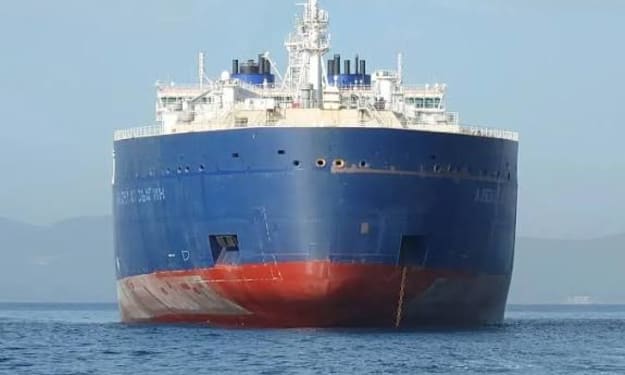
A new milestone in Russia’s Arctic energy ambitions, despite Western sanctions Russia’s first domestically built ice‑class tanker — a massive liquefied natural gas (LNG) vessel — is closing in on the Arctic LNG 2 plant, a facility that remains under U.S. sanctions. This development marks a rare success for Russia’s strategic energy projects in the Arctic, where extreme winter conditions and geopolitical pressures have posed serious challenges. � moneycontrol.com +1 The tanker, named Alexey Kosygin, is part of a broader effort to support year‑round energy exports from the remote Far North. Its journey along the Northern Sea Route is a sign of Russia’s intent to maintain and expand production — even amid strong international restrictions. � moneycontrol.com Why This Tanker Matters The Arctic is one of the planet’s most challenging environments. Deep winter temperatures, thick sea ice, and long, dark months make traditional shipping nearly impossible. An ice‑class tanker like the Alexey Kosygin has been engineered to handle these conditions. � «Первый технический» - www1.ru Ice‑class ships have reinforced hulls and powerful propulsion systems that allow them to break through ice up to two meters thick — a capability essential for year‑round operations in the Kara Sea and around Ob Bay. � «Первый технический» - www1.ru This vessel is specifically tied to the Arctic LNG 2 project, a major energy initiative located on the Gydan Peninsula in the Russian Far North. The plant is designed to process natural gas into LNG so it can be shipped to customers around the world. � Wikipedia Arctic LNG 2: High Ambition, Big Challenges Arctic LNG 2 is part of Russia’s bid to become a major player in the global liquefied natural gas market. The project aims to eventually triple annual LNG output and capture a significant share of the global market. � moneycontrol.com However, the plant and its tankers have faced obstacles. Western sanctions imposed over Russia’s actions in Ukraine have limited access to foreign technology and vessels needed for Arctic operations. Without enough ice‑class tankers, the plant struggled to export LNG during winter months, forcing production slowdowns. � Reuters The Alexey Kosygin is only the second Arctic‑ready tanker to operate at the site. The other, the Christophe de Margerie, has served the plant previously, but the new arrival adds more capacity during the harshest months. � Українські Національні Новини (УНН) Building a Ship Under Sanctions The fact that the Alexey Kosygin was built in Russia is significant. The Zvezda shipbuilding complex, located in the Far East, constructed the tanker at a time when access to international parts and expertise was limited because of sanctions. � moneycontrol.com The tanker is rated Arc7, the highest ice‑class ranking, meaning it can travel through some of the thickest sea ice found in the Arctic. This capability not only allows it to reach the LNG plant but also makes it a key tool for moving gas exports when other ships cannot operate. � Wikipedia Experts say that Russia still needs a fleet of similar ice‑class vessels — potentially more than a dozen — to fully unlock the Arctic LNG 2 project’s potential. Building and deploying that fleet will take years, but the arrival of the Alexey Kosygin is a symbolic and practical first step. � Baird Maritime / Work Boat World Sanctions and the Arctic The Arctic LNG 2 plant is on a list of Russian energy projects subject to U.S. and Western sanctions. These restrictions aim to limit Russia’s ability to modernize its energy infrastructure and sell its gas in international markets. � Reddit Yet Russia has sought ways to work around some of these limits. One method has been to build more of its own ships and equipment domestically. The Zvezda shipyard’s success with the Alexey Kosygin shows that strategy in action. � moneycontrol.com Still, sanctions remain a real constraint. Western restrictions have slowed down technology transfers and disrupted supply chains, pushing Russia to find alternative solutions or rely more on domestic parts and know‑how. � Pravda Economic and Strategic Effects For Russia, the Arctic LNG 2 project — and the vessels that serve it — are about more than energy exports. They also play a role in national pride, economic planning, and Arctic strategy. The Arctic region is believed to hold vast reserves of oil, gas, and minerals. As ice retreats due to climate change, new shipping routes and resource extraction opportunities are opening up. Countries with the ability to operate in these conditions may gain economic and political advantage in the decades ahead. Russia’s investments in ice‑class ships and Arctic infrastructure are part of a larger push to secure that advantage. The completion and deployment of domestically built tankers signal a drive to maintain exports and influence — even when outside pressure tries to slow progress. � moneycontrol.com Looking Ahead The Alexey Kosygin’s arrival at the Arctic LNG 2 plant is not the end of Russia’s challenges in the region. More ships like it will be needed, and construction will take time. Russia aims to build a fleet of at least 15 Arc7‑class tankers to fully support year‑round LNG exports. � Baird Maritime / Work Boat World Meanwhile, Western sanctions continue to influence how fast these projects can grow. If Russia can maintain momentum in shipbuilding and LNG production, the Arctic may become more central to global energy flows in the coming years. Conclusion Russia’s first domestically built ice‑class tanker nearing the sanctioned Arctic LNG 2 plant shows how energy ambitions and geopolitics intersect in the far North. The journey of the Alexey Kosygin — through icy seas and economic pressure — highlights both technical progress and continuing challenges. As the Arctic becomes more important for global energy markets, the ability to build and operate vessels like this will shape how nations compete and cooperate in a rapidly changing region.
By Fiaz Ahmed 2 days ago in The Swamp



Comments
There are no comments for this story
Be the first to respond and start the conversation.