
Trump Says He Will ‘100%’ Carry Out Greenland Tariffs Threat as EU Vows to Protect Its Interests
From Arctic resources to trade retaliation, the Greenland dispute highlights a new era of economic power politics.”

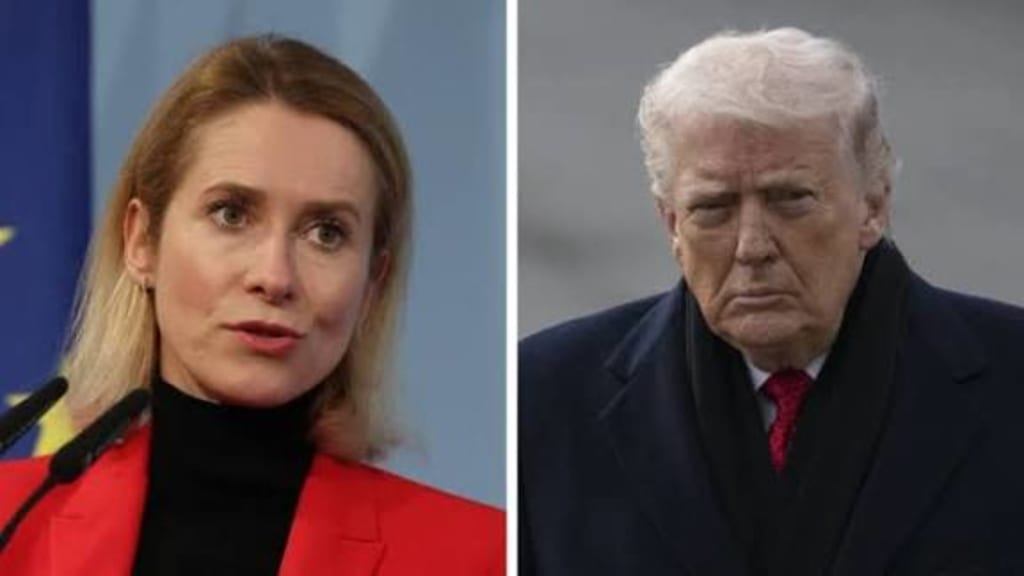
Former U.S. President Donald Trump has once again stirred global debate by declaring that he would “100%” follow through on imposing tariffs related to Greenland if his demands are not met. The remarks have reignited tensions between the United States and the European Union, with EU leaders quickly responding that they are prepared to defend their economic and strategic interests. What began years ago as an unconventional proposal to purchase Greenland has now evolved into a serious geopolitical and economic confrontation.
Why Greenland Matters
Greenland, an autonomous territory within the Kingdom of Denmark, holds enormous strategic value. It is rich in rare earth minerals, sits astride critical Arctic shipping routes, and plays a vital role in global climate and security calculations. As melting ice opens new trade passages and access to resources, major powers—including the U.S., China, and Russia—have increased their focus on the Arctic.
Trump has long viewed Greenland through a transactional lens, arguing that the United States should exert greater influence over the territory to counter rivals and secure access to critical minerals needed for advanced technologies and defense systems. When Denmark firmly rejected any idea of selling Greenland, Trump’s interest did not fade—it shifted into economic pressure.
The Tariffs Threat Explained
Trump’s renewed statement suggests that tariffs could be imposed on European goods, particularly targeting Denmark or broader EU exports, if U.S. strategic interests in Greenland are blocked. While details remain vague, the rhetoric alone has already caused unease in financial and diplomatic circles.
Tariffs, if enacted, could affect industries ranging from renewable energy equipment to shipping and pharmaceuticals. Denmark, a small but globally connected economy, would be particularly exposed, but the broader EU could also feel the impact depending on how widely the measures are applied.
EU Pushes Back Strongly
The European Union has responded with unusual unity. EU officials have stated clearly that any unilateral tariffs would be met with countermeasures under international trade rules. Brussels has emphasized that Greenland’s status is not negotiable and that economic coercion will not change that reality.
EU leaders argue that weaponizing trade undermines long-standing transatlantic relationships and risks escalating into a broader trade dispute at a time when global economic stability is already fragile. Inflation, supply chain disruptions, and geopolitical conflicts have left little appetite in Europe for another tariff war.
Economic and Political Implications
Markets tend to react swiftly to tariff threats, even before policies are implemented. Investors worry that renewed U.S.-EU trade tensions could disrupt supply chains and dampen growth. European exporters fear reduced access to the U.S. market, while American companies dependent on European inputs could face higher costs.
Politically, Trump’s stance resonates with his “America First” base, reinforcing his image as a leader willing to use economic tools aggressively to pursue national interests. Critics, however, argue that such tactics alienate allies and weaken collective Western influence at a time when cooperation is crucial.
Greenland’s Voice Often Overlooked
Amid the high-level rhetoric, Greenland’s own perspective is often sidelined. Greenlandic leaders have repeatedly stated that the territory is not for sale and that its future should be decided by its people. Many residents support greater autonomy and economic development but reject being treated as a bargaining chip in global power struggles.
Local officials have also expressed concern that increased militarization or economic pressure could harm Greenland’s environment and traditional ways of life, particularly as climate change already poses significant challenges.
What Comes Next?
Whether Trump’s tariff threat becomes reality depends on political developments in the United States and diplomatic maneuvering behind the scenes. If enacted, tariffs could trigger a cycle of retaliation, drawing both sides into a prolonged trade conflict. If cooler heads prevail, negotiations may refocus on cooperation in the Arctic, including joint investment, security coordination, and environmental protection.
What is clear is that Greenland has become a symbol of a larger shift in global politics—where strategic geography, resources, and economic power intersect. Trump’s declaration has ensured that the Arctic, once considered remote, is now firmly at the center of international debate.
Final Thoughts
Trump’s promise to “100%” carry out Greenland-related tariffs underscores how economic tools are increasingly used as instruments of geopolitical pressure. As the EU prepares to defend its interests, the episode highlights rising tensions within the Western alliance and the growing importance of the Arctic in global strategy. For readers and policymakers alike, the situation serves as a reminder that in today’s interconnected world, trade, politics, and geography are more closely linked than ever.
About the Creator
Fiaz Ahmed Brohi
I am a passionate writer with a love for exploring and creating content on trending topics. Always curious, always sharing stories that engage and inspire.
Keep reading
More stories from Fiaz Ahmed Brohi and writers in The Swamp and other communities.
China’s $7 Trillion Cash Pile Is Shifting Into Stocks, Gold: A Strategic Move with Global Ripples
China, long recognized as one of the world’s most significant holders of financial assets, is now making a bold shift in how it manages its vast reserves. Reports indicate that the country’s estimated $7 trillion cash pile is increasingly moving into equities and gold, signaling not just a domestic strategy, but one with far-reaching global implications.
By Fiaz Ahmed Brohiabout 14 hours ago in The Swamp
Iran’s Khamenei Blames Violent Protests on Trump
Iran is once again at the center of international attention after Supreme Leader Ayatollah Ali Khamenei blamed violent protests on former U.S. President Donald Trump, accusing Washington of fueling unrest inside the country. The comments come amid widespread demonstrations, a heavy security crackdown, and rising international concern over human rights and regional stability.
By Aarif Lasharia day ago in The Swamp
Wild Card Weekend Recap: What Happens Now?
I think I figured out why I love Wild Card Weekend so much. It's because it's the first playoff anything of the calendar year. The NFL season starts in the fall, and once upon a time, the champion was crowned either on or slightly before New Year's. The evolution of the NFL schedule has resulted in the playoffs starting just into the New Year, and currently, the final week of the season falls on the first weekend of the New Year, with Wild Card Weekend coming a week after that. So yes, chronologically, the NFL's Wild Card Weekend serves as the first playoff anything of the calendar year.
By Clyde E. Dawkins7 days ago in Unbalanced


Comments
There are no comments for this story
Be the first to respond and start the conversation.