
Trump Says He Might Sue Fed Chair Jerome Powell for ‘Gross Incompetence’
A surprising legal threat from the U.S. president intensifies scrutiny of the Federal Reserve’s leadership and sparks debate on central bank independence

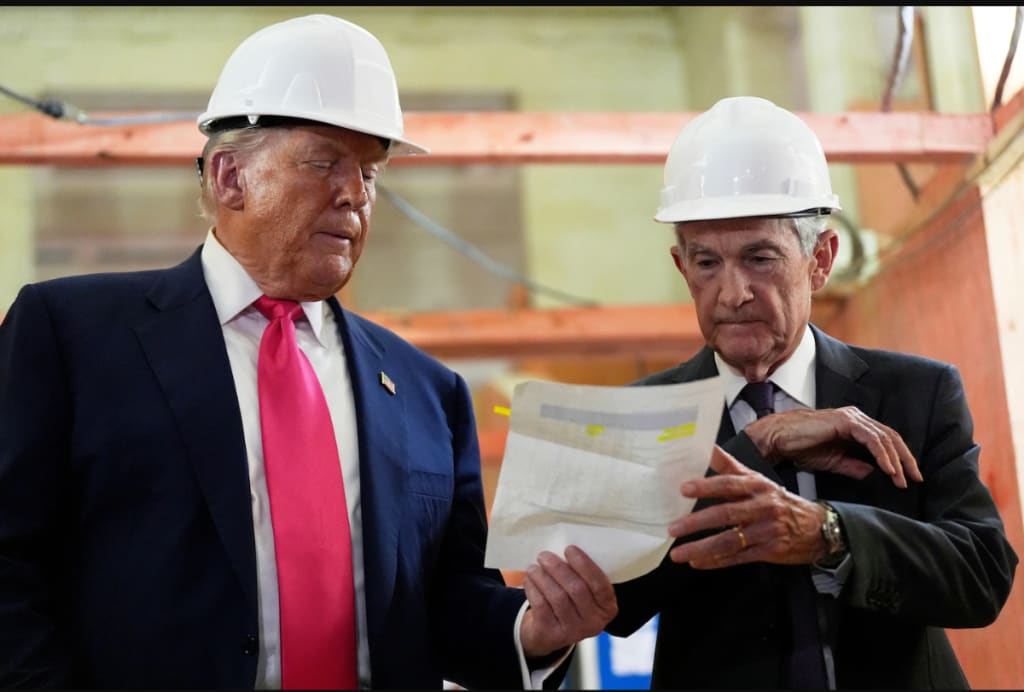
In a move that has captured widespread attention, former U.S. President Donald Trump recently suggested he might sue Federal Reserve Chair Jerome Powell for “gross incompetence.” The remark, made during a high-profile media event at Mar-a-Lago, marks one of the most unusual confrontations between a U.S. political leader and the central bank in modern history. The statement not only reignites discussions about the Federal Reserve’s independence but also raises questions about accountability, governance, and the political influence over monetary policy.
Trump has long criticized Powell for decisions he perceives as damaging to the economy, particularly regarding interest rates and inflation control. However, the latest accusations go a step further by implying legal culpability — a concept few legal experts consider feasible given the structure of U.S. law and the Fed’s independence. (washingtonpost.com)
The Statement That Shook the Media
During a joint press conference with Israeli Prime Minister Benjamin Netanyahu on December 29, 2025, Trump stated that Powell’s oversight of the Federal Reserve amounted to “gross incompetence,” adding that he may bring legal action against him. Trump specifically referenced a multibillion-dollar renovation project at the Federal Reserve headquarters as an example of mismanagement.
“It’s gross incompetence against Powell … we’re going to probably bring a lawsuit against him,” Trump said. He did not, however, outline specific legal arguments or provide a timeline for such a lawsuit. (washingtonpost.com)
The press conference and subsequent media coverage quickly went viral, highlighting the unprecedented nature of the claim. Analysts point out that while presidents have occasionally criticized central bank policy, openly threatening legal action against the Fed Chair is virtually unheard of in American political history.
Focus on the Federal Reserve Renovation
A significant portion of Trump’s criticism focused on the renovation of the Federal Reserve’s historic headquarters in Washington, D.C. He claimed the project’s costs had spiraled out of control and that Powell was ultimately responsible. According to Trump, the expenditures represented not just poor management but actionable negligence.
Independent reporting indicates that the renovation cost roughly $2.5 billion, far lower than figures cited by Trump. Experts note that while the project has been expensive, Trump’s portrayal of the spending has been somewhat inflated for dramatic effect. (theguardian.com)
Legal Feasibility and Constitutional Questions
The idea of suing the Fed Chair for “incompetence” raises complex legal and constitutional questions. The Federal Reserve operates independently of the executive branch, with statutory protections designed to shield monetary policy from political interference. This independence is widely regarded as essential to ensuring stability in financial markets and public confidence in U.S. economic policy.
Legal scholars emphasize that filing a lawsuit against Powell would face significant hurdles, including questions of standing, immunity, and separation of powers. Even if Trump pursued legal action, it is unlikely that courts would allow a case that challenges the Fed Chair’s policy decisions, given the institution’s legally protected independence. (washingtonpost.com)
Political Implications
Many analysts interpret Trump’s remarks as a strategic political move rather than a genuine legal threat. By targeting Powell and the Federal Reserve, Trump appeals to a base frustrated with inflation, rising interest rates, and what they perceive as bureaucratic mismanagement of the economy.
The statement also positions Trump as a vocal critic of institutional power, framing him as a champion for voters who feel alienated by the federal bureaucracy. In addition, by drawing attention to the Fed’s spending and policy decisions, Trump seeks to influence public perception ahead of the next election cycle. (businessinsider.com)
Fed Independence and Market Reactions
The Federal Reserve has maintained its usual practice of not commenting on political attacks, emphasizing that decisions are made based on economic data and long-term policy goals rather than political pressure. Nevertheless, Trump’s statements have sparked debate among economists, investors, and policymakers about the importance of preserving central bank independence.
Markets tend to respond negatively to uncertainty regarding monetary policy. While this particular threat may be symbolic, any erosion of confidence in the Fed’s autonomy could have real consequences for stock prices, bond yields, and global financial stability.
Historical Context
Trump is not the first president to criticize the Federal Reserve. Historical examples include Richard Nixon’s attempts to influence interest rate policy and other political leaders expressing frustration with monetary decisions. However, openly threatening legal action against the Fed Chair remains unprecedented.
The controversy underscores the delicate balance between political authority and independent institutions. While the president can nominate and influence key Fed positions, day-to-day policy decisions are legally insulated from direct political control. (reuters.com)
Public Reactions
Public and media reactions have been divided. Supporters of Trump praised him for challenging an institution they see as opaque and unaccountable, while critics warn that such rhetoric threatens the credibility of the Federal Reserve and could destabilize financial markets. Political commentators also speculate that the comments are designed to influence the nomination of Powell’s successor, expected to be announced soon.
The upcoming months will likely determine whether Trump follows through with any formal legal action or whether the statement remains a political tactic aimed at shaping public discourse.
Conclusion
Donald Trump’s statement that he may sue Fed Chair Jerome Powell for “gross incompetence” is unprecedented in modern U.S. history. While legal experts doubt the feasibility of such action, the remark highlights tensions between political leadership and independent institutions, raises questions about the Fed’s role, and underscores the influence of rhetoric in shaping economic and political narratives.
As the controversy unfolds, markets, policymakers, and the public will continue to watch closely. Whether this leads to legal proceedings or remains a high-profile political message, the situation emphasizes the delicate balance between presidential authority and the independence of key financial institutions
About the Creator
Muhammad Hassan
Muhammad Hassan | Content writer with 2 years of experience crafting engaging articles on world news, current affairs, and trending topics. I simplify complex stories to keep readers informed and connected.
Keep reading
More stories from Muhammad Hassan and writers in The Swamp and other communities.
North Korea’s Kim Calls for Stronger Artillery Production Ahead of Key Party Congress
North Korean leader Kim Jong Un has called for a major boost in artillery production as the country prepares for an important ruling party congress, signaling renewed emphasis on military strength amid rising regional and global tensions. The directive, delivered during a high-profile inspection of weapons manufacturing facilities, underscores Pyongyang’s continued focus on strengthening its armed forces despite ongoing economic challenges and international sanctions.
By Muhammad Hassan20 days ago in The Swamp
RWE Secures Contracts for Difference for 6.9 Gigawatts of Offshore Wind Capacity in UK Allocation Round 7 and Agrees a Long-Term Partnership with KKR
The United Kingdom’s renewable energy sector reached a significant milestone as RWE, one of Europe’s leading renewable energy companies, secured Contracts for Difference (CfDs) for 6.9 gigawatts (GW) of offshore wind capacity in UK Allocation Round 7 (AR7). Alongside this achievement, RWE also announced a long-term strategic partnership with global investment firm KKR, reinforcing confidence in the UK’s offshore wind market. This development highlights the UK’s continued leadership in offshore wind and signals strong investor confidence despite global economic challenges. Understanding the Contracts for Difference (CfD) Scheme The Contracts for Difference scheme is a key mechanism used by the UK government to support low-carbon electricity generation. It guarantees renewable energy developers a fixed price for the electricity they produce, protecting them from market volatility while ensuring consumers benefit from stable energy costs. By securing CfDs in Allocation Round 7, RWE has ensured long-term revenue stability for its offshore wind projects, enabling large-scale investment and timely project delivery. Scale and Impact of the 6.9 Gigawatts Offshore Wind Capacity The 6.9 GW of offshore wind capacity secured by RWE represents one of the largest allocations in the latest funding round. Once operational, these projects are expected to generate enough clean electricity to power millions of UK homes. This capacity will significantly reduce carbon emissions, lower dependence on fossil fuels, and contribute directly to the UK’s target of achieving net-zero emissions by 2050. Contribution to the UK’s Net-Zero and Energy Security Goals Offshore wind is central to the UK’s clean energy strategy, with a national goal of reaching 50 GW of offshore wind capacity by 2030. RWE’s successful bids in Allocation Round 7 make a substantial contribution toward this target. In addition to environmental benefits, these projects strengthen energy security by increasing domestic power generation and reducing exposure to global energy market volatility. Strategic Long-Term Partnership Between RWE and KKR Alongside its success in AR7, RWE announced a long-term partnership with KKR, a global investment firm with a strong track record in infrastructure and energy investments. This partnership combines RWE’s technical expertise in offshore wind development with KKR’s financial strength and investment capabilities, allowing both companies to scale projects efficiently and manage long-term risks. Boosting Investor Confidence in the UK Renewable Market The RWE–KKR collaboration sends a strong message to international investors about the attractiveness of the UK offshore wind sector. Despite challenges such as inflation, rising interest rates, and supply chain constraints, the UK remains a stable and competitive market for renewable energy investment. Such partnerships are crucial in maintaining momentum as global competition for clean energy capital intensifies. Economic Growth and Job Creation Opportunities Large-scale offshore wind projects bring wide-ranging economic benefits. From turbine manufacturing and port infrastructure to maintenance and engineering services, RWE’s projects are expected to support thousands of jobs across the UK. The long-term nature of these developments ensures sustained employment opportunities, particularly in coastal and industrial regions. Challenges Facing Offshore Wind Development While the announcement is largely positive, the offshore wind sector continues to face challenges, including rising construction costs, grid connection delays, and complex regulatory processes. However, the success of Allocation Round 7 demonstrates that with stable policy frameworks and strong private-sector partnerships, these challenges can be effectively managed. A Defining Moment for the UK Energy Transition RWE securing 6.9 GW of offshore wind capacity and entering a long-term partnership with KKR marks a defining moment in the UK’s clean energy journey. This achievement underlines offshore wind’s role as a cornerstone of the UK energy system, driving sustainability, economic growth, and long-term energy resilience.
By Aarif Lashari4 days ago in The Swamp


Comments
There are no comments for this story
Be the first to respond and start the conversation.