
Trump Says He Does Not Want Somalis in the US as ICE Plans Minnesota Operation
A controversial remark sparks national debate, while immigration enforcement prepares targeted actions in Minnesota.

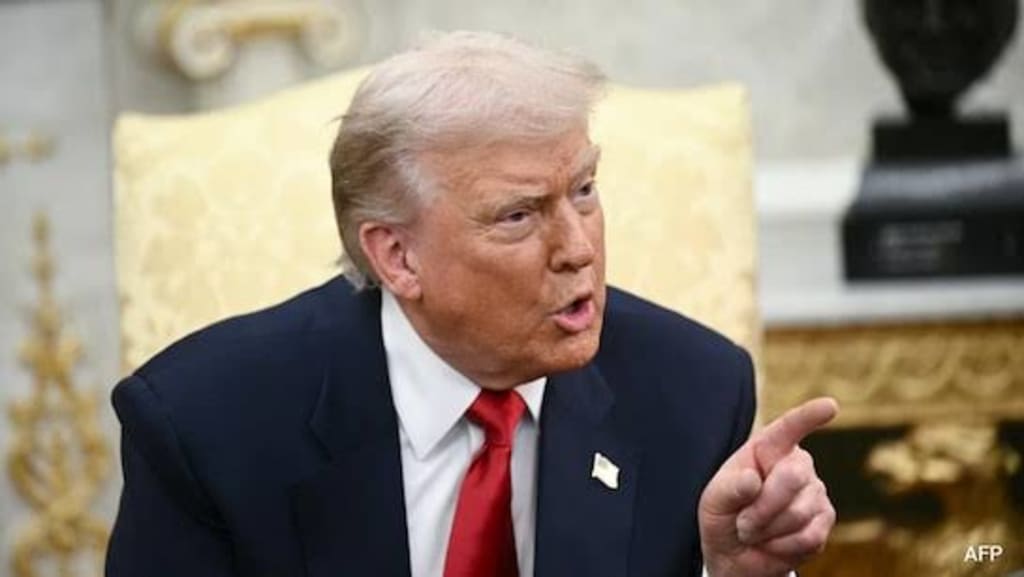
In a week already filled with political tension, former U.S. President Donald Trump once again drew national attention by stating that he “does not want Somalis in the United States.” The comment—made during a public appearance—immediately triggered reactions from immigrant communities, human-rights advocates, and political analysts across the country. Alongside this developing controversy, reports surfaced that U.S. Immigration and Customs Enforcement (ICE) is planning a major enforcement operation in Minnesota, a state home to one of the largest Somali-American populations.
Together, these two developments have reignited debates around immigration policy, community safety, and the longstanding role of refugees in American society.
A Statement That Sparked a Storm
Trump’s remarks, although not new in tone, have gained renewed significance due to the current political climate. His statement suggested that Somali immigrants are “damaging the country,” implying that their presence creates social and security issues. Critics argue that such claims reinforce dangerous stereotypes and inflame tensions in already vulnerable communities.
Leaders within the Somali-American community were quick to respond. Many emphasized that Somalis in the U.S. have built thriving neighborhoods, contributed to local economies, and participated robustly in public life. Minneapolis, for example, has become a cultural and economic hub largely due to immigrant entrepreneurship.
Community organizations stressed that political rhetoric like this does more than create controversy—it increases fear. Many Somali youth expressed concern that such comments could lead to more discrimination in schools, workplaces, and public spaces.
ICE Operation Planned in Minnesota
As Trump’s remarks circulated widely, new reports emerged that ICE is preparing a targeted operation in Minnesota. While officials have not publicly confirmed the details, the planned action is believed to focus on individuals who have outstanding deportation orders or are under active investigation.
Minnesota’s Somali-American population, estimated to be around 80,000, is one of the largest diaspora communities outside Somalia. Many families came to the U.S. through refugee programs fleeing civil war and regional instability. Over decades, they have built strong communities, particularly in the Twin Cities.
The timing of the ICE operation has raised eyebrows. For many families, the uncertainty is deeply unsettling. Local advocacy groups say they have already received calls from residents worried about potential raids and arrests.
Legal organizations, meanwhile, have begun preparing “Know Your Rights” sessions to help residents understand their legal protections. Some community leaders described the upcoming operation as part of a broader pattern of enforcement that targets specific immigrant groups.
A Community Caught Between Fear and Resilience
Despite the tension, Somali community leaders continue to emphasize resilience, unity, and civic engagement. Many say that political rhetoric may come and go, but community strength is built through everyday actions—running small businesses, supporting neighbors, volunteering, and educating the next generation.
Faith leaders, especially in Minneapolis, have urged residents to stay calm and informed. Mosques and community centers have begun organizing support networks in case families face detentions or disruptions.
Some residents expressed disappointment that Somali-Americans are once again placed in the national spotlight for negative reasons. “We work hard. We love this country,” one Minneapolis store owner said. “But statements like these make us feel like we don’t belong.”
The Broader Debate on Immigration and Inclusion
The controversy highlights a larger issue: the divide in America’s immigration debate. On one side are arguments for stronger border controls, increased vetting, and stricter enforcement. On the other are calls for compassion, recognition of immigrant contributions, and protection of refugee communities who have faced unimaginable hardships.
Experts say this debate is unlikely to fade soon. Instead, it may intensify, especially in states where immigrant communities are more visible. Minnesota, with its history of welcoming refugees, finds itself once again at the center of a national conversation.
Still, many believe that local communities—not national politics—will shape the real outcome. In Minnesota, local officials, neighborhood groups, educators, and business owners have often worked together to support immigrant families regardless of political changes.
A Critical Moment for Minnesota’s Somali Community
Trump’s remarks and the planned ICE operation have created a moment of deep concern, but also reflection. For Somali-Americans, the coming weeks may bring challenges—but also opportunities for solidarity, advocacy, and dialogue.
As debates continue, one thing remains clear: the Somali community in Minnesota is not defined by political statements or enforcement operations. It is defined by decades of hard work, cultural pride, and the determination to build a better life—values shared by countless immigrant families throughout American history.
About the Creator
Fiaz Ahmed Brohi
I am a passionate writer with a love for exploring and creating content on trending topics. Always curious, always sharing stories that engage and inspire.
Keep reading
More stories from Fiaz Ahmed Brohi and writers in The Swamp and other communities.
Driver Hoisted to Safety After Truck Dangles Over West Virginia Bridge
When a routine drive becomes a brush with death, it leaves behind a story that captures the world’s attention. That is exactly what happened in West Virginia, where a shocking rescue unfolded after a truck ended up dangling off the edge of a bridge, leaving the driver trapped inside and fighting for life. The dramatic operation, led by firefighters and rescue crews, has since gone viral — not only for its intensity, but also for the courage displayed by the responders who refused to give up.
By Fiaz Ahmed Brohi2 months ago in The Swamp



Comments
There are no comments for this story
Be the first to respond and start the conversation.