
Trump’s 'White Refuge' Gamble: Inside Ramaphosa’s High-Stakes US Visit & the Afrikaner Exodus—Why Elon Musk’s Whispers Could Reshape Global Politics
As South Africa’s President Faces Trump’s “Humiliation Playbook,” White Farmers Settle in Texas—and Critics Ask: Why Not Orania?

Introduction: A Diplomatic Minefield
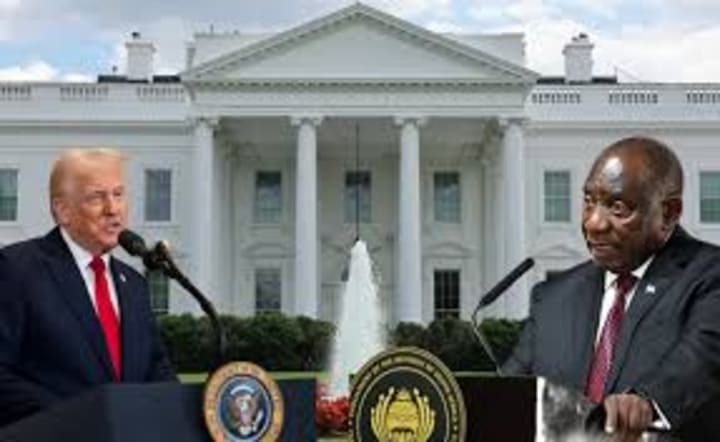
South African President Cyril Ramaphosa’s arrival in Washington this week is no ordinary state visit. It’s a geopolitical chess match where the stakes include trade wars, apartheid legacies, and a surreal refugee crisis involving white Afrikaners—all while Elon Musk looms as Trump’s shadow advisor. With memories of Trump’s humiliation of Ukraine’s Zelensky fresh in mind, Ramaphosa walks into a White House primed for confrontation. But this time, the drama is laced with irony: Trump is resettling white South Africans as “refugees” while slashing aid to Black-majority nations. Here’s the untold story behind the headlines.
1. The Afrikaner Exodus: Fact or Fiction?
The “White Genocide” Myth
The Trump administration’s resettlement of 59 white Afrikaners under refugee status hinges on claims of “racial persecution” and a supposed “genocide” of white farmers—a narrative debunked by South African officials and independent analysts. President Ramaphosa has repeatedly stated that these claims are “patently false,” noting that white South Africans, who comprise 7% of the population, own 70% of private farmland. Even South Africa’s crime statistics reveal no racial targeting: of 44 farm murders in 2024, only eight victims were farmers, most of whom were white, but farmworkers (mostly Black) faced greater risk.
Fast-Tracked Refugees, Hypocrisy Exposed
While Trump suspended the U.S. Refugee Admissions Program for others—including Afghan allies and Syrian war victims—the Afrikaners bypassed standard UN vetting and were welcomed with balloons and flags at Dallas Airport. The Episcopal Church, a longtime refugee resettlement partner, severed ties with the U.S. government over this “preferential treatment,” calling it a betrayal of racial justice. Critics argue the move is a political stunt to appease Trump’s base and far-right allies like Elon Musk, who has falsely accused South Africa of “racist ownership laws”.
Orania: The Elephant in the Room
ORANIA : South Africas WHITE-ONLY Town (DON'T Come Here if You are Black! )
If white South Africans fear persecution, why not relocate to Orania—the Afrikaner-majority enclave in South Africa’s Northern Cape? Founded in 1991, Orania practices self-governance and cultural preservation, yet its existence undermines Trump’s narrative. South African officials argue that Afrikaners leaving for the U.S. are not fleeing violence but rejecting racial equity policies like land reform. As one analyst quipped, “Orania proves they have a safe haven in South Africa. This exodus is about privilege, not persecution”.
2. Ramaphosa vs. Trump: The Agenda Behind the Handshake
AGOA on Life Support
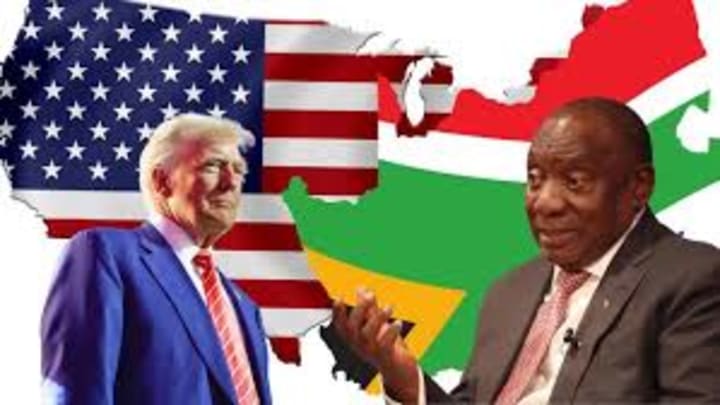
At the heart of Ramaphosa’s visit is salvaging the African Growth and Opportunity Act (AGOA), a trade pact that grants South Africa duty-free access to U.S. markets. Trump’s 31% tariffs on South African imports—a retaliatory move linked to the Israel genocide case—threaten to collapse a $17 billion trade relationship and cost thousands of jobs. Agriculture Minister John Steenhuisen, part of Ramaphosa’s delegation, warned that losing AGOA would be “disastrous for farmers,” but Trump’s team seems more focused on extracting concessions.
The Israel Ultimatum
Sources suggest Trump will pressure Ramaphosa to drop South Africa’s ICJ case accusing Israel of genocide in Gaza—a move that would alienate Global South allies and bolster Trump’s pro-Israel base. Ramaphosa, however, has doubled down, framing the case as a moral imperative. The U.S. has already cut aid to South Africa over the issue, and further threats loom.
BRICS Betrayal?
Whispers in diplomatic circles indicate the U.S. may demand South Africa dilute its BRICS membership—a bloc including China and Russia—as a condition for restoring trade ties. Such a move would undermine Pretoria’s non-aligned stance and could fracture the coalition.
3. Elon Musk’s Shadow Role: From Starlink to Sanctions
Musk’s “White Genocide” Amplification
The South African-born billionaire, now Trump’s “Department of Government Efficiency” head, has been a vocal proponent of the “white genocide” myth, even falsely claiming Starlink was blocked in South Africa due to Black empowerment laws. His influence is evident: Trump’s refugee order mirrors Musk’s 2023 social media posts, and Ramaphosa’s team is prepared to discuss Starlink licensing and Tesla tariff reductions to appease him.
The Malema Sanction Threat
Trump’s allies have floated sanctions against Julius Malema, leader of the EFF party, for singing “Kill the Boer”—a protest song ruled legal by South African courts. Such a move would escalate tensions, but Ramaphosa’s coalition government includes the EFF, making compliance politically toxic.
4. American Reactions: Outrage, Indifference, and Irony
Public Backlash
While Trump’s base cheers the Afrikaners as “victims of wokeism,” progressives and refugee advocates condemn the policy as racist. The Washington Post’s editorial board called it “a politically motivated rewrite of history,” while human rights groups note the irony of prioritizing wealthy white migrants over Black and brown refugees.
Most Afrikaners are settling in red states like Texas and Idaho, where conservative communities welcome them as “allies in the culture war”. Yet the question lingers: Why not Orania? The answer lies in ideology—Orania represents separatist nostalgia, while the U.S. offers mainstream far-right validation.
5. The Global Fallout: A Test for Democracy
Ramaphosa’s High-Wire Act
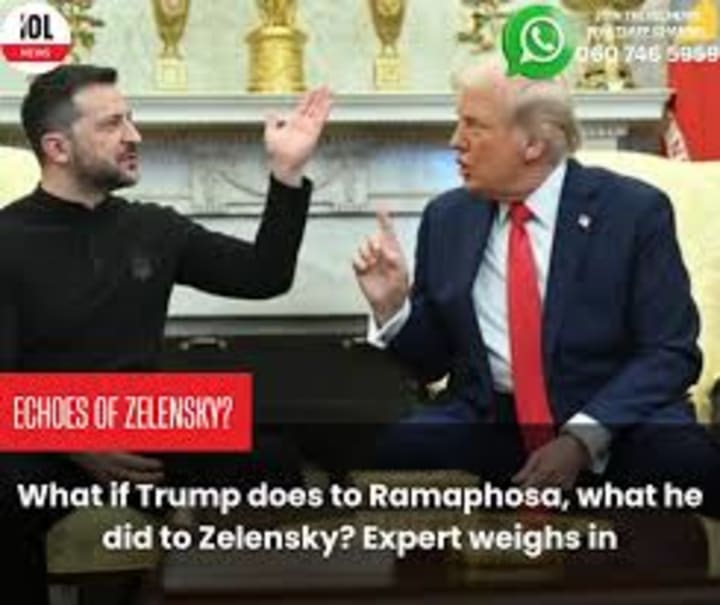
To avoid Zelensky-style humiliation, Ramaphosa must balance defiance with diplomacy. His strategy includes inviting Trump to tour South Africa—including Orania—to witness the “beauty and complexity” of a nation still healing from apartheid.
The BRICS Wildcard
If the U.S. forces South Africa to abandon BRICS, China and Russia could fill the void, further polarizing global trade. Meanwhile, South Africa’s G20 leadership in November offers Ramaphosa a platform to counter Trump’s narrative.
Conclusion: The Unraveling of a Colonial Legacy
Trump’s Afrikaner gambit isn’t just about refugees—it’s a calculated play to destabilize a Black-led government, undermine multilateralism, and rally his base. For Ramaphosa, the visit is a defining moment: capitulate to U.S. demands and betray South Africa’s post-apartheid ideals, or stand firm and risk economic collapse. As the world watches, one truth emerges: the ghosts of colonialism are alive in Washington’s corridors of power.
About the Creator
David Snam
Greetings, I'm David Snam, a passionate storyteller weaving narratives that resonate with the heart and mind. My tales blend the surreal with the everyday, inviting you to explore worlds where the ordinary transforms into the extraordinary.
Keep reading
More stories from David Snam and writers in The Swamp and other communities.
An Open Letter to President Donald J. Trump: A Call to Restore Stability and Leadership to America April 29, 2025
Dear President Trump, As your administration navigates unprecedented challenges—economic uncertainty, global tensions, and deepening divisions at home—it is critical to reflect on the path forward. While your commitment to American workers and “America First” principles has resonated with many, the current trajectory of tariffs, isolationist policies, and erratic governance risks undermining the very goals you seek to achieve. This letter urges you to reassess key policies, prioritize pragmatic solutions over ideological battles, and lead the nation toward unity, stability, and renewed prosperity.
By David Snam9 months ago in The Swamp
Carney’s China Embrace Widens Gap With US in Trump’s Tariff Era
Canada is making waves on the global stage, and not necessarily where the U.S. wants. Prime Minister Mark Carney’s embrace of China is widening a gap with Washington at a time when President Trump’s tariff policies are shaking up international trade. What was once unthinkable — Canada leaning toward Beijing — now looks like a pragmatic move in a world of rising tariffs and disrupted supply chains.
By Aqib Hussain2 days ago in The Swamp
Center Stage with Paul Stewart
*** I'm keen to republish the interviews I did for my series with Vocal creators. It's been a few years and I thought it might be nice to revisit these wonderful conversations. I'll be releasing them one at a time for a few weeks/months.
By Heather Hubler5 days ago in Interview



Comments
There are no comments for this story
Be the first to respond and start the conversation.