
Trump’s Territorial Ambition: New Imperialism or a Case of the Emperor’s New Clothes?
Rhetoric, power politics, and perception collide in debates over America’s global posture

Introduction
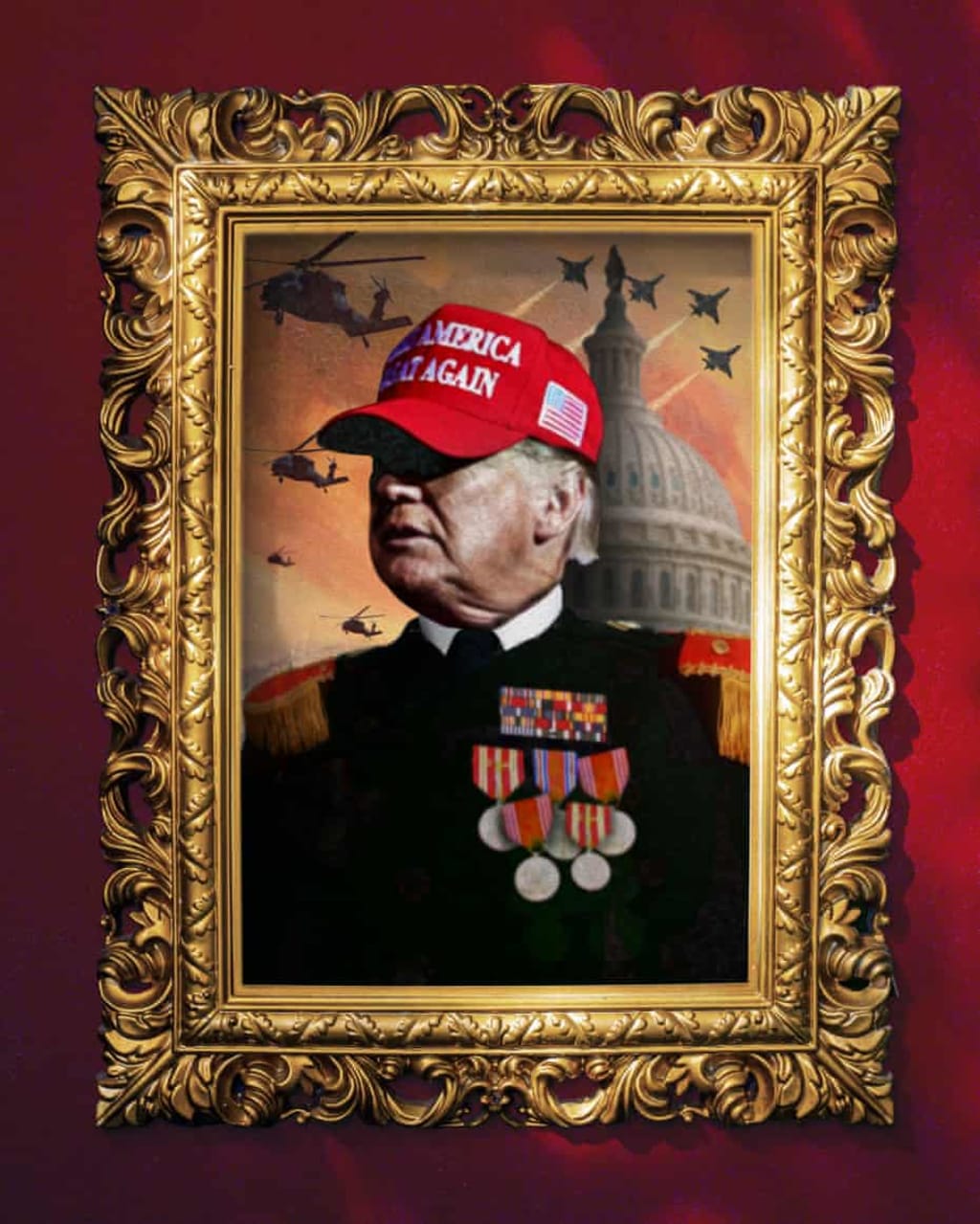
Donald Trump’s approach to foreign policy has always challenged convention, but recent discussions around territorial influence and expansion have reignited debate about whether his vision represents a form of modern imperial ambition or simply political theater without substance. From bold rhetoric about sovereignty and borders to transactional diplomacy with allies and rivals alike, Trump’s posture raises an enduring question: Is this the emergence of a new imperial mindset, or a symbolic display masking limited practical intent?
Understanding this distinction is critical as global power structures shift and traditional norms of international engagement are tested.
What Is Meant by “Territorial Ambition”?
Territorial ambition does not necessarily mean outright conquest. In contemporary geopolitics, it can involve:
Expanding political or economic influence
Challenging existing alliances or boundaries
Leveraging military, trade, or diplomatic power for strategic advantage
Trump’s rhetoric often emphasizes sovereignty, dominance, and national leverage, framing international relations as competitive rather than cooperative.
The Case for a New Imperialism
Supporters of the imperialism argument point to several elements of Trump’s worldview.
Transactional Power Politics
Trump consistently framed alliances as deals, pressing partners to contribute more or risk reduced protection. Critics argue this echoes imperial logic, where power dictates terms rather than mutual obligation.
Territorial Rhetoric
Statements about borders, spheres of influence, and control over strategic regions have fueled perceptions that Trump favors a more assertive, zero-sum global order.
Pressure Through Strength
The emphasis on military buildup and economic pressure suggests a belief that coercive power is central to maintaining influence, a hallmark of imperial systems.
The Counterargument: Rhetoric Without Reach
Others argue that Trump’s territorial posture was more symbolic than structural.
Limited Structural Change
Despite strong language, the United States did not embark on major territorial expansion or sustained military occupations under Trump’s leadership.
Domestic Constraints
Congressional oversight, public war fatigue, and institutional checks limited the scope of unilateral action, reducing the feasibility of imperial ambitions.
Strategic Ambiguity
Many of Trump’s statements served domestic political purposes, energizing supporters without translating into lasting policy shifts.
From this perspective, Trump’s approach resembles the emperor’s new clothes—bold claims that appear powerful but lack concrete transformation.
Global Perception and Reaction
Regardless of intent, perception matters in international relations. Trump’s language unsettled allies and emboldened rivals, altering diplomatic dynamics.
Allies questioned long-standing commitments
Adversaries tested boundaries
Neutral states recalibrated expectations
This atmosphere of uncertainty arguably reshaped global diplomacy more than any territorial ambition itself.
A Shift in American Identity?
The debate reflects a deeper question about America’s role in the world. Trump’s posture tapped into domestic skepticism toward global leadership, multilateral institutions, and long-term military engagement.
Rather than seeking empire, critics argue, Trump sought retrenchment with dominance—reducing obligations while preserving leverage. This approach challenges traditional imperial frameworks and introduces a hybrid model of influence without occupation.
The Long-Term Impact
Whether imperial or performative, Trump’s territorial rhetoric has left a lasting imprint. Future leaders must now contend with:
Heightened skepticism from allies
Precedents of transactional diplomacy
A more openly competitive global order
The legacy lies less in territorial gains and more in altered expectations about how power is expressed.
Conclusion
Trump’s territorial ambition remains open to interpretation, resting somewhere between assertive power politics and rhetorical spectacle. On one hand, his language and approach challenged long-standing diplomatic norms, favoring strength, leverage, and transactional relationships that resemble imperial logic in tone if not in execution. On the other hand, concrete actions rarely matched the scale of the rhetoric.
Structural constraints, domestic politics, and global realities limited any true shift toward territorial expansion or sustained imperial control. What ultimately defined Trump’s approach was not the redrawing of borders, but the reshaping of expectations — among allies, rivals, and American voters alike. His posture highlighted a world moving away from consensus-driven leadership toward open competition and uncertainty.
Whether viewed as emerging imperial ambition or symbolic bravado, Trump’s legacy lies in how power was communicated rather than how territory was acquired. In modern geopolitics, perception can be as influential as action, and Trump’s rhetoric ensured that debate over America’s global role will persist long after his presidency.
About the Creator
Asad Ali
I'm Asad Ali, a passionate blogger with 3 years of experience creating engaging and informative content across various niches. I specialize in crafting SEO-friendly articles that drive traffic and deliver value to readers.
Russia-Ukraine War: Key Developments on Day 1,416 of the Conflict
Introduction The Russia-Ukraine war has reached day 1,416, marking nearly four years since the full-scale invasion began. What was initially expected by many to be a short conflict has evolved into one of the most prolonged and consequential wars in modern European history. Each passing day brings new military developments, diplomatic signals, and humanitarian consequences that continue to reshape regional and global politics.
By Mohammed Azama day ago in The Swamp
Bruce Lee and The God of War: Kuan Ti
It starts with love.. The Power to the God Of War and Wealth Walk into a Chinese restaurant (even in Oklahoma, USA), a Chinese police station, a kung fu martial arts studio or even a Chinese temple and you often see a red faced warrior holding a heavy quan-do (spear like weapon).
By WILD WAYNE : The Dragon King4 days ago in Chapters


Comments
There are no comments for this story
Be the first to respond and start the conversation.