
Trump’s Private Call with Putin: Is the West Losing Its Grip on Russia?
What seemed like an innocent outreach may risk legitimizing Russian aggression—and put Ukraine and Europe in even greater danger.
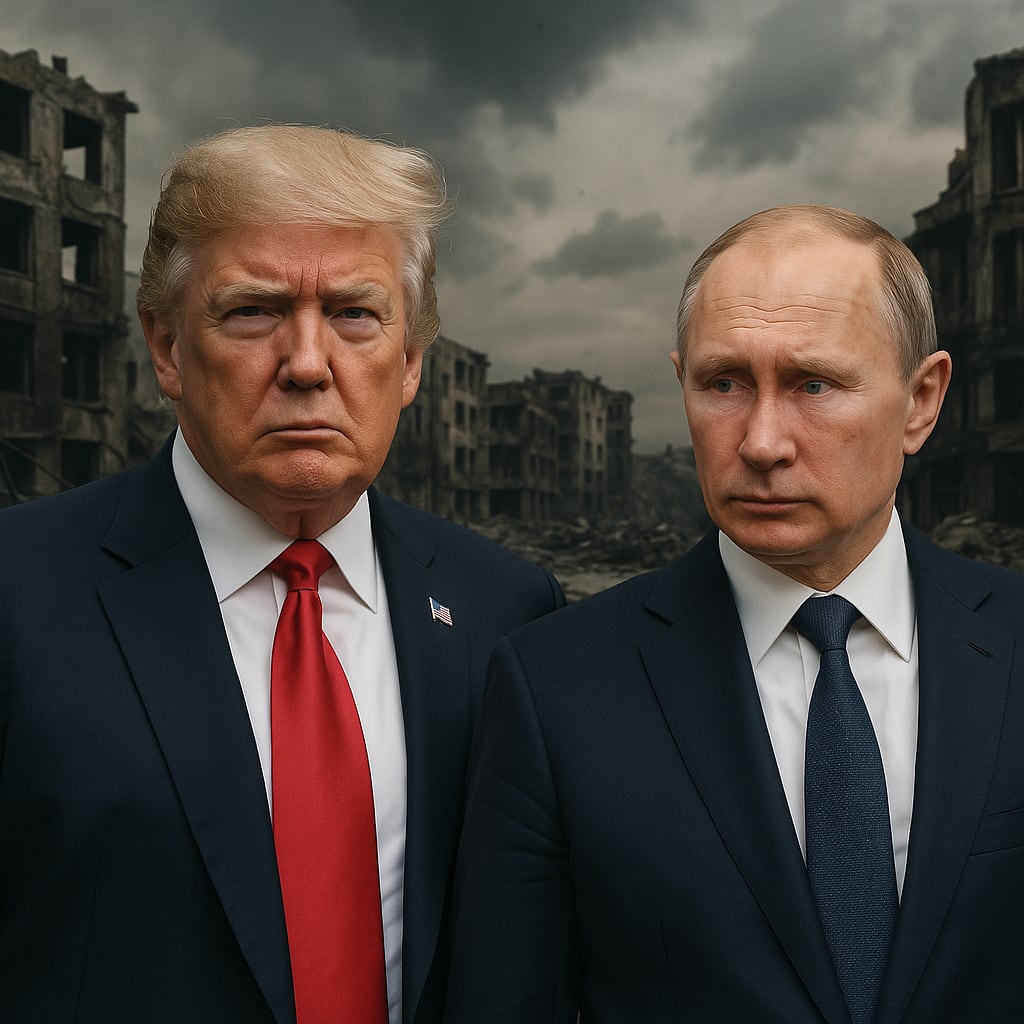
US President Donald Trump reportedly held a private phone call with Vladimir Putin, urging the Russian dictator to come up with a peace proposal that would be “acceptable” to Ukraine and Europe. While it may sound like a noble attempt to end the war, the implications are far more dangerous than they first appear.
Following that secret conversation, Trump reportedly gathered key European leaders and Ukrainian President Volodymyr Zelensky for a joint video conference. During that meeting, he revealed his conversation with Putin, emphasizing that Moscow was open to talks and rejecting the need for further sanctions. He made it clear: the United States would not participate in any peace talks, but would rather let Europe and Ukraine resolve the issue.
To some, this may seem like old-school diplomacy. But to Ukraine — and any country that remembers the horrors of Russian imperialism — it is a red flag.
The Illusion of Peace
Ukrainians, whose homes and lives have been destroyed by Russian missiles, know that Putin is not offering peace—he is offering surrender. That is why President Zelenskyy reacted quickly. He urged Trump to call for an immediate ceasefire and support additional sanctions, rather than appease Moscow. He also stressed that Ukraine must be consulted in any negotiations, warning against backroom deals that could betray his country’s sovereignty.
But Trump’s message was clear: let Putin make his offer.
The silence that followed the meeting was deafening. While some leaders, such as Giorgia Maloni of Italy and Friedrich Merz of Germany, raised cautious questions about the nature of Russia’s so-called offer, many remained uneasy. Was this diplomacy? Was this the beginning of Western appeasement?
A Western split?
This is not the first time Trump has surprised with his pro-Russian rhetoric. During his presidency, he has often downplayed Russia’s aggression and praised Putin’s “strength.” Now, with war raging in Ukraine and the front lines still active, Trump’s actions could undermine the unity of the Western alliance.
More dangerously, it could embolden Putin. Russian state media is already mocking Western indecision and exaggerating internal divisions. If Trump’s proposal gains traction, it could confirm to Moscow that the West is tired, divided, and ready to move on, even if it means sacrificing Ukraine.
And if Ukraine falls? What then?
A warning from history—and from Russia itself
Russia’s ambitions do not end with Kyiv. Kremlin propagandists have spoken openly about “re-educating” the Baltic states and reclaiming influence in Eastern Europe. Latvia, Lithuania, and Estonia are often described in Russian media as “temporary borders” and “falsely independent.” They have even suggested that they may need to be “re-taught to speak Russian.”
This is not just talk. This is the same state that occupied Crimea, destroyed Mariupol, and bombed maternity hospitals.
Allowing Putin to walk away from this war with concessions will not bring peace. It will lead to more chaos, more invasions, and more deaths.
America’s Role and Responsibility
If the United States wants to be a world leader, it must act as a leader. Being open about Ukraine while allowing Russia to dictate the terms of peace sends the wrong message to allies, adversaries, and the Ukrainian people, who are still fighting, dying, and hoping.
Trump may think he’s smart. But what if, through his passive diplomacy, he helped Russia win? What if the “deal” he helps create causes the downfall of Ukraine and the subsequent crisis in Europe?
The world is watching. And history has a long memory.
About the Creator
Keep reading
More stories from Mykhailo Datsyshyn and writers in The Swamp and other communities.
Trump’s Flirtation With Putin Could Lead to Europe’s Next War
When Russia launched its full-scale invasion of Ukraine, the world expected unity from the democratic West. And for a time, it happened. But now, as the war grinds on and Ukraine bleeds daily, some Western politicians are changing their tone — none more worryingly than Donald Trump.
By Mykhailo Datsyshyn8 months ago in The Swamp
Driving Test Cheating Soars as Candidates Turn to Bluetooth Headsets and Impersonators
The integrity of driving tests is facing a serious challenge as cheating cases surge across many countries. Authorities are reporting a sharp rise in the use of high-tech Bluetooth devices, hidden earpieces, and even professional impersonators to fraudulently pass driving theory and practical exams. What was once considered rare misconduct has now become an organized and alarming trend, raising concerns about public safety and the credibility of driver licensing systems.
By Ayesha Lashari3 days ago in The Swamp
Real Estate Crash Weighs on China’s Economic Growth
China’s economic growth, long driven by industrial expansion and a booming real estate sector, is now facing a critical test. The country’s real estate market, which has historically fueled investment, employment, and consumer wealth, is showing signs of a sharp downturn. With property developers struggling under heavy debt, homebuyers delaying purchases, and prices declining in key cities, economists warn that the housing slump could weigh heavily on China’s broader economic growth in the coming months.
By Muhammad Hassan5 days ago in The Swamp


Comments
There are no comments for this story
Be the first to respond and start the conversation.