
Real Estate Crash Weighs on China’s Economic Growth
“Housing market turmoil puts pressure on China’s economy, threatening growth and investor confidence

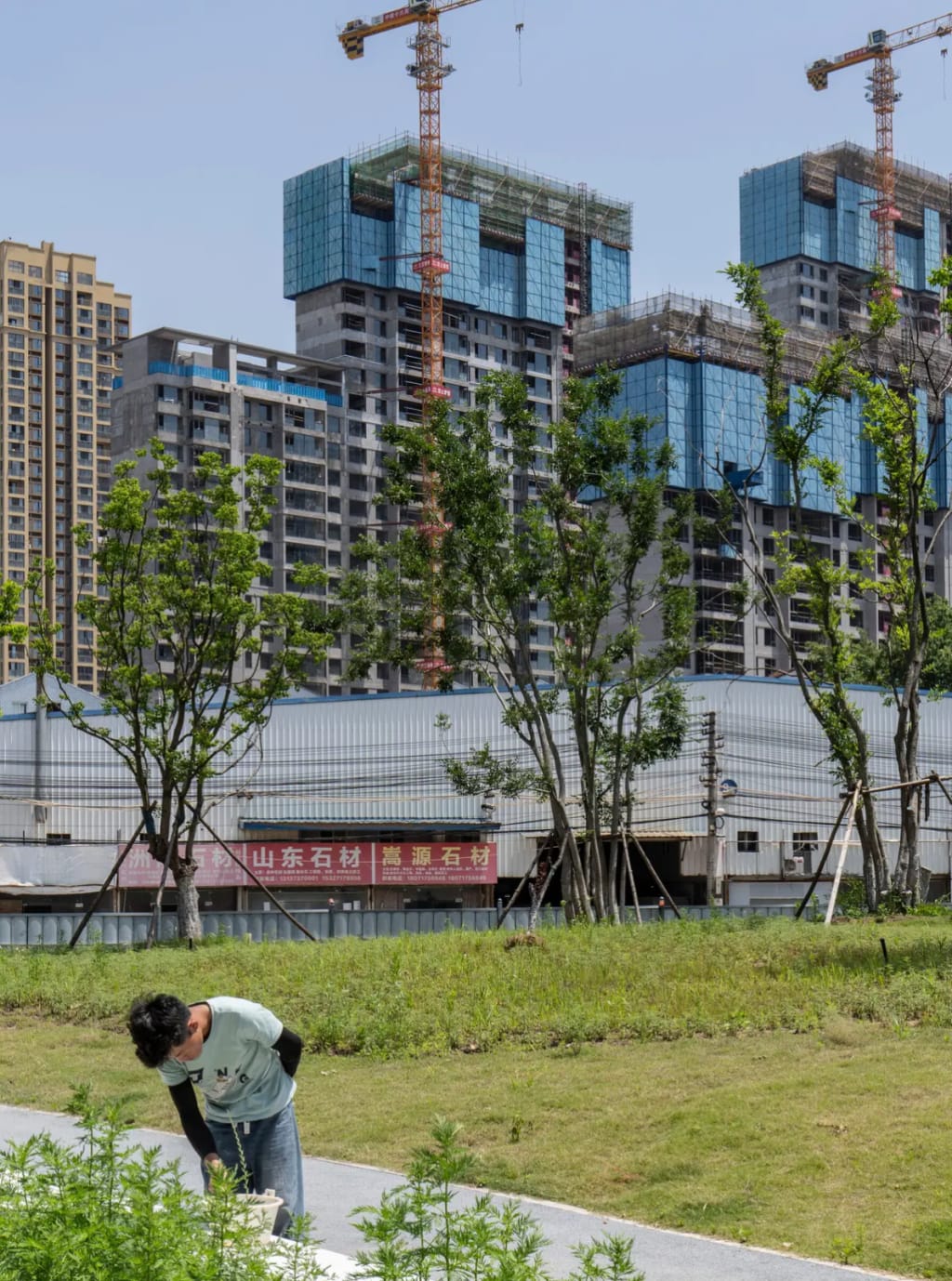
China’s economic growth, long driven by industrial expansion and a booming real estate sector, is now facing a critical test. The country’s real estate market, which has historically fueled investment, employment, and consumer wealth, is showing signs of a sharp downturn. With property developers struggling under heavy debt, homebuyers delaying purchases, and prices declining in key cities, economists warn that the housing slump could weigh heavily on China’s broader economic growth in the coming months.
China’s Real Estate Bubble
For decades, China’s property market has been a cornerstone of economic expansion. Urbanization, rising incomes, and government policies encouraging home ownership drove rapid construction and investment. Real estate accounted for roughly 30% of China’s GDP, including direct construction, related industries, and consumer spending tied to housing.
However, this rapid growth has come at a cost. Many developers took on massive debt to finance construction, creating a highly leveraged market. In recent years, government efforts to curb excessive borrowing—through initiatives like the “three red lines” policy—have exposed vulnerabilities in the sector. Several high-profile developers have faced defaults, triggering panic among investors and homebuyers alike.
The Current Crisis
The current downturn is characterized by:
Falling Property Sales: Home sales have slowed dramatically, as buyers fear falling prices or incomplete developments.
Developer Debt Defaults: Major property developers are struggling to service their debt, with some facing bankruptcy.
Declining Property Prices: In key urban markets, prices have started to drop, reducing household wealth and consumer confidence.
Delayed Construction: Many housing projects remain unfinished, leaving buyers and contractors in limbo.
These factors have created a ripple effect across the economy. Construction, a key driver of employment and material demand, has slowed. Household wealth has been affected, reducing consumer spending. Financial institutions exposed to developer debt are under pressure, increasing systemic risk.
Economic Implications
China’s government faces a delicate balancing act. On one hand, the real estate sector is vital for economic growth and local government revenue. On the other, unchecked developer debt and property speculation threaten financial stability.
Economists warn that the slump could lower China’s GDP growth rate for 2026, potentially pushing it below government targets. Slower growth in real estate affects related industries such as steel, cement, and home appliances, creating broader economic drag.
Additionally, declining property prices can erode household confidence. Many Chinese families view real estate as a primary investment and a source of security. As prices fall, households may postpone other expenditures, further slowing consumer-driven growth.
Government Response
Chinese authorities have already taken steps to stabilize the market:
Policy Support: Reducing restrictions on home purchases in certain cities and loosening credit availability for developers.
Financial Measures: Easing debt repayment requirements and encouraging banks to support healthy developers.
Infrastructure Investment: Increasing spending on public projects to offset weakness in the property sector.
While these measures aim to prevent a full-blown economic crisis, analysts caution that recovery may be slow. The structural issues in the real estate market—high debt, oversupply in certain areas, and declining demand—cannot be fixed overnight.
Global Impact
China’s real estate slump does not only affect the domestic economy; it has broader implications for global markets.
Investor Confidence: International investors, who have poured billions into Chinese property and financial markets, are now reevaluating risk.
Commodities: Reduced construction activity lowers demand for commodities such as steel, copper, and cement, affecting global prices.
Trade and Supply Chains: Slower growth in China could dampen demand for imports, impacting countries that rely heavily on Chinese consumption.
Given China’s role as the world’s second-largest economy, instability in its property market is being closely monitored by policymakers and investors worldwide.
Possible Scenarios
Experts suggest several potential paths for China’s property market and economy:
Gradual Stabilization: Government intervention, combined with moderate buyer confidence, could stabilize prices and allow developers to recover slowly.
Prolonged Slump: If defaults continue and buyers remain hesitant, the market could face a multi-year downturn, putting further pressure on GDP.
Policy-Driven Recovery: Aggressive fiscal and monetary stimulus might revive demand, though this could increase long-term debt risks.
Each scenario has implications not only for domestic growth but also for China’s financial system and global economic stability.
Lessons and Warnings
The real estate crash underscores the risks of overreliance on a single sector for economic growth. For China, diversifying growth drivers—such as innovation, domestic consumption, and service industries—will be crucial.
Investors, both domestic and international, are also reminded of the importance of assessing structural risks. While real estate can generate high returns, excessive leverage and speculative investment can amplify losses when the market turns.
Conclusion
China’s real estate crash is more than a market correction; it is a test of the country’s economic resilience. With developers facing debt pressure, buyers hesitant, and prices declining, the housing sector’s weakness could ripple across the economy, affecting growth, consumer confidence, and global markets.
Government interventions may help stabilize the market, but the underlying structural challenges suggest that recovery will be gradual. As the situation unfolds, policymakers, investors, and households alike will need to navigate a period of uncertainty carefully.
For global observers, the lesson is clear: China’s real estate sector is not just a domestic concern—it has far-reaching implications for the world economy. The coming months will reveal whether China can manage the downturn without triggering a broader economic slowdown, or if deeper reforms are needed to secure long-term stability.
About the Creator
Muhammad Hassan
Muhammad Hassan | Content writer with 2 years of experience crafting engaging articles on world news, current affairs, and trending topics. I simplify complex stories to keep readers informed and connected.
Keep reading
More stories from Muhammad Hassan and writers in The Swamp and other communities.
Mother of Elon Musk’s Child Sues xAI Over Grok Deepfakes
The world of artificial intelligence has taken another controversial turn, this time involving one of the most high-profile figures in tech: Elon Musk. Reports have surfaced that the mother of Musk’s child has filed a lawsuit against xAI, Musk’s AI company, over alleged misuse of AI-generated deepfake technology. The case centers on Grok, xAI’s chatbot, which, according to the lawsuit, created unauthorized deepfake content that impacted the plaintiff’s privacy and emotional wellbeing.
By Muhammad Hassana day ago in The Swamp
Trump Tests the Boundaries of His Power as Minnesota Pushes Back
The clash between federal authority and state autonomy has once again taken center stage in American politics, as former President Donald Trump’s latest assertions of power meet firm resistance from Minnesota’s leadership. The standoff highlights a deeper constitutional tension—one that goes beyond a single state or political personality and speaks to the evolving balance between Washington and the states in an era of intense polarization. At the heart of the dispute is Trump’s enduring political influence and his continued effort to shape national policy debates even outside the Oval Office. Through public statements, legal pressure, and mobilization of his political base, Trump has sought to assert a vision of executive power that stretches traditional norms. Minnesota, governed by leaders who emphasize states’ rights, civil liberties, and local control, has emerged as a prominent counterweight to that approach. Minnesota’s pushback is not merely symbolic. State officials have consistently defended their authority to interpret and implement policies in ways that reflect local values and legal frameworks. Whether the issue involves immigration enforcement, voting regulations, public health measures, or law enforcement cooperation, Minnesota’s stance underscores a broader resistance among Democratic-led states to what they view as federal overreach—or, in Trump’s case, an attempt to govern by pressure rather than constitutional process. Trump’s political style has long thrived on testing limits. During his presidency, he frequently challenged institutional guardrails, from the judiciary to Congress, arguing that decisive leadership required bold action. Supporters praised this approach as a rejection of bureaucratic inertia, while critics warned it eroded democratic norms. Even now, Trump’s rhetoric suggests a belief that executive power should be expansive, flexible, and closely tied to popular mandate rather than institutional restraint. Minnesota’s response reflects a contrasting philosophy. State leaders emphasize that the U.S. Constitution establishes a system of shared power, where states are not mere administrative units but sovereign entities with their own responsibilities and rights. By asserting legal challenges, issuing policy refusals, or reinforcing state laws, Minnesota is signaling that political popularity does not override constitutional boundaries. This confrontation resonates far beyond state lines. Other states are closely watching how Minnesota navigates the pressure, aware that precedents set today could shape future federal-state relations. If aggressive assertions of power go unchallenged, states fear a gradual weakening of their authority. Conversely, a strong and legally grounded resistance could reaffirm the importance of federalism in an increasingly centralized political environment. Public opinion remains sharply divided. Trump’s supporters argue that states like Minnesota obstruct policies aimed at national security, election integrity, or law and order. From their perspective, resistance is framed as defiance rather than defense of democratic principles. On the other hand, critics view Minnesota’s stance as a necessary safeguard against the concentration of power and the politicization of federal authority. Legal experts note that these conflicts often end up in court, where constitutional interpretation becomes the ultimate referee. The judiciary has historically played a crucial role in defining the limits of executive power, and future rulings may further clarify how far a president—or a former president with significant influence—can go in shaping state behavior. Minnesota’s willingness to challenge perceived overreach suggests confidence in the legal system as a counterbalance to political pressure. Beyond legal implications, the dispute also carries electoral significance. Minnesota’s resistance reinforces its identity as a state that values progressive governance and institutional checks. For Trump, confronting such states energizes his base and reinforces his image as a leader willing to confront opposition head-on. In this sense, the clash is as much about narrative as it is about policy. Ultimately, the struggle between Trump’s assertive political posture and Minnesota’s determined pushback reflects a defining question of modern American democracy: how power should be exercised, limited, and contested. As polarization deepens, these confrontations are likely to become more frequent, testing not only political alliances but the resilience of constitutional norms. Minnesota’s stand serves as a reminder that in the American system, power is not absolute. It is negotiated, challenged, and constrained through institutions designed to prevent dominance by any single figure or level of government. Whether this balance holds will shape the nation’s political trajectory long after the current disputes fade from the headlines.
By Fiaz Ahmed Brohia day ago in The Swamp



Comments
There are no comments for this story
Be the first to respond and start the conversation.