
Trump’s New Tariff Comes into Effect at Lower Than Expected Rate
The U.S. president’s latest import tax takes effect at 7 percent, easing market fears while underscoring Washington’s renewed push to protect domestic industries.

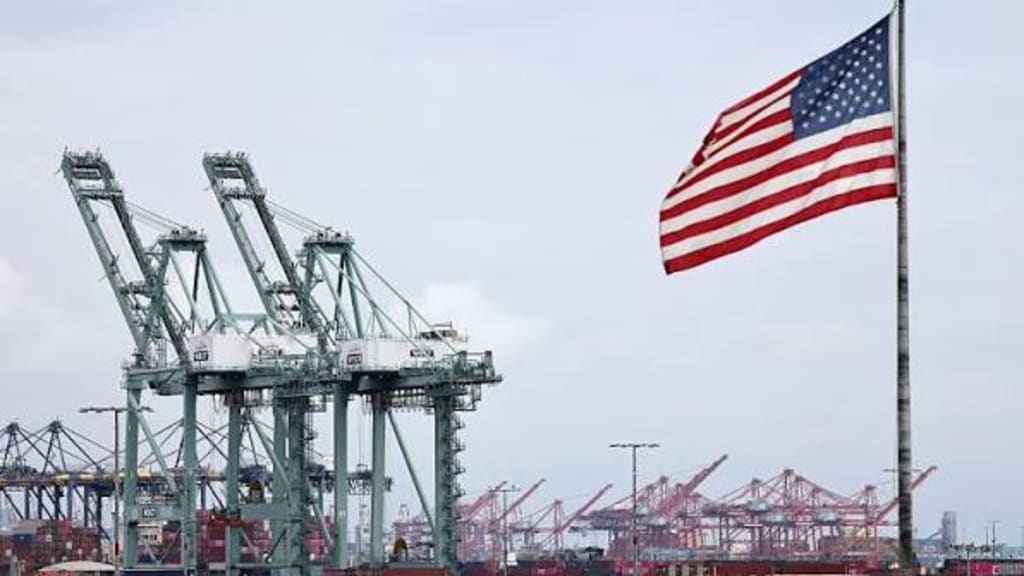
A new tariff introduced by Donald Trump has officially come into force in the United States, but at a significantly lower rate than many economists and industry groups had anticipated. The decision has eased immediate fears of sharp price increases while still signaling a renewed commitment by the administration to its protectionist trade agenda.
The tariff, which targets a broad range of imported industrial and consumer goods, was initially expected to be set at a rate of up to 15 percent. Instead, the finalized measure applies a baseline rate of 7 percent, according to officials from the U.S. Department of Commerce. The administration described the lower figure as a “calibrated step” aimed at protecting domestic industries without triggering sudden inflation or retaliation from key trading partners.
A Shift from Hardline Expectations
When the proposal was first announced earlier this year, business leaders and financial markets reacted with concern, warning that higher tariffs could disrupt supply chains and push up costs for American consumers. Many companies had begun preparing contingency plans, including sourcing materials from alternative countries or passing additional costs on to customers.
However, the administration’s revised approach appears designed to balance political messaging with economic caution. A senior White House official said the lower-than-expected rate reflected “careful consultation with manufacturers, farmers, and retail groups.”
“This is not about shocking the economy,” the official said. “It’s about giving American producers a fair chance to compete while keeping prices stable for families.”
Economic Impact and Market Reaction
Markets responded positively to the announcement. Major stock indexes rose modestly after the tariff rate was confirmed, reflecting investor relief that the policy would be less disruptive than initially feared. Analysts said the reduced tariff could limit short-term inflationary pressure while still encouraging companies to invest in domestic production.
Economists estimate the new tariff will generate several billion dollars annually in revenue, though far less than earlier projections. Importers will be required to pay the levy at ports of entry, and the cost may eventually be shared between foreign exporters, U.S. companies, and consumers.
Retail groups welcomed the adjustment. One national trade association said the decision showed “a recognition that aggressive tariffs can hurt the very people they are meant to protect.”
Political and Strategic Messaging
The tariff remains a key part of Trump’s broader strategy of reshaping global trade relationships. Throughout his political career, he has argued that the United States has been treated unfairly by international trade rules and foreign competitors, particularly in manufacturing and steel production.
By implementing the tariff at a lower rate, the administration can claim progress toward protecting domestic jobs while avoiding the political fallout of sharp price increases. Supporters view the move as a pragmatic compromise that keeps pressure on foreign exporters without escalating into a full trade conflict.
Opposition lawmakers, however, criticized the policy as unnecessary and symbolic. One senior Democrat said the tariff would “create uncertainty for businesses and risk alienating allies at a time when economic cooperation is needed.”
International Response
Several U.S. trading partners are closely monitoring the situation. Officials in Europe and Asia have so far avoided public retaliation, noting that the lower tariff rate reduces the risk of a trade war. Still, diplomatic sources say governments are preparing contingency plans in case further increases are announced.
The World Trade Organization has also taken note of the measure. While the tariff falls within existing U.S. legal frameworks, experts warn that prolonged use of unilateral trade actions could invite formal disputes under international trade rules.
Business Adjustments Underway
For American businesses, the new tariff creates both challenges and opportunities. Domestic producers in sectors such as steel, machinery, and electronics may benefit from reduced competition from cheaper imports. Import-dependent companies, meanwhile, are exploring ways to absorb or offset the added costs.
Some firms have already begun renegotiating contracts with overseas suppliers, while others are considering shifting parts of their supply chains closer to home. Analysts say the lower rate gives companies more time to adapt gradually rather than forcing abrupt changes.
Looking Ahead
While the tariff is now in effect, officials emphasized that it could be adjusted in the coming months depending on economic conditions and trade negotiations. The administration has left open the possibility of raising the rate if foreign governments fail to make concessions in ongoing talks.
For now, the lower-than-expected tariff has tempered immediate economic fears while reinforcing Trump’s message that trade policy will remain a central tool of his economic strategy. Whether this approach delivers long-term benefits or merely postpones larger trade disputes remains an open question.
About the Creator
Fiaz Ahmed
I am Fiaz Ahmed. I am a passionate writer. I love covering trending topics and breaking news. With a sharp eye for what’s happening around the world, and crafts timely and engaging stories that keep readers informed and updated.
Keep reading
More stories from Fiaz Ahmed and writers in The Swamp and other communities.
Prominent Russian Scholar of North Korea Says He Was Expelled from Latvia Following Detention
A prominent Russian academic specializing in North Korea has said he was expelled from Latvia after being detained by authorities, in an incident highlighting the growing tensions surrounding Russian citizens in Europe amid geopolitical disputes. The scholar, known for decades of research on Pyongyang’s political and military strategies, claims that Latvian security services questioned him for several hours before ordering him to leave the country immediately. In statements to Russian media outlets, the academic said he was traveling to Riga for a series of research meetings and consultations with European colleagues. He described his detention as abrupt, with officials citing “national security concerns” but providing no detailed explanation. “I was treated not as a scholar, but as a threat,” he said. “There was no formal accusation, no evidence presented, just the directive to depart.” Latvian authorities have not publicly disclosed the identity of the scholar or the specific reasons for his removal. A spokesperson for the Ministry of Interior confirmed that a Russian national had been expelled under administrative procedures, noting that the move was taken to safeguard national security, but declined to provide further details. Academic Profile and Work The expelled scholar is recognized for his extensive work on North Korea’s political system, leadership dynamics, and relations with major powers such as Russia and China. His publications include numerous books and peer-reviewed articles examining Pyongyang’s foreign policy, military doctrine, and ideological evolution. He has also served as a commentator on Russian media, offering insights into North Korea’s nuclear program and regional diplomacy. Colleagues emphasized that the scholar’s research is strictly academic and not affiliated with intelligence activities. “He has spent his career analyzing North Korea’s internal politics and international behavior,” said one researcher at a Moscow think tank. “There is no evidence linking him to any operational work for the Russian state.” Security Concerns and Regional Context The Baltic states, including Latvia, have tightened security measures for Russian nationals following Russia’s full-scale invasion of Ukraine in 2022. Heightened scrutiny is applied to individuals with backgrounds in defense, international relations, or strategic studies. Authorities argue that vigilance is necessary to prevent espionage or influence operations, even when dealing with academic visitors. Experts note that the North Korea specialization adds sensitivity. Analysts suggest that European security services view Russian scholars focused on Pyongyang through a lens of geopolitical risk, particularly given Moscow’s evolving military and technological ties to Pyongyang. Reaction and Academic Freedom Debate The scholar’s expulsion has sparked concern in academic and human rights circles. Advocates warn that treating researchers as potential security threats could chill intellectual exchange and isolate scholars from international collaboration. “This sets a worrying precedent,” said a European university professor who works on East Asian politics. “When academics are treated as suspects solely because of their nationality or area of expertise, it undermines the principles of open inquiry.” Russian officials condemned Latvia’s action, describing it as discriminatory. A spokesperson for the Russian foreign ministry stated that the expulsion reflects “the unfair treatment of Russian citizens abroad” and called for the country to respect the scholar’s professional work. Implications for Academic Mobility The incident highlights the fragility of academic mobility between Russia and Europe. Visa restrictions, canceled conferences, and heightened security checks have already made travel challenging for Russian scholars. Experts say that the removal of a specialist in North Korean studies may further hinder international collaboration in fields critical to global security understanding. The scholar has indicated that he may pursue legal avenues or appeal through international organizations, though such challenges are rarely successful in overturning administrative expulsions. For now, he remains in Russia, reflecting on the broader impact of politics on academic work. A Precarious Environment for Research As geopolitical tensions continue to affect scholarly exchange, the case underscores the thin line between security concerns and the suppression of academic freedom.
By Fiaz Ahmed 3 days ago in The Swamp
Why Black History Matters in America?
The United States of America is celebrating their 250th anniversary in 2026. I'm proud to be an American and as someone who was born here, I wouldn't imagine myself living anywhere else. This is a country where opportunities are possible. Where anyone can be successful in anything they desire to do. Equality, community, and togetherness are the backbones of what America is and should be about. However, we have an administration who wants to erase and disregard those who have made positive, meaningful impacts in our country, specifically Black figures, such as Martin Luther King, Jr., Rosa Parks, and Maya Angelou. President Trump and his administration have been constantly complaining and fighting against what they call the "Woke agenda". They use this excuse as a distraction from other issues they refuse to address, such as the high cost of living, climate change, and inflation. That equality is dividing America, when in reality, it's bringing us together. Being woke is not tied to a specific political party. No matter where you stand on the political spectrum, you can still care about other people and their plights. Compassion and empathy for others isn't tied to a political party, either. We were taught as children to treat others the way we want to be treated and not judge others because they're different from us. Caring about others isn't a personal attack on your beliefs. It doesn't make you any less of a person. People who are easily offended over African American figures, past or present, or anything related to it, are grasping at straws. Current and future generations need to know who people like Harriet Tubman and Shirley Chisholm were, especially in the classroom. Black History is part of American History. It should be recognized, not hidden or forgotten. Besides, you can't shield children from everything, just because your feelings are easily hurt.
By Mark Wesley Pritchard 26 days ago in The Swamp
It's 2026. Songs Turning 10 This Year
In 2016, we saw the rise of short form videos and what would lead to the birth of TikTok. We cannot forget the Snapchat filters no matter how cringe worthy some of them might have been. It was also the year in which the hit series Stranger Things debuted.
By Jasmine Aguilar6 days ago in Beat



Comments
There are no comments for this story
Be the first to respond and start the conversation.