
Cubans Attempted to ‘Infiltrate’ Island on U.S. Speedboat, Havana Says
Maritime incident highlights migration pressures, smuggling fears, and ongoing U.S.–Cuba tensions
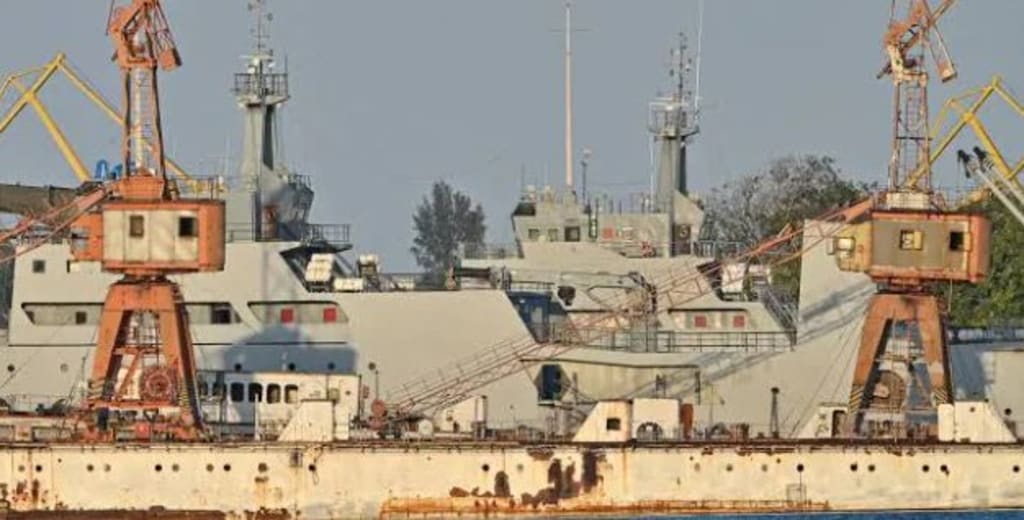
The waters between Cuba and the United States have once again become the focus of international attention after Cuban authorities claimed a group attempted to “infiltrate” the island using a U.S.-registered speedboat. The incident, which unfolded near the Cuban coastline, has raised questions about migration trends, maritime security, and the fragile diplomatic relationship between the two countries.
Officials in Havana said border forces intercepted the vessel after it entered Cuban territorial waters without authorization. Authorities detained the individuals on board and launched an investigation to determine whether the journey was an illegal migration attempt, a smuggling operation, or something with broader security implications.
🚤 A fast-moving vessel sparks concern
According to Cuban state reports, the speedboat was traveling at high speed toward the island before being stopped by patrol units. Authorities described the incident using strong language, suggesting the group may have been attempting to enter the country covertly rather than through official channels.
The Cuban Ministry of Interior indicated that early findings pointed to the vessel departing from the direction of Florida, a well-known starting point for maritime journeys between the two nations. Such crossings are not new, but the use of a powerful speedboat suggests a more organized approach compared with the makeshift vessels often seen in migrant journeys.
While officials emphasized the possibility of infiltration, they did not immediately release details about the passengers’ identities or motives.
🌊 Migration remains a driving force
The stretch of water known as the Straits of Florida has long been a corridor for migration. Economic hardship, family reunification, and limited legal migration pathways have pushed many people to attempt risky sea crossings over the decades.
Experts say faster vessels are increasingly used by smuggling networks that promise shorter travel times and a higher chance of avoiding interception. However, speed does not necessarily mean safety. High-performance boats can be dangerous, particularly when overloaded or operated at night.
Many incidents initially framed as security threats ultimately involve migrants seeking opportunity rather than organized infiltration. Still, governments often adopt strong messaging to deter future crossings.
🇺🇸 The U.S. response: safety and enforcement
American officials have not confirmed specific details about the latest case, but they continue to warn against unauthorized maritime travel. The U.S. Coast Guard regularly patrols regional waters, intercepting vessels and working with Cuban authorities on repatriation agreements.
U.S. messaging typically focuses on humanitarian risks — emphasizing that smuggling networks can exploit migrants and that dangerous sea journeys often end in tragedy. Authorities have repeatedly highlighted cases of capsized boats, dehydration, and fatal accidents.
The absence of detailed confirmation from Washington has left uncertainty about whether the incident involved migrants, smugglers, or another type of operation.
🔐 Security narratives vs. human realities
From Havana’s perspective, unauthorized maritime arrivals raise broader security concerns, including trafficking and cross-border criminal activity. Labeling incidents as infiltration can reinforce domestic messaging about sovereignty and border control.
At the same time, migration researchers caution that individuals making these journeys are frequently motivated by personal hardship rather than political objectives. Economic instability, shortages, and family separation continue to shape movement patterns across the Caribbean.
The difference in how each government frames these events often leads to competing narratives — one focused on security, the other on humanitarian risk.
📊 A region under growing pressure
Caribbean migration has evolved in recent years as economic volatility, natural disasters, and shifting policies influence travel routes. Faster boats, coordinated pickups, and social media communication have changed how crossings are organized.
Governments have responded with increased surveillance, joint patrols, and tougher penalties for smuggling. Yet crossings persist, suggesting enforcement alone cannot address the underlying drivers.
Analysts say the latest incident reflects this broader trend: more organized journeys, heightened political sensitivity, and ongoing uncertainty about migration policy.
👥 The people behind the voyage
Details about those detained remain limited, but migration advocates stress that every intercepted vessel represents real human stories. Some travelers seek work, others reunification with relatives, and some simply hope for stability.
Fast boats can create the illusion of a safer or easier trip, but they also heighten risks — particularly if pursued by authorities or operated by inexperienced crews. Past maritime confrontations have resulted in injuries and diplomatic friction, underscoring how quickly these situations can escalate.
Transparency about passengers’ circumstances will be key to understanding whether this case reflects a smuggling network or a smaller private journey.
🔎 What happens next?
Cuban investigators are expected to examine the boat’s registration, ownership, and any links to organized smuggling groups. Outcomes could include deportation, criminal charges, or further diplomatic coordination depending on the findings.
While a single maritime incident rarely reshapes policy, repeated episodes can strain already delicate relations between the two countries. If similar cases continue — especially those involving casualties — they could intensify political debate around migration management.
✍️ Final thoughts
The reported infiltration attempt highlights a familiar reality in the Caribbean: migration, security, and diplomacy remain deeply intertwined. A single speedboat crossing can trigger questions that extend far beyond the passengers on board.
As authorities on both sides continue their investigations, the episode serves as a reminder that the narrow waters separating Cuba and the United States carry not only boats, but also hope, risk, and political tension. Understanding that complexity is essential to grasping why incidents like this continue to unfold — and why they resonate far beyond the shoreline.
About the Creator
A Gathering of Evil Bosses
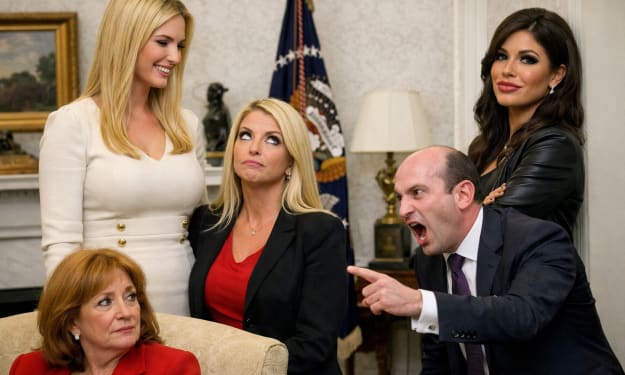
“I’m the queen of chin jutting while I smooth my hair, attacking, insulting, and deflecting to protect my appointer.” “Oh, please, Blondi, my hair is curled, highlighted, and longer than yours. I feature television commercials telling immigrants that we will give them a free plane ride home, and if they voluntarily turn themselves in, they will be allowed to legally apply for re-entry. It runs everywhere, and I look good in it! You can’t compete because of your blond hair. Mine is nicer, and my lips are prettier than yours.”
By Andrea Corwin 10 days ago in The Swamp
Trump’s New Tariff Comes into Effect at Lower Than Expected Rate
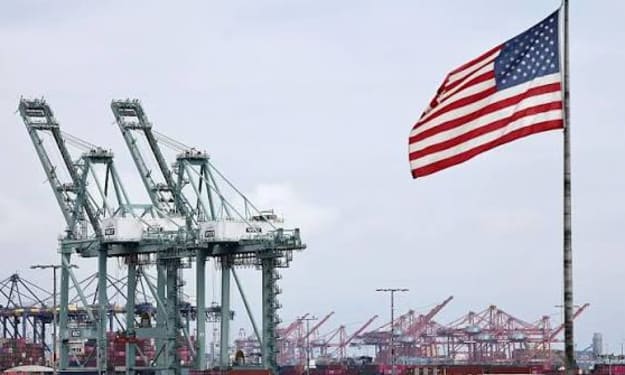
A new tariff introduced by Donald Trump has officially come into force in the United States, but at a significantly lower rate than many economists and industry groups had anticipated. The decision has eased immediate fears of sharp price increases while still signaling a renewed commitment by the administration to its protectionist trade agenda. The tariff, which targets a broad range of imported industrial and consumer goods, was initially expected to be set at a rate of up to 15 percent. Instead, the finalized measure applies a baseline rate of 7 percent, according to officials from the U.S. Department of Commerce. The administration described the lower figure as a “calibrated step” aimed at protecting domestic industries without triggering sudden inflation or retaliation from key trading partners. A Shift from Hardline Expectations When the proposal was first announced earlier this year, business leaders and financial markets reacted with concern, warning that higher tariffs could disrupt supply chains and push up costs for American consumers. Many companies had begun preparing contingency plans, including sourcing materials from alternative countries or passing additional costs on to customers. However, the administration’s revised approach appears designed to balance political messaging with economic caution. A senior White House official said the lower-than-expected rate reflected “careful consultation with manufacturers, farmers, and retail groups.” “This is not about shocking the economy,” the official said. “It’s about giving American producers a fair chance to compete while keeping prices stable for families.” Economic Impact and Market Reaction Markets responded positively to the announcement. Major stock indexes rose modestly after the tariff rate was confirmed, reflecting investor relief that the policy would be less disruptive than initially feared. Analysts said the reduced tariff could limit short-term inflationary pressure while still encouraging companies to invest in domestic production. Economists estimate the new tariff will generate several billion dollars annually in revenue, though far less than earlier projections. Importers will be required to pay the levy at ports of entry, and the cost may eventually be shared between foreign exporters, U.S. companies, and consumers. Retail groups welcomed the adjustment. One national trade association said the decision showed “a recognition that aggressive tariffs can hurt the very people they are meant to protect.” Political and Strategic Messaging The tariff remains a key part of Trump’s broader strategy of reshaping global trade relationships. Throughout his political career, he has argued that the United States has been treated unfairly by international trade rules and foreign competitors, particularly in manufacturing and steel production. By implementing the tariff at a lower rate, the administration can claim progress toward protecting domestic jobs while avoiding the political fallout of sharp price increases. Supporters view the move as a pragmatic compromise that keeps pressure on foreign exporters without escalating into a full trade conflict. Opposition lawmakers, however, criticized the policy as unnecessary and symbolic. One senior Democrat said the tariff would “create uncertainty for businesses and risk alienating allies at a time when economic cooperation is needed.” International Response Several U.S. trading partners are closely monitoring the situation. Officials in Europe and Asia have so far avoided public retaliation, noting that the lower tariff rate reduces the risk of a trade war. Still, diplomatic sources say governments are preparing contingency plans in case further increases are announced. The World Trade Organization has also taken note of the measure. While the tariff falls within existing U.S. legal frameworks, experts warn that prolonged use of unilateral trade actions could invite formal disputes under international trade rules. Business Adjustments Underway For American businesses, the new tariff creates both challenges and opportunities. Domestic producers in sectors such as steel, machinery, and electronics may benefit from reduced competition from cheaper imports. Import-dependent companies, meanwhile, are exploring ways to absorb or offset the added costs. Some firms have already begun renegotiating contracts with overseas suppliers, while others are considering shifting parts of their supply chains closer to home. Analysts say the lower rate gives companies more time to adapt gradually rather than forcing abrupt changes. Looking Ahead While the tariff is now in effect, officials emphasized that it could be adjusted in the coming months depending on economic conditions and trade negotiations. The administration has left open the possibility of raising the rate if foreign governments fail to make concessions in ongoing talks. For now, the lower-than-expected tariff has tempered immediate economic fears while reinforcing Trump’s message that trade policy will remain a central tool of his economic strategy. Whether this approach delivers long-term benefits or merely postpones larger trade disputes remains an open question.
By Fiaz Ahmed 3 days ago in The Swamp
I was in a Toxic Relationship, with my Workplace
“You got that?” My ex yelled. His hands were balled into fists at his side. At six foot three, he towered over me. A normal person would have been afraid, but I looked up a video of George Lopez repeatedly saying, “I got this,” and showed it to him. I had grown used to this treatment, so much so that I didn’t blink when he ripped the phone from my hand and threw it across the room.
By Jade M.a day ago in Confessions


Comments
There are no comments for this story
Be the first to respond and start the conversation.