
Trump’s New Flat-Rate Tariff Is a Boost for China and Brazil
The unintended consequences of trade barriers in an interconnected economy
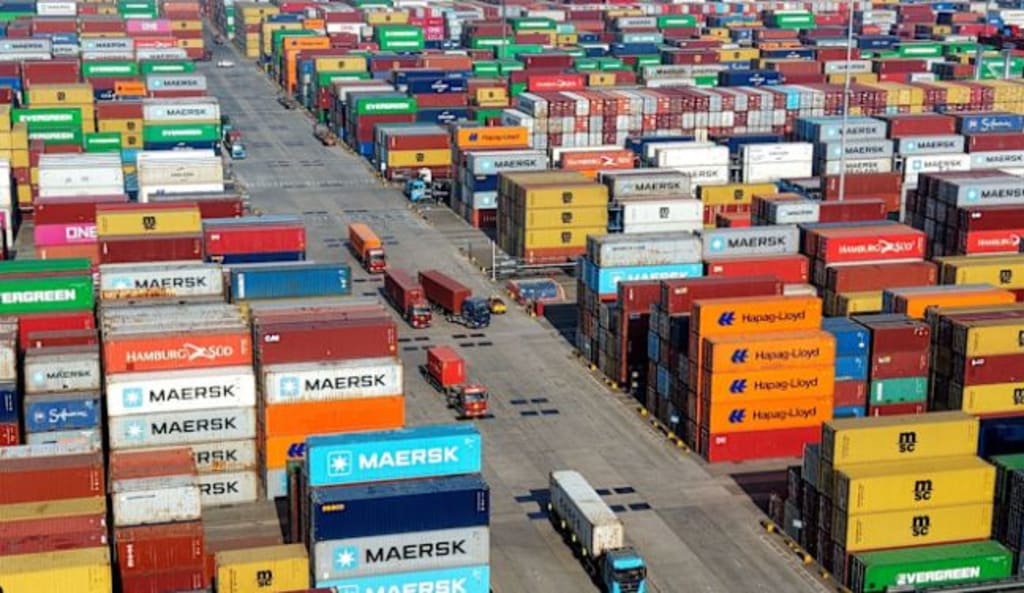
The debate highlights a core reality of modern globalization: tariffs rarely affect only one country. Instead, they reshape supply chains, shift trade flows, and open opportunities for alternative exporters.
What the Flat-Rate Tariff Means
The proposed policy centers on applying a uniform tariff across a wide range of imported goods rather than targeting specific countries or industries. Supporters say this approach simplifies trade enforcement and encourages companies to produce more goods domestically.
The argument is straightforward. Higher import costs could push manufacturers to relocate factories back to the United States, boosting jobs and reducing reliance on foreign suppliers.
However, economists warn that blanket tariffs can create ripple effects. Instead of bringing production home, companies may simply shift sourcing from one foreign country to another — especially to nations not heavily affected by the policy’s strategic focus.
That dynamic is where China and Brazil enter the conversation.
Why China Could Benefit
At first glance, it may seem counterintuitive that tariffs designed to limit imports could benefit China. But global supply chains are complex.
One key factor is indirect trade. Chinese manufacturers often export components rather than finished goods. If tariffs target final products broadly, companies may restructure production so assembly occurs in third countries while Chinese suppliers continue providing parts.
Another factor is scale. China’s manufacturing ecosystem remains unmatched in speed, infrastructure, and cost efficiency. Even with tariffs, many firms may find it difficult to replace Chinese inputs entirely.
There is also the possibility of market diversification. If U.S. demand becomes more expensive to serve, Chinese exporters could expand into Europe, Southeast Asia, and emerging markets, strengthening their global position rather than weakening it.
In this sense, tariffs may accelerate China’s shift from export dependence on the U.S. toward a broader trade network — a strategic goal the country has pursued for years.
Brazil’s Opportunity in Commodities
While China’s advantage lies in manufacturing, Brazil’s opportunity comes from natural resources and agriculture.
Flat tariffs on imported goods can reshape sourcing decisions for commodities such as soybeans, beef, iron ore, and biofuels. If U.S. buyers face higher costs from traditional suppliers, Brazil can step in as an alternative — especially in markets where it already holds strong production capacity.
Brazil has repeatedly benefited from trade tensions between major economies. When tariffs disrupt existing supply chains, global buyers search for reliable replacements, and Brazil’s scale in agriculture makes it a natural candidate.
Additionally, Brazil’s growing role in renewable energy inputs — including materials used in battery production — positions it to gain if global manufacturing networks shift.
Supply Chains Rarely Return Home
A major assumption behind broad tariffs is that production will return to domestic factories. But recent trade disruptions suggest companies often choose relocation over reshoring.
Moving supply chains back to the United States can be expensive due to labor costs, regulatory requirements, and infrastructure limitations. Instead, firms frequently adopt a “China plus one” strategy — keeping part of production in China while expanding into countries like Mexico, Vietnam, or Brazil.
This diversification reduces risk without eliminating international sourcing. As a result, tariffs may redistribute manufacturing rather than repatriate it.
That redistribution can strengthen countries able to scale quickly — including Brazil in commodities and China in upstream manufacturing.
Currency and Pricing Effects
Tariffs also influence exchange rates and pricing strategies. When import costs rise, exporters sometimes adjust currency values or lower margins to remain competitive.
China has historically used pricing flexibility to absorb trade shocks, allowing companies to maintain market share even under tariff pressure. Meanwhile, commodity exporters like Brazil can benefit when global prices shift in response to supply changes.
These financial adjustments mean tariffs do not always reduce imports as much as expected. Instead, they can reshape who supplies goods and how trade flows move.
Geopolitical Implications
Beyond economics, a flat-rate tariff could carry geopolitical consequences. Trade relationships often influence diplomatic ties, investment flows, and regional alliances.
If U.S. policy encourages diversification away from certain suppliers, countries that capture new demand may gain leverage in global negotiations. Brazil’s agricultural exports and China’s manufacturing capacity both provide strategic influence.
At the same time, broad tariffs risk triggering retaliatory measures. Other countries may introduce their own trade barriers, further complicating supply chains and accelerating the shift toward regional trade blocs.
The Debate Among Economists
Supporters of flat tariffs argue that short-term disruption may be necessary to rebuild domestic industry and strengthen economic security. They point to historical examples where protectionist policies supported emerging sectors.
Critics counter that modern supply chains are too interconnected for blanket tariffs to produce simple outcomes. Instead of boosting domestic manufacturing, they may raise consumer prices, pressure businesses, and reward alternative exporters.
Many economists fall somewhere in the middle, suggesting targeted industrial policy combined with selective tariffs may be more effective than broad measures.
A Changing Trade Landscape
Regardless of political debate, one conclusion is clear: global trade is entering a more fragmented phase. Companies are prioritizing resilience over efficiency, governments are emphasizing economic security, and supply chains are becoming more regional.
In this environment, policies designed to protect one economy can create unexpected opportunities elsewhere. China’s manufacturing ecosystem and Brazil’s resource strength place both countries in position to capture demand when trade flows shift.
Final Thoughts
The idea that tariffs automatically weaken foreign competitors is increasingly outdated. In a deeply interconnected global economy, broad trade barriers often produce complex outcomes.
A flat-rate tariff proposal linked to Donald Trump illustrates this dynamic. While intended to support domestic industry in the United States, it could simultaneously open doors for China and Brazil by reshaping supply chains, redirecting investment, and altering global sourcing patterns.
For businesses and investors, the key lesson is adaptability. Trade policy will continue to evolve, but the countries best positioned to benefit are those with scale, flexibility, and diversified export strengths.
In the years ahead, the real impact of tariffs may not be measured by reduced imports — but by which nations step in to fill the gaps they create.
About the Creator
A Gathering of Evil Bosses
“I’m the queen of chin jutting while I smooth my hair, attacking, insulting, and deflecting to protect my appointer.” “Oh, please, Blondi, my hair is curled, highlighted, and longer than yours. I feature television commercials telling immigrants that we will give them a free plane ride home, and if they voluntarily turn themselves in, they will be allowed to legally apply for re-entry. It runs everywhere, and I look good in it! You can’t compete because of your blond hair. Mine is nicer, and my lips are prettier than yours.”
By Andrea Corwin 4 days ago in The Swamp
U.S. Deports Nine Migrants in Secret, Ignoring Legal Protections
The United States has quietly deported nine migrants in what human rights groups describe as a covert operation that bypassed established legal protections and due process. The deportations, carried out late at night and without prior notice to lawyers or family members, have raised alarm among immigration advocates and lawmakers who say the actions undermine both domestic law and international obligations. According to attorneys representing the migrants, the individuals were removed from U.S. custody despite having active legal claims, including pending asylum applications and appeals against deportation orders. Several of the migrants were reportedly transferred from detention facilities to an undisclosed location before being placed on a chartered flight out of the country. Their whereabouts were unknown for hours, prompting frantic efforts by legal teams to locate them. Officials from the Department of Homeland Security declined to provide detailed explanations, stating only that the deportations were conducted “in accordance with operational procedures and national security considerations.” However, civil rights groups argue that secrecy itself violated basic safeguards meant to ensure migrants have access to legal counsel and the courts. The American Civil Liberties Union said at least four of the nine migrants had court hearings scheduled in the coming weeks. “These removals appear designed to prevent judicial review,” said an ACLU attorney familiar with the case. “When the government acts in the dark, it deprives people of their most fundamental right — to challenge the decision before a judge.” Legal experts note that U.S. immigration law requires authorities to notify lawyers and provide time for appeals, particularly when individuals claim fear of persecution if returned to their home countries. International conventions, including refugee protection agreements, also prohibit deporting individuals to places where they may face torture or political repression. One migrant, a 27-year-old man from Central America, had reportedly cooperated with U.S. authorities in a criminal investigation and was granted temporary protection while his case was reviewed. His sudden deportation has raised questions about whether political or administrative pressure played a role. Family members learned of his removal only after receiving a brief message from detention officials stating that he was “no longer in U.S. custody.” Members of Congress from both parties have called for an inquiry. Senator Maria Lopez, a Democrat on the Senate Judiciary Committee, said the operation “sets a dangerous precedent.” “The rule of law does not disappear when it becomes inconvenient,” she said. “If this can happen to nine people today, it can happen to many more tomorrow.” Within the Biden administration, the episode highlights growing tension between border enforcement priorities and legal obligations. While officials face pressure to demonstrate control over migration flows, critics argue that shortcuts risk eroding trust in the immigration system. Former immigration judge Paul Hernandez said secrecy signals weakness rather than strength. “Transparency is the backbone of legitimacy. Without it, enforcement becomes arbitrary,” he said. The deportations also come amid renewed scrutiny of emergency powers used by previous administrations to fast-track removals. Advocacy groups fear that mechanisms intended for exceptional circumstances are becoming routine tools of policy. “This mirrors practices we challenged years ago,” said a spokesperson for Human Rights First. “We are seeing history repeat itself under a different justification.” For the deported migrants, the consequences may be immediate and severe. Lawyers say at least two were returned to countries where they had previously reported threats from gangs and political groups. Efforts are now underway to file emergency motions in federal court seeking explanations from the government and potentially ordering the return of those deported. The Supreme Court of the United States has previously ruled that migrants on U.S. soil are entitled to due process, regardless of their immigration status. Whether this latest episode violates those standards will likely become the subject of legal challenge. As details continue to emerge, the incident has reignited debate over how far the government can go in enforcing immigration law without sacrificing transparency and legal protections. For now, the secret deportation of nine migrants stands as a stark reminder of the fragile balance between security and justice — and of the human cost when that balance tilts too far in one direction.
By Fiaz Ahmed 8 days ago in The Swamp




Comments
There are no comments for this story
Be the first to respond and start the conversation.