
Trump’s Inauguration Relocated Indoors Due to Freezing Weather
Weather Woes: Freezing Temperatures Force Inauguration Indoors
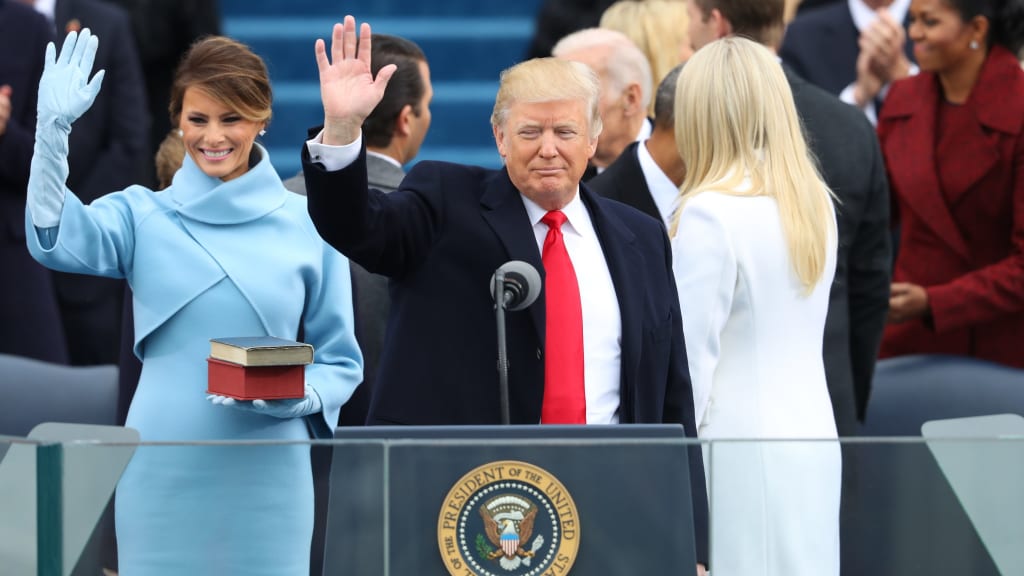
Donald Trump announced that his inauguration as president will be moved indoors due to extremely cold weather expected in Washington, D.C., on the day of his swearing-in. This change in plans significantly alters the grand ceremonial expectations that usually accompany the event, particularly the outdoor setting on the steps of the U.S. Capitol. Trump confirmed via his Truth Social platform that he had decided to hold the event in the Capitol Rotunda instead, citing the harsh Arctic blast sweeping across the country.
Impact of Cold Weather on Inauguration Plans
With Washington’s forecast predicting temperatures well below freezing, compounded by gusty winds, the inauguration will not take place as originally planned on the Capitol steps, which typically host a large crowd of spectators. The National Mall, usually packed with thousands of people, was initially prepared to accommodate this traditional outdoor spectacle. However, due to the severe weather conditions, only a small group of dignitaries and invited guests will be present inside the Capitol Rotunda, a round hall located beneath the Capitol dome, which can only hold a few hundred people.
This decision to shift the inauguration indoors marks the first time such an emergency measure has been implemented since Ronald Reagan’s inauguration in 1985, when similarly freezing temperatures forced a change in location. The move is seen as a necessary precaution to ensure the safety and comfort of attendees, given the dangerous weather conditions.
Adjustments for Public Viewing
While the usual throngs of people expected to witness the inauguration in person will now miss out on this iconic experience, Trump has ensured that the event will be broadcast live for public viewing. In an effort to accommodate his supporters, Trump announced that Capital One Arena, the home of the Washington Wizards basketball team and the Washington Capitals ice hockey team, would be open to the public. This sports arena, which can hold up to 20,000 people, will feature live viewing of the inauguration and will host the Presidential Parade afterward.
Trump also emphasized that he would personally join the crowds at Capital One Arena after his swearing-in, offering a chance for his supporters to gather and celebrate. Additionally, he assured that the indoor inauguration would still be a beautiful event, especially for the large television audience that would tune in to witness the historic moment.
Disappointment and Support Amidst the Changes
While many attendees and supporters had anticipated the traditional grandeur of an outdoor event, some fans of the president expressed optimism despite the change in plans. Matthew Medill, a Trump supporter from California, shared that, while the weather-induced change was disappointing for some, they still expected “a lot of excitement and jubilation,” regardless of the weather conditions. Medill’s sentiment reflects the passionate support Trump continues to enjoy, even in the face of altered expectations for the inauguration.
Nevertheless, this adjustment marks a sharp contrast from Trump’s first inauguration in 2017, when the public was captivated by disputes over the size of the crowd attending the event. At that time, Trump’s administration famously claimed that his inauguration crowd size surpassed that of Barack Obama’s 2009 inauguration, a claim that was quickly disproven by aerial photographs showing a far smaller crowd. The controversy over crowd sizes highlighted Trump’s sensitivity to public perception and his focus on presenting a powerful image.
Security and Preparedness for the Inaugural Event
Despite the shift to an indoor ceremony, security preparations for the inauguration remain intense. Around 25,000 law enforcement and military personnel have been deployed to ensure safety during the event. This heavy security presence is due in part to the sensitive nature of the occasion and heightened concerns about potential threats. Parts of the parade route along Pennsylvania Avenue, as well as key locations such as the White House and the Capitol, have been surrounded by eight-foot-high metal barriers, designed to protect the incoming president and other dignitaries.
People who still wish to witness the event in person can catch a glimpse of the newly inaugurated president as he makes his way from the Capitol to the White House in the traditional parade. Despite the reduced crowd size for the ceremony itself, these precautions reflect the high security standards required for presidential events, especially in the context of heightened political tensions.
Historical Context: Inaugurations and Weather
The decision to move the inauguration indoors also brings to mind historical precedents of how weather has impacted presidential ceremonies. One notable example is William Henry Harrison’s 1841 inauguration. Harrison, the country’s ninth president, braved freezing weather by delivering his inaugural address without a coat or hat, hoping to demonstrate his strength despite being the oldest president at the time, at 68. Unfortunately, Harrison’s decision led to a tragic outcome: he contracted pneumonia and died just a month later.
This contrast highlights the importance of making practical decisions in response to adverse weather conditions, as seen in Trump’s decision to prioritize the safety of his guests and the public by moving the event indoors. The upcoming inauguration, though different from traditional events, will still be a significant occasion, albeit in a format suited for modern television audiences rather than large-scale crowds braving the cold.
*************************************************************
Source
google news
About the Creator
Keep reading
More stories from Jebaraj Jacob and writers in The Swamp and other communities.
Canada Warns of Major Trade War as Tariff Threats Loom from US
Tensions between Canada and the United States have risen significantly as trade-related disputes threaten to escalate. Following a recent announcement by U.S. President-elect Donald Trump, Canada’s leadership has expressed strong concerns over proposed tariffs on Canadian imports. In response, Canada is preparing to take firm retaliatory measures. This marks a critical juncture in North American trade relations, potentially impacting both economies significantly.
By Jebaraj Jacob about a year ago in The Swamp
Saudi Arabia’s Maaden Uncovers 7.8 Million Ounces of New Gold — A Major Boost for the Kingdom’s Economy
In a landmark discovery that reinforces Saudi Arabia’s rising profile as a global mineral powerhouse, the Saudi Arabian Mining Company (Ma’aden) has announced the uncovering of 7.8 million ounces of new gold resources. This significant find not only highlights the Kingdom’s geological potential but also marks a defining moment in the nation’s economic diversification strategy under Vision 2030. This discovery is set to reshape local mining prospects, strengthen Saudi Arabia’s position in global gold markets, and further diversify an economy long dependent on oil revenues. A Golden Find in the Heart of the Desert Ma’aden’s new gold resource estimate comes from exploration activities in the Kingdom’s northern and central regions — areas long suspected to hold rich mineral deposits. The discovery is a result of extensive geological surveys, advanced exploration technologies, and years of persistent investment in local expertise. While 7.8 million ounces may sound like an abstract figure, its economic significance is immense. At current global gold prices — which hover above $2,000 per ounce — this discovery could represent billions of dollars in potential value. More importantly, it signals a shift in how Saudi Arabia approaches its natural resource wealth beyond hydrocarbons. Strengthening Vision 2030 Goals Saudi Arabia’s Vision 2030 blueprint aims to reduce the Kingdom’s reliance on oil by fostering sectors such as tourism, renewable energy, manufacturing, and mining. Gold — one of the most enduring and universally valued commodities — plays a central role in strengthening economic resilience. Ma’aden’s discovery supports several strategic goals: Economic Diversification: Adding high-value mining output to the GDP mix Job Creation: Stimulating employment in engineering, geology, logistics, and processing Technological Advancement: Encouraging innovation in exploration and mining technologies Foreign Investment: Attracting international partners into Saudi mining projects The gold find aligns perfectly with these ambitions, demonstrating that Saudi Arabia’s vast terrain holds more than just oil — it harbors minerals capable of securing long-term economic growth. Ma’aden: From Promising Prospect to Mining Powerhouse Ma’aden is no newcomer to mining success. Since its establishment in 1997, the company has expanded rapidly, partnering with major global firms to develop projects involving gold, phosphate, aluminum, and industrial minerals. The company’s progress reflects strategic planning and an increasing willingness by the Saudi government to open mining ventures to international collaboration. Through technology transfer, joint ventures, and export partnerships, Ma’aden has steadily built a reputation as a reliable and innovative mining operator. With this latest gold discovery, Ma’aden not only enhances its resource base but also reinforces investor confidence in the Kingdom’s mining sector. What the Discovery Means for the Saudi Economy 1. Economic Resilience Gold is traditionally viewed as a safe-haven asset, with demand often rising during global economic uncertainty. Increased domestic gold production gives Saudi Arabia greater leverage in international markets and adds a hedge against oil market volatility. A robust mining sector can also cushion the economy against global downturns — an increasingly valuable advantage in an interconnected world. 2. Job Creation and Skills Development Developing gold resources requires a broad range of skills in mining engineering, geology, environmental science, and project management. This creates opportunities for Saudi nationals and positions the Kingdom as a regional hub for mining talent. The demand for skilled professionals may also nurture educational programs in geosciences and mining technologies — a long-term investment in human capital. 3. Export Potential and Foreign Partnerships Saudi gold does not have to remain domestic. With global gold demand consistently strong — spanning jewelry, electronics, and investment markets — Saudi Arabia has the potential to become a significant gold exporter. International partnerships could accelerate infrastructure development and improve extraction efficiency, while revenue from exports could help fund other national initiatives under Vision 2030. Mining With Environmental Responsibility Saudi authorities and Ma’aden have emphasized that mining operations will incorporate modern environmental standards aimed at minimizing ecological impact. Responsible mining practices include water recycling, land rehabilitation, and protecting biodiversity near mining sites. Environmental stewardship is not only ethical but essential for long-term sustainability — particularly in harsh desert environments where natural systems are fragile. A Model for Regional Growth Saudi Arabia’s gold discovery may inspire other Gulf nations to explore their untapped mineral potential. Countries like Oman, Jordan, and the United Arab Emirates also possess geological terrains with promising mineral resources, and Saudi success could catalyze broader regional cooperation and investment in mining exploration. Looking Ahead: A Golden Future? While the 7.8 million ounces of newly uncovered gold will require years of exploration, development, and extraction before it becomes revenue, the significance of the discovery is already clear. It represents not only a treasure beneath the desert sands but a strategic asset for national growth and economic transformation. For Saudi Arabia, this gold find is more than a mineral discovery: it’s proof that the Kingdom’s future — long linked to black gold — now shines with golden potential in a broader economic landscape.
By Fiaz Ahmed Brohi4 days ago in The Swamp
How to Succeed at the Benson Directory®
Congratulations and welcome to the Benson Directory® employee #22391! As our newest call handler, you will have the privilege of speaking with dozens of unique and interesting people on a daily basis as well as the opportunity to earn bonuses for high performance. Contained within this handbook you will find a set of ease to follow instructions designed to help you settle in to your new role and begin paving the way to success.
By S. A. Crawford2 days ago in Fiction



Comments
There are no comments for this story
Be the first to respond and start the conversation.