
Trump’s Executive Order to End Birthright Citizenship: What It Means and Why It Matters
"Trump’s Push to End Birthright Citizenship: A Legal and Constitutional Battle That Could Reshape America"
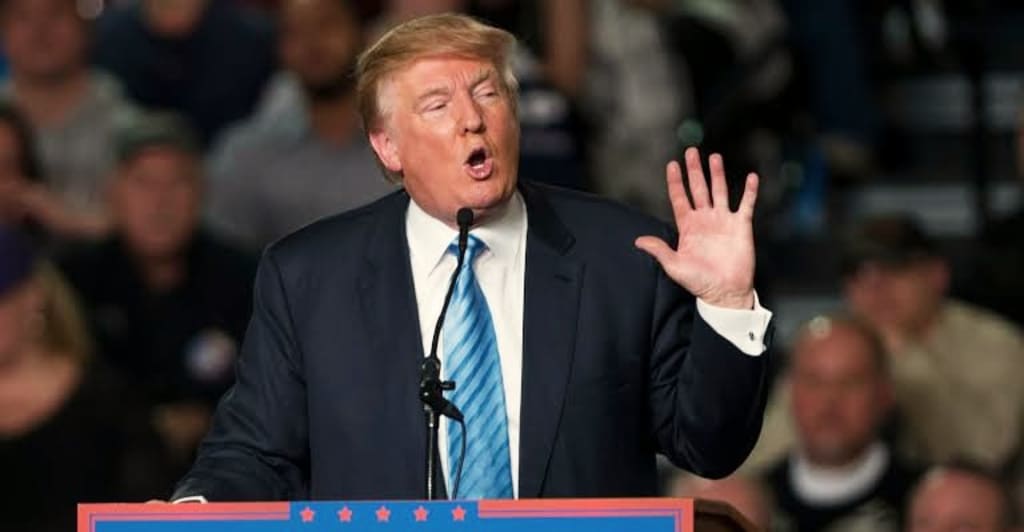
In a controversial move, former President Donald Trump has signed an executive order aiming to end birthright citizenship in the United States. This right, which guarantees citizenship to anyone born on U.S. soil, has been protected by the U.S. Constitution and upheld by the Supreme Court for over a century. However, Trump's order directly challenges the 14th Amendment, sparking heated debates and legal challenges across the country.
What Is Birthright Citizenship?
Birthright citizenship, a concept enshrined in the 14th Amendment of the Constitution, ensures that "all persons born or naturalized in the United States, and subject to the jurisdiction thereof, are citizens of the United States and of the State wherein they reside." Ratified in 1868, this amendment was originally created to grant citizenship to emancipated Black Americans after the Civil War. Over the years, it has also extended citizenship to children born in the U.S., regardless of their parents’ immigration status.

The Supreme Court solidified this principle in 1898 through the landmark United States v. Wong Kim Ark case. Wong, born in San Francisco to Chinese immigrant parents, was denied re-entry to the U.S. after a trip to China. His case reached the Supreme Court, which ruled that anyone born on U.S. soil is a citizen. This decision has since shaped America’s approach to citizenship and immigration.
Trump’s Executive Order: What’s at Stake?
Trump's executive order challenges this long-standing interpretation of the 14th Amendment. His argument targets children born in the U.S. to undocumented immigrants, claiming they do not have a rightful claim to citizenship. This belief, though previously seen as extreme, has gained traction in certain political circles.
Critics argue that this executive order contradicts the Constitution and established legal precedent. Legal experts and state attorneys general, including California Attorney General Rob Bonta, have already announced plans to challenge the order in federal court. Bonta bluntly stated, “He can’t do it. He can’t undermine it with executive authority. That is not how the law works.”
Why Is This Happening Now?
The push to end birthright citizenship stems from a broader cultural and political debate about immigration and race in the U.S. Trump and his supporters have linked birthright citizenship to a conspiracy theory known as "white replacement theory." This theory falsely claims that immigrants, particularly those from Latin America and Asia, are part of a plot to replace white Americans and diminish their political influence.
This rhetoric, rooted in racism and xenophobia, has been condemned by many as dangerous. Trump’s recent statement that immigrants are "poisoning the blood of our country" echoes similar language used by white supremacists throughout history. Critics argue that such inflammatory remarks only deepen divisions in an already polarized nation.
Historical and Demographic Context
Birthright citizenship has played a crucial role in shaping the U.S. into a diverse nation. After the Immigration and Nationality Act of 1965, the U.S. saw a dramatic increase in immigrants from Latin America and Asia. In 1965, the country was about 85% white. Today, it is far more diverse, and by the 2040s, the U.S. is expected to become a "majority-minority" nation, where no single racial or ethnic group will make up more than half the population.
Supporters of birthright citizenship argue that this diversity is one of America’s greatest strengths, contributing to its economic, cultural, and social vitality. However, opponents fear that changing demographics could weaken their political power, fueling movements like the one Trump has championed.
What’s Next?
The executive order is expected to face swift and strong legal challenges. Experts predict that courts will likely block its implementation, as it directly conflicts with the Constitution and more than 125 years of legal precedent. However, the debate over birthright citizenship is far from over.
For now, the legal battle will continue, with state attorneys general and civil rights organizations leading the charge to defend birthright citizenship. Beyond the courtroom, the issue raises deeper questions about America’s identity, values, and future.
The Bigger Picture
Trump’s attempt to end birthright citizenship is about more than just immigration policy—it reflects broader tensions over race, diversity, and the changing face of America. While the legal fight will determine the immediate fate of the executive order, the societal and political debates it has sparked will likely continue for years to come.
Birthright citizenship has been a cornerstone of American democracy, symbolizing equality and opportunity. Whether it remains intact will depend on how the courts interpret the Constitution and whether Americans continue to uphold its promise of inclusion for all.
About the Creator
Asda Chairman Allan Leighton Has Struggled to Rebuild the Supermarket’s Market Share
Asda, one of the UK’s largest supermarket chains, has long been a household name, known for its value-driven approach and wide product range. Yet in recent years, the retailer has faced intense competition from rivals like Tesco, Sainsbury’s, Aldi, and Lidl. In this challenging environment, Asda Chairman Allan Leighton has tried to steer the supermarket back to growth, but the path has proven far from smooth.
By Muhammad Hassanabout 3 hours ago in The Swamp


Comments
There are no comments for this story
Be the first to respond and start the conversation.