
Trump’s America is not Britain’s Friend
In response to Trump, Britain must turn away from America and back towards Europe

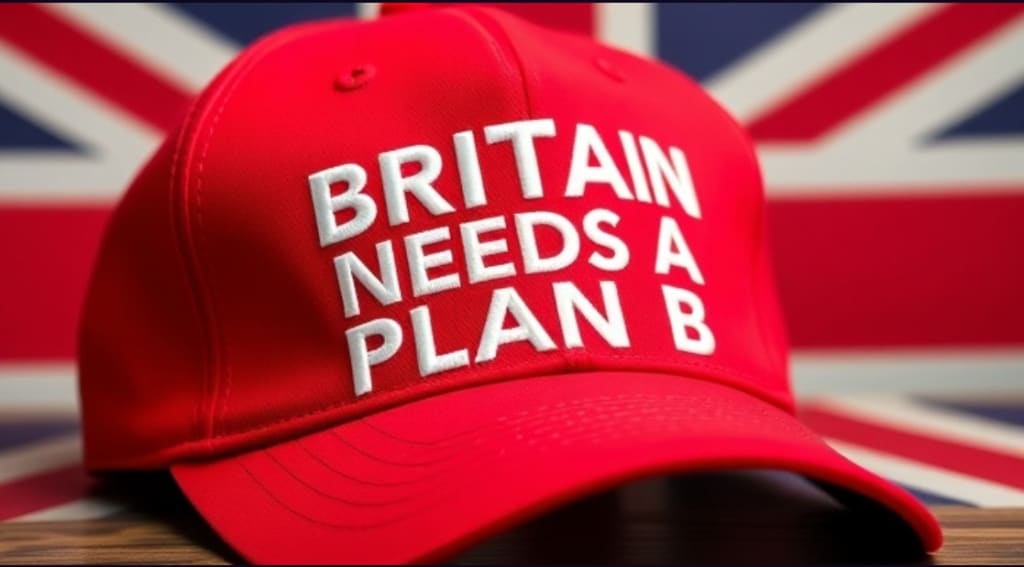
The United Kingdom stands at a precipice. As the shadows of a second Donald Trump presidency loom over the United States, the spectre of right-wing populism waits in the wings here at home. The victory of the new Labour Government on barely a third of the popular vote offers only momentary, threadbare respite. The next election will be fought in the most politically fragmented climate in our nation’s modern history. Labour are in from the cold. Keir Starmer’s party may well enjoy themselves, but it’s later than they think.
In the wake of Trump’s victory, it is not progressives, but reactionary nationalists who will look forward to 2029 with relish.
At this critical juncture, we must ask ourselves, what kind of nation we want to be? Do we continue to retreat into isolation, courting the dangers of nationalism and disunion as we endlessly debate the right wing on their own terms? Rehashing and pandering to the strawman debates of immigration and playing at culture war politics? Or do we embrace a future of collaboration, collective security and prosperity for the whole of the UK?
How should Britain respond as the reverberations of ‘America First’ politics once again make their way across the Atlantic and throughout the world?
The answer lies in repairing our broken relationship with Europe, committing resolutely to our own defence, rejoining the European Single Market and Customs Union, and addressing the entrenched regional inequalities that divide our nation. These steps are not merely practical solutions; they are fundamental to ensuring that Britain steers it’s own course in the world rather than being swept this way and that by the unpredictable whims of an American polity locked into a four-yearly crisis and fallout doom-loop.
Rebuilding Britain’s Broken Relationship with Europe: A Strategic Imperative
The United Kingdom's decision to leave the European Union was a seismic shift in our nation’s political and economic landscape. The 2016 referendum, fuelled by populist rhetoric, promises of sovereignty, and a misplaced nostalgia for an imperial past, set the stage for a decade of turmoil. However, as the global order grows increasingly unstable and new challenges emerge, it has become clearer than ever that Britain’s interests cannot be separated from those of Europe.
Rebuilding Britain’s relationship with Europe, rejoining the Single Market and Customs Union would be powerful tools in addressing the regional imbalances in our nation. By ensuring access to European markets, we can create new economic opportunities for the regions that have been left behind. Investment in infrastructure, education and skills training would ensure that no part of Britain is excluded from the benefits of economic growth. We must remove the Brexit red tape that has stifled opportunity for businesses. No longer should the shelves in our shops be bare for want of easy access to European-grown food. Nor should our building sites stand idle for want of materials from Europe delayed again and again at the border. What a perversion it is, to tell British citizens it is patriotic to be made poorer – without access to the trade, opportunities and freedoms of a continent we have twice fought to liberate.
The threat of right-wing populism, exemplified by figures such as Trump, is a reminder that isolationism breeds vulnerability. Populists thrive in environments where nations turn inward, rejecting cooperation in favour of divisive nationalism. The Brexit experiment has failed. It has made us poorer while its proponents have escaped scrutiny in the media. From the food on our shelves to the prosperity of our businesses, the strength of the pound and the trade that crosses our borders, rebuilding our relationship with Europe is not a matter of ideological preference — it is an existential necessity.
The European Union remains one of the world’s largest and most powerful economic and political entities. Rejoining the Single Market and Customs Union would offer Britain unparalleled access to the wealthiest and most dynamic market on the planet. It would facilitate smoother trade, reduce bureaucratic red tape, and restore vital economic connections that have been frayed since Brexit. Most importantly, it would signal to the world that Britain is not retreating into isolation, but rather reasserting its commitment to shared values of peace, democracy, and collective prosperity.
Change can begin small. The first step towards the mending of relations with Europe would be for the new government to reach agreement with the EU over a youth mobility scheme. Our young people deserve the opportunity to live, work and study on the continent. Likewise, our economy would benefit from young people from across Europe being more easily able to do the same here. This is low-hanging fruit that costs us little while offering and economic and diplomatic boost. A meaningful step back towards longer term cooperation.
A renewed partnership with Europe would ensure that Britain’s voice is heard on the global stage. The rise of authoritarian regimes, the erosion of international norms, and the growing power of China demand a unified response from the democratic world. A fractured Europe, divided from Britain, is a weaker Europe. By repairing our ties with the EU, Britain can once again be a leading force in shaping the future of Europe and the world.
A Commitment to Defence: Securing Britain’s Future
At a time of rising geopolitical tension and growing instability, we must take seriously our responsibility to defend ourselves and our allies. The threats posed by both traditional state actors and non-state adversaries are becoming more complex, and our security environment is evolving at an alarming pace. In response to these challenges, it is imperative that Britain meets its NATO commitments by spending at least 2.5% of GDP on defence.
A robust and well-funded defence strategy is not just a matter of military preparedness; it is a crucial element of national security, political stability, and economic resilience. In the face of growing global uncertainty—whether from Russia’s aggression in Ukraine, the rise of China, or the proliferation of global terrorism—Britain cannot afford to diminish its military capabilities. Yet this is precisely what the previous Conservative Government allowed to transpire. It is a disgrace that must be corrected by Starmer. The argument that we should “cut back” on defence spending, especially in an era of escalating threats, is not just misguided—it is dangerously short-sighted.
Moreover, Trump’s ‘America First’ foreign policy, which prioritises unilateral action over multilateral cooperation, only makes the need for a strong British defence strategy more urgent. In a world where alliances may no longer be as reliable and international cooperation may fray, Britain must be prepared to defend its interests, its allies, and its values independently if necessary. To do so, we must ensure that our armed forces are not only equipped to respond to immediate threats but are also capable of projecting power and influence globally.
Addressing Regional Inequality: The Only Proven Defence Against Populism
Britain's economic model has long been characterised by deep regional disparities. Wealth and opportunity today is still far too concentrated in London and the South East, while the rest of the country languishes in neglect. These inequalities have fed discontent, contributed to political instability, and provided fertile ground for the rise of populist politics. It is small wonder that economically disadvantaged areas of the country turned out to be the strongest backers of Brexit. As in America, so in Britain: anti-establishment messages resonate most clearly with those who feel most ignored by the elites who govern them.
It is in unequal nations like America and Britain, where the gap between richest and poorest is most severe, that right wing populists enjoy most success. Contrast this with the most equal societies in Europe. Denmark, Finland and Sweden all face their own significant challenges, but there – where the gaps between region and region; and rich and poor are narrow – we see stable government which enjoys higher rates of satisfaction from the public.
Tackling regional inequality is therefore crucial to preventing the rise of populism and nationalism. A genuine commitment to tackling these inequalities – one that goes beyond the slogans and piecemeal handouts of so-called ‘Levelling Up’ - would create a more balanced economy and ensure that every region has the opportunity to thrive, countering the likes of Reform UK who only seek to use regional resentments for their own narrow gain.
The challenges facing Britain today are immense. Yet, they are not insurmountable. By committing to a renewed relationship with Europe, investing in defence, rejoining the European Single Market, and addressing regional inequalities, Britain can chart a course toward a stronger, more united, and prosperous future.
In doing so, we will not only safeguard our national security and economic interests but we can also reject the politics of division and isolationism that threaten our values and talk down our nation. This is the only path that ensures Britain can meet the challenges of a rapidly changing world, while remaining true to the ideals of democracy and shared progress.
Now, more than ever, it is time for Britain to embrace a united future. Secure, prosperous, deeply connected to the European continent that has so been shaped by British leadership; and can be again.
About the Creator
Shaun Ennis
Shaun from Manchester. I love to write. When I find the time, I write about politics - my passion and my job - and occasionally history - my escapism.
Expect to find thoughts on the housing crisis, political reform and Ancient Egypt.
Keep reading
More stories from Shaun Ennis and writers in The Swamp and other communities.
Homes on the Right Tracks
The British housing crisis has been brewing for several decades. It is a crisis of unaffordability that has complex ‘knock on’ effects for social mobility and inequality in our society. The solution is remarkably straightforward. We need to build more homes.
By Shaun Ennis5 years ago in The Swamp
Australian Arts Festival Apologizes for Disinviting Palestinian Writer Who Lauded Oct. 7
Hey readers, buckle up — Australia’s arts scene has just been through one of its most dramatic shake-ups in years. If you’ve been following the news, you might have heard about the Adelaide Festival and its controversial decision to disinvite Palestinian Australian writer Randa Abdel‑Fattah. Let’s unpack what happened, why it mattered, and what it tells us about art, politics, and free speech today.
By Aqib Hussainabout 11 hours ago in The Swamp



Comments
There are no comments for this story
Be the first to respond and start the conversation.