
Trump revokes landmark ruling that greenhouse gases endanger public health
A sweeping rollback of Obama-era climate policy sparks legal challenges and global concern over America’s environmental leadership. The controversial move dismantles the legal foundation of U.S. emissions controls and ignites backlash from scientists and environmental groups. Trump’s decision redefines federal climate authority, shifting the balance between economic priorities and public health protections. The reversal of the 2009 endangerment finding signals a dramatic turn in U.S. environmental regulation and international climate diplomacy. Critics warn the action undermines decades of climate science, while supporters hail it as a victory for industry and jobs.

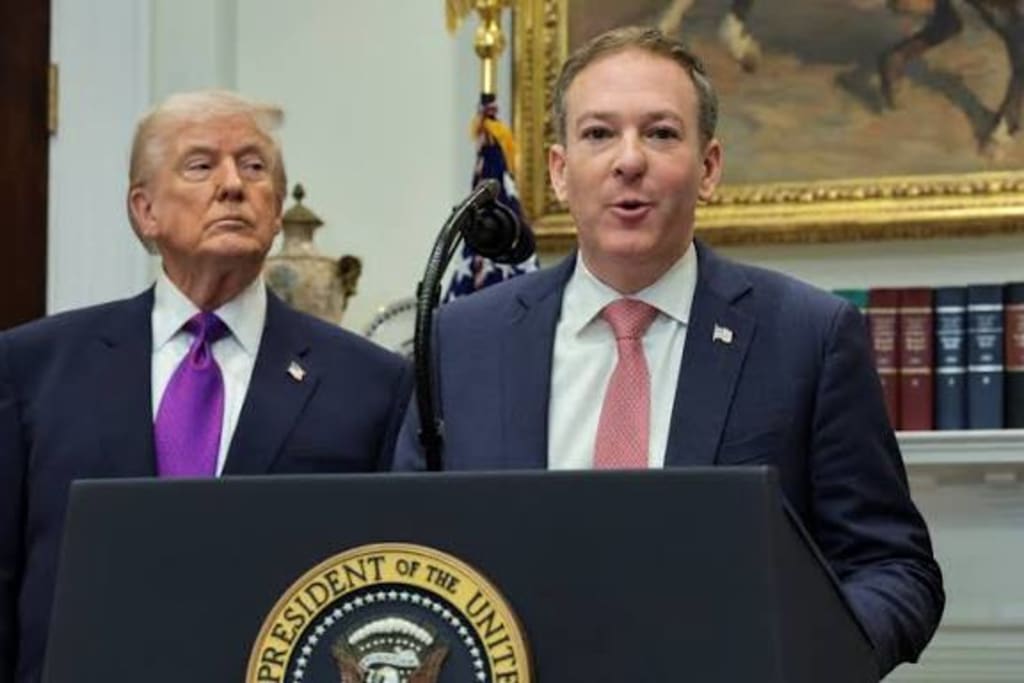
Subtitle: The rollback of the Obama-era “endangerment finding” signals a dramatic shift in U.S. climate policy and sets the stage for legal and political battles over the nation’s responsibility to curb emissions.In a move that reshapes the foundation of U.S. climate regulation, Donald Trump has formally revoked the landmark federal ruling that classified greenhouse gases as a threat to public health and welfare. The decision overturns the 2009 “endangerment finding,” which empowered the Environmental Protection Agency to regulate carbon dioxide and other heat-trapping emissions under the Clean Air Act.
Administration officials described the action as a correction of what they called regulatory overreach. They argued the original finding relied on “uncertain climate projections” and imposed unnecessary costs on U.S. industries and consumers. The new directive instructs the EPA to withdraw the scientific and legal basis for treating greenhouse gases as pollutants that threaten human health.
“This is about restoring balance and protecting American jobs,” a senior official said during the announcement. “We are ensuring that environmental policy does not become a weapon against economic growth.”
The endangerment finding, introduced during the Obama administration, was a cornerstone of federal climate policy. It provided the legal justification for limits on emissions from power plants, automobiles, and industrial facilities. By rescinding it, the Trump administration effectively removes the EPA’s authority to regulate greenhouse gases nationwide unless Congress passes new legislation.
Environmental groups and public health advocates reacted with alarm. They warned that the decision ignores decades of scientific research linking climate change to rising heat deaths, worsening air quality, stronger storms, and the spread of infectious diseases. Several organizations vowed to challenge the move in court, arguing that the EPA is legally obligated to consider scientific evidence and protect public welfare.
“This is not just a policy change—it is a rejection of established science,” said one environmental lawyer involved in preparing litigation. “The courts have already affirmed that greenhouse gases can be regulated when they endanger health. Undoing that will not be easy.”
Legal experts expect a protracted battle. The original endangerment finding was upheld by federal courts, and any attempt to withdraw it must survive judicial review. Critics say the administration must provide stronger scientific justification than it has so far presented, or risk having the reversal blocked.
Industry groups, however, welcomed the announcement. Energy producers and manufacturing associations have long complained that climate regulations increase operating costs and put U.S. companies at a disadvantage compared with foreign competitors. They argue that market forces and innovation, rather than federal mandates, should drive emissions reductions.
Internationally, the decision has drawn sharp criticism from U.S. allies and climate diplomats. Observers say it weakens American credibility in global climate negotiations and could slow momentum toward collective action. Several European officials expressed concern that the U.S. is retreating from commitments to address a problem that scientists describe as accelerating.
Public reaction at home has been divided. Supporters of the move see it as consistent with Trump’s campaign promises to dismantle what he called burdensome environmental rules. Opponents view it as a step backward that puts vulnerable communities at greater risk from pollution and extreme weather.
The rollback comes amid increasing evidence of climate impacts across the United States, including record-breaking heat waves, more intense wildfires, and rising coastal flooding. Health organizations warn that these trends disproportionately affect the elderly, children, and low-income populations.
Whether the revocation ultimately stands will depend on the courts and future administrations. For now, the decision marks one of the most consequential reversals of environmental policy in modern U.S. history—one that reopens a fundamental question: should greenhouse gases be treated as a public health threat, or as an economic variable beyond the reach of federal regulation?
About the Creator
Fiaz Ahmed
I am Fiaz Ahmed. I am a passionate writer. I love covering trending topics and breaking news. With a sharp eye for what’s happening around the world, and crafts timely and engaging stories that keep readers informed and updated.
Keep reading
More stories from Fiaz Ahmed and writers in The Swamp and other communities.
Ex-Pakistan PM Imran Khan left with 15% vision in right eye, court told
Medical report submitted to the court reveals lasting damage from the 2022 assassination attempt, renewing debate over prison healthcare and political violence in Pakistan. A Pakistani court has been informed that former prime minister Imran Khan has suffered permanent damage to his right eye and is left with only 15% vision following the assassination attempt that injured him during a political rally in November 2022. The disclosure came during legal proceedings concerning Khan’s medical condition and access to specialized treatment while in custody. According to medical documents presented before the court, doctors concluded that the firearm injury caused irreversible harm to the optic structures of his right eye, significantly reducing his eyesight and raising concerns about long-term complications. Khan, who was shot while traveling in a convoy in Wazirabad, Punjab, had initially undergone emergency surgery and treatment at military and civilian hospitals. At the time, doctors said multiple pellets struck his leg and upper body, but later assessments revealed that one projectile or fragment had caused trauma near the eye area, leading to progressive vision loss. The medical report stated that despite treatment and follow-up care, full recovery of vision in the affected eye is not possible. Physicians warned that prolonged strain, stress, or inadequate medical supervision could worsen his condition and potentially affect his remaining eyesight. Defense lawyers told the court that Khan’s health has deteriorated in prison and that his limited vision now interferes with daily activities, including reading legal documents and attending lengthy hearings. They argued that his condition requires regular monitoring by ophthalmology specialists and access to diagnostic facilities that are not fully available inside detention centers. Government representatives acknowledged the medical findings but maintained that Khan is receiving appropriate healthcare under prison rules. Officials said that arrangements have been made for periodic checkups and that he can be transferred to a hospital if doctors deem it necessary. They rejected claims of negligence, calling them politically motivated. The revelation has revived memories of the 2022 shooting, which shocked the country and intensified political polarization. Khan had accused elements within the state of being involved in the attack, allegations that authorities denied. A suspect was arrested at the scene and investigations were launched, but the case remains a symbol of Pakistan’s volatile political climate. Supporters of Khan’s Pakistan Tehreek-e-Insaf (PTI) party reacted strongly to the court disclosure, calling it proof that he continues to suffer because of political violence. Party leaders demanded that independent medical boards be allowed to examine him and that he be granted medical relief in line with constitutional rights. “This is not just about one man’s eyesight,” a PTI spokesperson said. “It is about the safety and dignity of political leaders and the rule of law in Pakistan.” Human rights groups have also weighed in, urging authorities to ensure transparency regarding Khan’s medical treatment. They noted that prisoners, regardless of political status, are entitled to healthcare consistent with international standards. Legal analysts say the medical evidence could influence ongoing petitions seeking bail or temporary release on health grounds. However, they caution that Pakistani courts traditionally require clear proof that treatment cannot be provided within the prison system before granting such relief. The case also highlights broader concerns over security at political gatherings and the risks faced by public figures in Pakistan. Attacks on politicians have historically altered the country’s political trajectory, and Khan’s injury remains a powerful reminder of those dangers. As proceedings continue, the court is expected to review additional medical evaluations and determine whether special measures are needed to safeguard Khan’s health. For now, the confirmation that he retains only 15% vision in his right eye adds a new and sobering dimension to his legal and political struggles, underscoring the lasting personal cost of violence in Pakistan’s turbulent political arena.
By Fiaz Ahmed 2 days ago in The Swamp
Why Black History Matters in America?
The United States of America is celebrating their 250th anniversary in 2026. I'm proud to be an American and as someone who was born here, I wouldn't imagine myself living anywhere else. This is a country where opportunities are possible. Where anyone can be successful in anything they desire to do. Equality, community, and togetherness are the backbones of what America is and should be about. However, we have an administration who wants to erase and disregard those who have made positive, meaningful impacts in our country, specifically Black figures, such as Martin Luther King, Jr., Rosa Parks, and Maya Angelou. President Trump and his administration have been constantly complaining and fighting against what they call the "Woke agenda". They use this excuse as a distraction from other issues they refuse to address, such as the high cost of living, climate change, and inflation. That equality is dividing America, when in reality, it's bringing us together. Being woke is not tied to a specific political party. No matter where you stand on the political spectrum, you can still care about other people and their plights. Compassion and empathy for others isn't tied to a political party, either. We were taught as children to treat others the way we want to be treated and not judge others because they're different from us. Caring about others isn't a personal attack on your beliefs. It doesn't make you any less of a person. People who are easily offended over African American figures, past or present, or anything related to it, are grasping at straws. Current and future generations need to know who people like Harriet Tubman and Shirley Chisholm were, especially in the classroom. Black History is part of American History. It should be recognized, not hidden or forgotten. Besides, you can't shield children from everything, just because your feelings are easily hurt.
By Mark Wesley Pritchard 13 days ago in The Swamp
Ukraine’s Strategy to Kill 50,000 Russian Soldiers a Month: Strategic Confidence or a Sign of Battlefield Constraints?
Amid the grinding reality of the Russia-Ukraine war, one striking figure has circulated among military analysts and geopolitical observers: Ukraine’s strategy aims to inflict up to 50,000 Russian casualties per month.
By Adil Ali Khan2 days ago in The Swamp
Super Bowl LX Recap: A Team Called Hawks
Sixty. The Super Bowl turned 60! Still amazes me that this was the sixtieth Super Bowl played in NFL history. It seems like yesterday that I watched Super Bowl XXVII, the first SB I ever watched. The QB who won Super Bowl XXVII has since called a few SBs, and will call next year's game, but that's another story. Super Bowl LX took place at Levi's Stadium in Santa Clara, California, the home stadium of the San Francisco 49ers. However, it was one of their division foes who represented the NFC, as the Seattle Seahawks faced off against the New England Patriots.
By Clyde E. Dawkins6 days ago in Unbalanced




Comments
There are no comments for this story
Be the first to respond and start the conversation.