
Trump–Putin Alaska Summit: A Meeting of Optics Over Substance?
A failed ceasefire, rising skepticism, and what comes next for Ukraine's fight.
By Lee Gachuhi – Journalist and Media Personality
When former U.S. President Donald Trump met Russian President Vladimir Putin in Alaska this week, the world braced for a breakthrough. Supporters of both men painted the summit as a historic step that could shift the course of the war in Ukraine.
Instead, the gathering revealed how wide the gulf remains between Washington and Moscow — and how much of the event was designed for spectacle rather than substance.
The Stakes?
The Alaska meeting was framed as a chance to explore peace in Ukraine. For many observers, it symbolized the rare possibility of dialogue between Russia and the U.S. after years of confrontation. Yet the summit delivered little more than familiar talking points, leaving the conflict’s future as uncertain as before.
For Ukrainians, who continue to endure bombardment and displacement, the symbolism of the event mattered little. What they need are concrete commitments — ceasefire agreements, humanitarian corridors, or reconstruction aid. None of these materialized.
Trump’s Optics Play
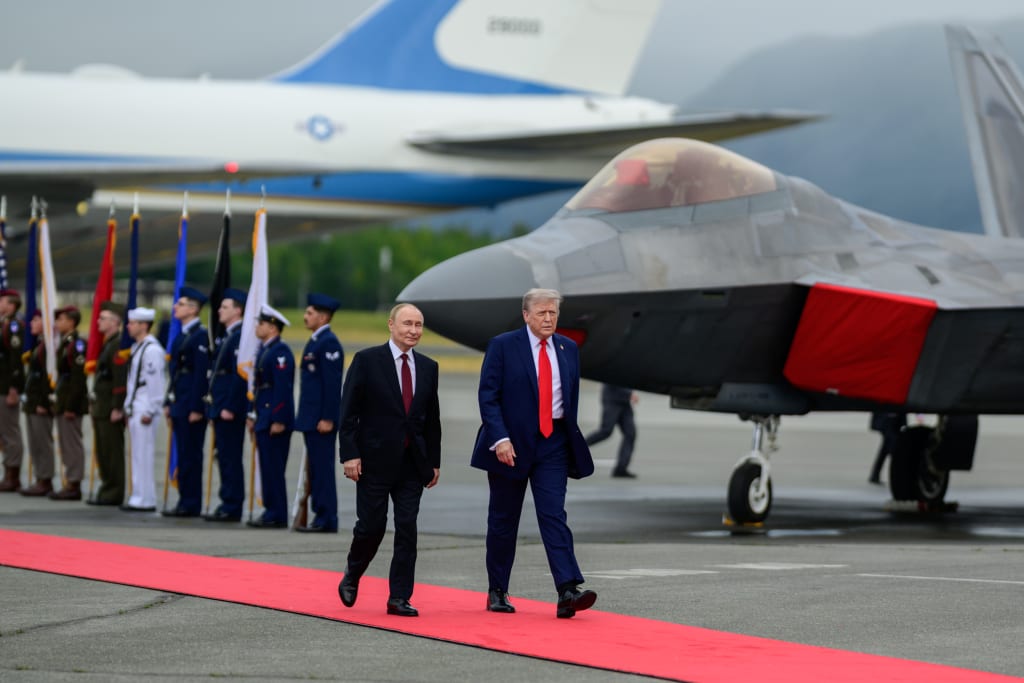
Trump approached the summit with his trademark flair. His team highlighted his ability to command international attention, portraying him as a dealmaker still capable of brokering peace. The carefully choreographed photo opportunities — the firm handshakes, the long stares, the American and Russian flags flanking them — echoed the imagery of his presidency.
But beyond the stagecraft, Trump offered no fresh blueprint for peace. His language leaned on broad themes of “getting along” and “ending endless wars,” but stopped short of the detailed proposals that diplomats rely on. To critics, this was a return to the style-over-substance approach that defined much of his foreign policy.
Putin’s Calculated Posture
For Putin, the optics mattered just as much. Simply standing alongside a former U.S. president gave him a platform to show strength back home and to argue that Russia is not isolated. He echoed long-standing demands — recognition of territories Moscow claims, easing of Western sanctions, and assurances about NATO expansion — but offered little in terms of compromise.
The summit allowed him to demonstrate to both domestic and international audiences that Russia still has a seat at the table. Yet by refusing to concede ground, Putin reinforced the perception that Moscow remains entrenched in its wartime goals.
Echoes of Helsinki: A throwback
The Alaska summit drew immediate comparisons to Trump and Putin’s 2018 meeting in Helsinki. That gathering was widely criticized in the U.S. after Trump appeared to side with Putin over his own intelligence agencies on election interference.
This time, the stakes were even higher. With Ukraine’s survival on the line and Western unity under strain, any hint of U.S. softness toward Moscow could alter the conflict’s trajectory. Instead, the summit largely replayed familiar dynamics — Trump eager to project statesmanship, Putin eager to exploit the optics.
How did the world react?
Reaction abroad was swift. European leaders expressed concern that the meeting might undermine coordinated Western efforts to support Ukraine. Kyiv, for its part, warned that any summit without Ukraine’s direct involvement risks sidelining its sovereignty.
In Beijing, analysts noted the meeting with interest. China, Russia’s strategic partner, benefits from Western divisions. A Trump–Putin handshake may not change the battlefield, but it complicates the diplomatic chessboard.
A Missed Opportunity
The Alaska summit could have been a moment to test bold ideas or signal even the smallest shift in tone. Instead, it reminded the world that both men value the performance of diplomacy more than its difficult details.
For Ukrainians, the absence of progress means continued uncertainty. For the international community, it was another reminder that the war will not be solved by high-profile photo ops but by painstaking negotiations — the kind neither Trump nor Putin appears willing to engage in.
What's the Bigger Picture?
International summits often blur the line between substance and theater. This one leaned heavily toward the latter. While it drew global headlines, it produced no new commitments, no road map for peace, and no sign that either side is prepared to make concessions.
In the end, the Trump–Putin meeting in Alaska may be remembered not as a step toward peace but as a carefully staged performance. It underscored the limits of personality-driven diplomacy and left the world exactly where it was before: watching a brutal war with no end in sight.
---
Note: This article was drafted with the assistance of AI for editing and structuring purposes, but all analysis and framing reflect the author’s journalistic perspective.
About the Creator
Keep reading
More stories from writers in The Swamp and other communities.
The Forsyth House Fire
Since 1851, Forsyth House has stood on the corner of Union Street and Gordon Street in the heart of Glasgow. Its iconic, or was... because on Sunday 8th of March, 2026, a fire broke out in a small, seemingly un-named shop in the building and tore all that history down. As I write, the rubble is still unsettled and the street is still blocked off. Central Station is quiet on the upper level, and around 30 small businesses have quite literally gone up in smoke.
By S. A. Crawford3 days ago in The Swamp
Why Didn't Anyone Tell Us
Men, move along. This is not for you. This is for the women. I was forty-five when I began menopause. It is pretty young for that to be going on in a woman’s life, but I had undiagnosed PCOS, my entire life. Thank you to all the gynecologists I had seen my entire life. That in itself should encourage women to keep seeking second opinions, especially when you are not getting correct answers or any at all.
By Alexandra Grant6 days ago in Humans
Microsoft's Purposeful Marketing Deception About AI's Ability To Beat Physicians In Diagnosis
When you look at the world of scientific research... If you are not careful... You will be fooled into believing things that are not actually supported by the data.
By Dr. Cody Dakota Wooten, DFM, DHM, DAS (hc)a day ago in Longevity




Comments (1)
Very Very Nice