
Trump News at a Glance: Nicolás Maduro Signals Readiness for ‘Serious Talks’ With Trump
A surprising diplomatic note amid long-standing tensions between Washington and Caracas
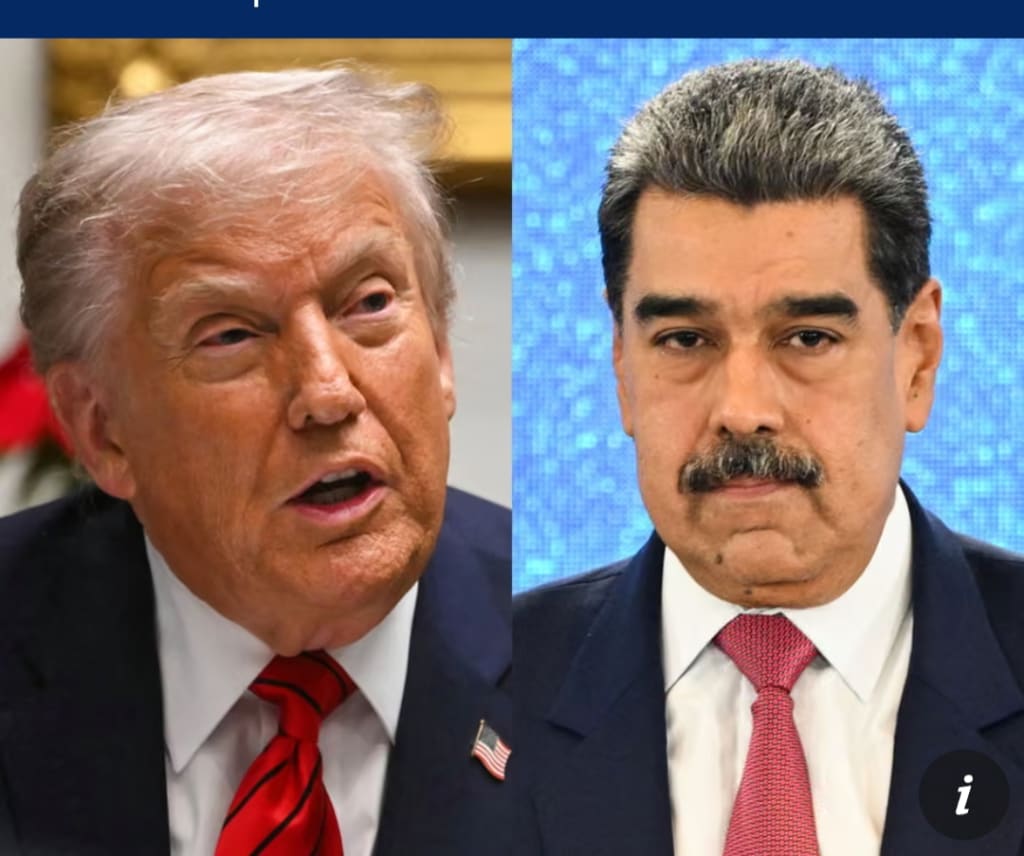
In a development that has caught the attention of diplomats and analysts alike, Venezuelan President Nicolás Maduro has indicated he is open to “serious talks” with former US President Donald Trump, according to recent statements circulating in political and media circles. The remark marks a notable shift in tone between two figures whose relationship has long been defined by hostility, sanctions, and sharp rhetoric.
While details remain limited and no formal negotiations have been confirmed, the signal itself raises important questions about US–Venezuela relations, political strategy, and the broader geopolitical landscape in the Americas.
A Relationship Defined by Confrontation
During Trump’s presidency, relations between the United States and Venezuela reached one of their lowest points in modern history. Washington imposed sweeping economic sanctions aimed at pressuring Maduro’s government, while openly supporting Venezuelan opposition figures and questioning the legitimacy of Maduro’s leadership.
Trump repeatedly referred to Maduro as a “dictator,” and his administration explored aggressive options—including diplomatic isolation and economic pressure—to force political change in Caracas. Maduro, for his part, accused the US of economic warfare and interference in Venezuela’s sovereignty.
Against this backdrop, any suggestion of dialogue represents a sharp departure from years of mutual antagonism.
Why Maduro Is Changing His Tone
Analysts suggest several factors may explain Maduro’s apparent willingness to engage. Venezuela’s economy, though showing signs of stabilization, continues to struggle under the weight of sanctions, inflation, and infrastructure challenges. Opening a diplomatic channel with a powerful US political figure could signal an attempt to ease pressure or gain leverage.
There is also a strategic dimension. With Trump remaining a dominant force in American politics, engaging him—even symbolically—may be seen by Caracas as a way to prepare for shifting political winds in Washington.
“Talking does not mean agreeing,” one regional analyst noted. “It can be a way to test intentions and reshape narratives.”
Trump’s Perspective: Deal-Making and Leverage
Trump has long branded himself as a deal-maker, often expressing openness to talks with adversaries if he believes it serves US interests. During and after his presidency, he has signaled a willingness to negotiate directly with leaders others consider untouchable—provided the talks occur on his terms.
From Trump’s perspective, any engagement with Maduro could be framed as strength rather than concession, especially if it promises outcomes such as political reforms, migration cooperation, or energy-related agreements.
However, Trump has not publicly confirmed any intention to engage in talks, leaving open the question of whether Maduro’s statement reflects a genuine opening or a diplomatic gambit.
Energy, Sanctions, and Strategic Interests
One area where dialogue could theoretically emerge is energy. Venezuela holds some of the world’s largest oil reserves, and global energy markets remain sensitive to geopolitical disruptions. In recent years, US policy toward Venezuela has shown moments of flexibility when energy security is at stake.
Any discussion involving sanctions relief, oil exports, or economic cooperation would be politically charged and closely scrutinized—both in the US and Venezuela.
Critics argue that engaging Maduro risks legitimizing an authoritarian government, while supporters of dialogue contend that isolation has failed to produce meaningful change.
Reaction From the International Community
Maduro’s comments have drawn cautious reactions from international observers. Some Latin American leaders emphasize the importance of diplomacy and dialogue, even with adversarial governments. Others warn that talks without concrete commitments on human rights and democratic reforms could undermine accountability.
Within Venezuela, reactions are mixed. Supporters of the government portray the statement as proof of Maduro’s political resilience, while opposition figures remain skeptical, arguing that past negotiations have produced few tangible results.
What ‘Serious Talks’ Might Actually Mean
Diplomatic language is often deliberately vague, and “serious talks” can encompass anything from informal backchannel communication to formal negotiations. At this stage, there is no indication of:
An official US response
A defined agenda
A timeline for discussions
Experts caution against overinterpreting the statement, noting that political signaling does not always translate into action—especially during periods of uncertainty in US politics.
The Domestic Political Angle
Both leaders also face domestic audiences. For Maduro, signaling openness to talks can project confidence and pragmatism amid ongoing economic challenges. For Trump, any engagement would likely be framed through the lens of America First, emphasizing leverage and results.
In this sense, diplomacy becomes not just a tool of foreign policy but a component of political messaging.
A Moment Worth Watching
Whether Maduro’s overture leads anywhere remains unclear. But the statement itself underscores how rapidly geopolitical narratives can shift—and how former leaders can continue to shape international discourse.
At minimum, the comment reopens a conversation many believed was closed, reminding observers that even the most entrenched standoffs are subject to change.
Conclusion
Nicolás Maduro’s signal that he is ready for “serious talks” with Donald Trump adds a new wrinkle to the complex and often volatile relationship between the US and Venezuela. While concrete steps toward dialogue have yet to materialize, the statement highlights the enduring influence of Trump in global politics and the strategic calculations facing Venezuela’s leadership.
Whether this moment represents genuine diplomatic movement or simply political positioning, it is a development worth watching closely in a region where history shows that words can sometimes lead to unexpected turns.
About the Creator
Keep reading
More stories from Aarif Lashari and writers in The Swamp and other communities.
No Future for Us’: Disaffected Iranians Say It’s Now or Never to Topple the Regime
Across Iran, a growing number of citizens—particularly young people—are voicing a stark belief: if meaningful change does not happen now, it may never happen at all. Amid economic collapse, political repression, and shrinking personal freedoms, disaffected Iranians describe a sense of urgency that has transformed frustration into resolve.
By Aarif Lashari17 days ago in The Swamp
Iran and the Limits of American Power
For over 40 years, the relationship between Iran and the United States has been tense, complicated, and often confrontational. From the 1979 Islamic Revolution to today, U.S. attempts to shape Iran’s behavior — through diplomacy, sanctions, or even military threats — have often hit a wall. Despite America’s vast power, Iran has repeatedly shown the limits of U.S. influence. Understanding this dynamic is essential for anyone trying to make sense of today’s global politics.
By Aqib Hussain5 days ago in The Swamp



Comments
There are no comments for this story
Be the first to respond and start the conversation.