
Trump Moves to Designate Some Muslim Brotherhood Chapters as Terrorist Groups
A controversial move that could reshape Middle Eastern politics and redefine U.S. counterterrorism strategy.

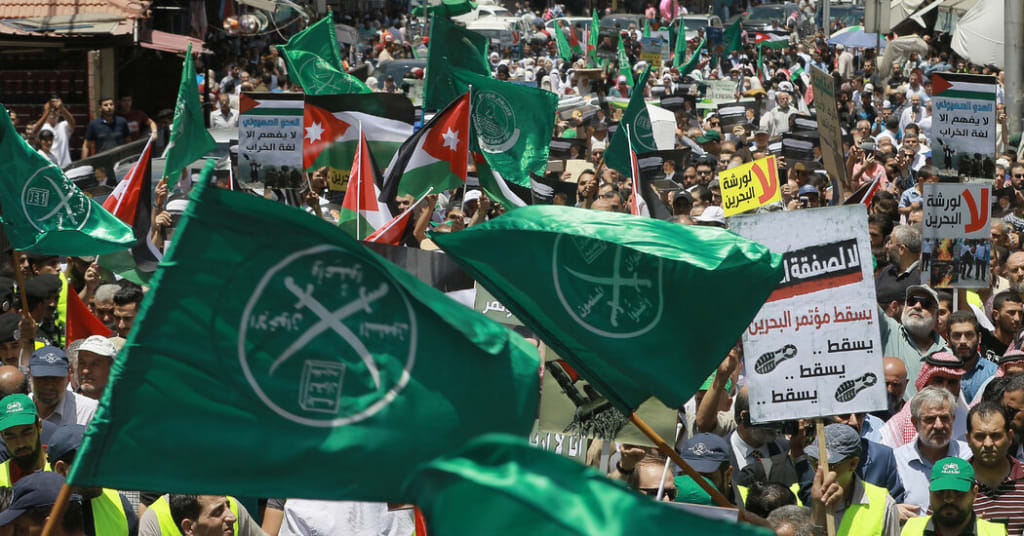
For years, global governments have wrestled with how to deal with the Muslim Brotherhood, one of the most influential and controversial Islamic political movements in the world. Now, the debate has returned to center stage as former U.S. President Donald Trump pushes forward an effort to classify certain chapters of the Muslim Brotherhood as terrorist organizations. The move has sparked strong reactions, raised important questions about international security, and created new tensions in an already fragile geopolitical environment.
Trump’s initiative is not aimed at the entire Muslim Brotherhood network, but at specific branches that the U.S. intelligence community believes have links to extremist activity. Even so, the announcement has reignited a long-standing global conversation: Is the Muslim Brotherhood a political movement, a religious organization, a social reform network—or a breeding ground for extremism?
The answer depends on who you ask, and that is exactly why Trump’s move has drawn both praise and concern.
---
What the Muslim Brotherhood Is—and Why It Matters
Founded in Egypt in 1928, the Muslim Brotherhood began as a reformist movement focused on education, religious identity, and social welfare. Over the decades, it expanded across the Middle East and North Africa, forming political parties, charities, and religious groups. Some branches participated in democratic elections, while others were banned, exiled, or forced underground.
But critics—including several governments—argue that certain chapters of the organization have supported extremist ideologies or acted as gateways to radicalization. Countries like Egypt, Saudi Arabia, and the UAE have already labeled the Brotherhood as a terrorist group, claiming it incites unrest and inspires violent offshoots.
In contrast, nations such as Tunisia, Jordan, and Morocco recognize Brotherhood-linked parties as legitimate political actors.
This global divide makes any U.S. designation extremely complex—and potentially far-reaching.
Why Trump Is Pushing for the Designation
Trump has long taken a hard stance on groups linked to extremism, and this latest move aligns with his broader national security approach. His supporters argue that:
Some Brotherhood chapters have clear ideological ties to militant groups.
Designation helps counter radicalization in the Middle East.
It may pressure governments that quietly support extremist networks.
It strengthens U.S. intelligence cooperation with nations that already consider the group a threat.
In short, Trump believes that targeting specific Brotherhood factions will enhance global safety and disrupt financial channels connected to extremism.
The Concerns—and Why Critics Are Warning of Consequences
Opponents of the designation say the situation is far more complicated than it appears. Their main concerns include:
1. The Muslim Brotherhood Is Not a Single Organization
Each chapter operates independently, with its own leadership and agenda. Labeling one chapter as a terrorist group may unintentionally implicate others that have no ties to violence.
2. It Could Strain Ties With Key U.S. Allies
Nations like Turkey and Qatar support Brotherhood-linked political movements. A terrorist designation may trigger diplomatic tensions or disrupt cooperation on other issues.
3. It Could Limit Democratic Participation in Some Countries
In places where Brotherhood-associated parties are part of the political process, the move could undermine local stability or empower more extremist groups.
4. It Risks Pushing Moderate Islamists Underground
Experts argue that isolating moderate political Islam movements may create a vacuum that more radical organizations could fill.
How the Global Community Is Responding
Reactions worldwide have been mixed.
Middle Eastern nations opposed to the Brotherhood have welcomed the announcement and view it as a step toward greater regional security.
Others have expressed worry that the U.S. may be entering a religious or political conflict that it cannot easily navigate.
Analysts point out that previous administrations avoided this designation for one simple reason: the Muslim Brotherhood’s influence runs deep in many societies, and the organization’s structure is too complex for a blanket classification.
What Happens Next?
If the U.S. proceeds with the designation, it would allow authorities to impose sanctions, freeze assets, and restrict travel against individuals or groups linked to the targeted Brotherhood chapters. The move could reshape alliances, influence elections in the Middle East, and shift how governments engage with Islamist political movements.
But it could also escalate tensions, inspire backlash, or push some groups into secrecy.
For now, the world watches closely as Trump’s proposal moves through the evaluation process. One thing is clear: this decision could shape Middle Eastern politics—and U.S. foreign policy—for years to come.
About the Creator
Fiaz Ahmed
I am Fiaz Ahmed. I am a passionate writer. I love covering trending topics and breaking news. With a sharp eye for what’s happening around the world, and crafts timely and engaging stories that keep readers informed and updated.
Keep reading
More stories from Fiaz Ahmed and writers in The Swamp and other communities.
Sindh May Return to India: Rajnath Singh's "Borders May Change" Remark Stirs Debate
In a political landscape marked by shifting alliances, intense nationalistic sentiment, and a complex history of territorial disputes, recent remarks made by Indian Defense Minister Rajnath Singh have ignited a wave of discussion and controversy. During a speech that has since garnered significant media attention, Singh suggested that "borders may change," a comment that has stirred debate over the status of regions like Sindh, and their historical ties to India. The statement, in the context of the long-standing India-Pakistan conflict, raises questions about the potential redefinition of borders in South Asia and what such a change might mean for the future of the region.
By Fiaz Ahmed 4 months ago in The Swamp
The Forsyth House Fire
Since 1851, Forsyth House has stood on the corner of Union Street and Gordon Street in the heart of Glasgow. Its iconic, or was... because on Sunday 8th of March, 2026, a fire broke out in a small, seemingly un-named shop in the building and tore all that history down. As I write, the rubble is still unsettled and the street is still blocked off. Central Station is quiet on the upper level, and around 30 small businesses have quite literally gone up in smoke.
By S. A. Crawford3 days ago in The Swamp
My First Time Skiing and I Got Lost, Alone, in the French Alps
Looking back, I can trace some of my life’s biggest adventures to a simple action from my sister. She’d introduced me to Tommy (a very long time ago), a colleague of hers, who had overshared his penchant for Italian-looking women, and I ticked that box.
By Chantal Christie Weiss3 days ago in Humans


Comments
There are no comments for this story
Be the first to respond and start the conversation.